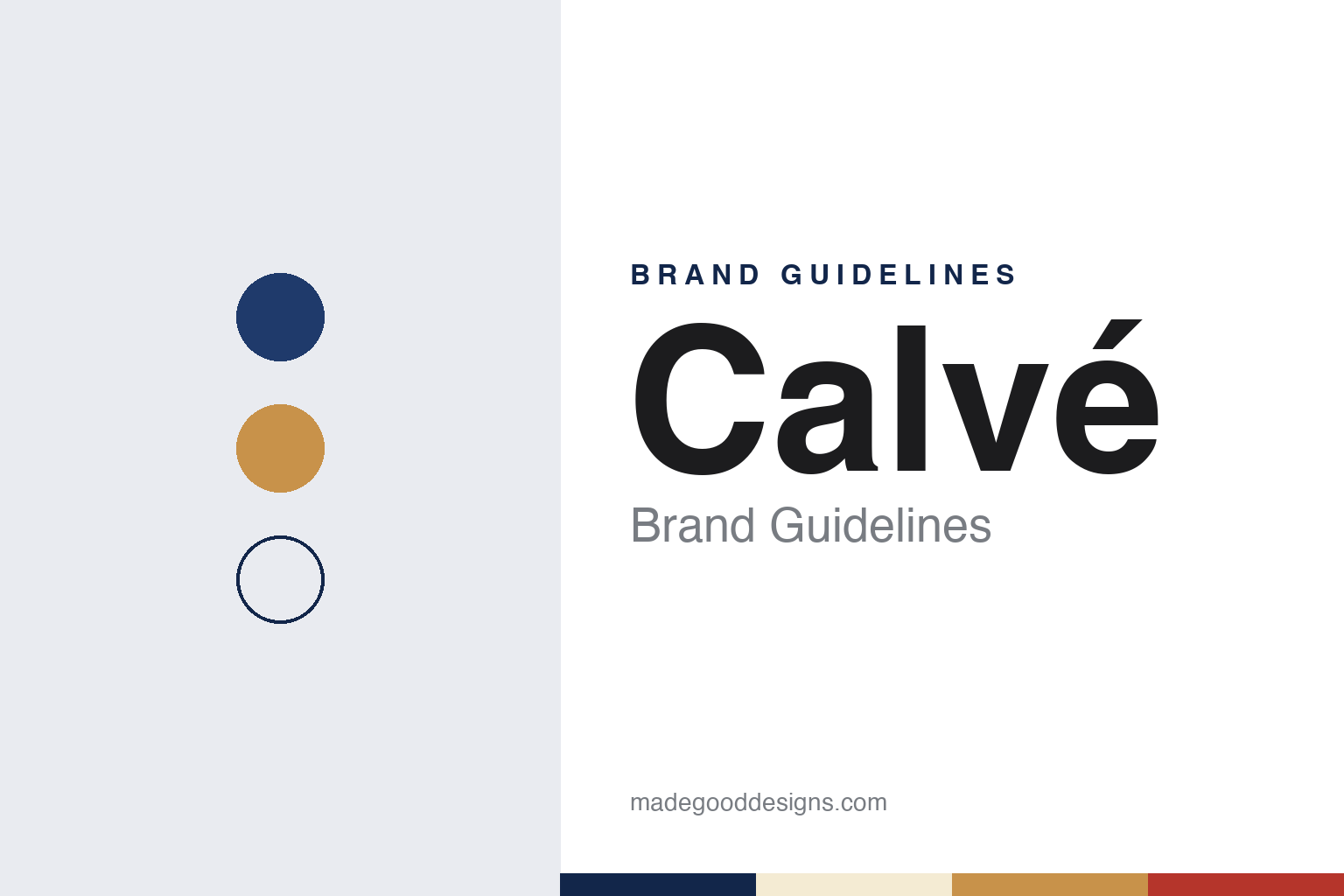
Calvé Brand Guidelines
The Delft oil works that became a Dutch pantry name.
Aa
Two constants: a Delft blue, peanut tan and mayonnaise cream palette and a bookish Dutch serif register. Abstract homage — not a Calvé product or mark; no jar, label or logo is reproduced.
An oil works in Delft
A yeast magnate, a French partner and a fire.
Calvé is a French surname on a Dutch jar, and the reason lies in Delft. Dutch Wikipedia says the Nederlandsche Oliefabriek (NOF) was founded there in 1883 by Jacques van Marken, the owner of the Delft yeast and spirits works, to press oil from groundnuts. A chemist with a financial background, Jan Tutein Nolthenius, visited the French firm Calvé on Van Marken’s advice to study how artificial butter was made. Capital came from Van Marken, the Amsterdam banking house of the Tutein Nolthenius family, a share issue and a large stake from Gaston Thubé, a director of the French company Serpette, Lorois, Lourmand & Co, who had been planning a similar factory in the Netherlands. Nolthenius and Thubé became the directors and Van Marken an adviser.
The start was rough. Production began in 1884, and on 17 August that year a fire burned the whole factory down, Dutch Wikipedia says; Van Marken then took over supervision himself. The works became known above all for Delftsche Slaolie, a salad oil, and went on to make margarine, sauces and tomato ketchup. In 1920 the oil factory employed 1,226 people, more than the 837 at Van Marken’s yeast works next door.
The French name arrived with a merger. On 1 January 1898, according to a shareholders’ notice in the Delftsche Courant of 4 January 1898 cited by Dutch Wikipedia, the Delft company was folded into a new Franco-Dutch oil company, Nouveaux Établissements Calvé-Delft, joining forces with the firm of the brothers Emmanuel and Georges Calvé. The Calvé brothers’ French factory stood at Laubardemont, in Sablons in the Gironde, from 1893, according to a history of the mills of the Isle and Dronne rivers by David Redon and Philippe Rallion. The business was later renamed Nederlandsche Oliefabrieken (NOF) Calvé-Delft, or simply Calvé, and Dutch Wikipedia says the name was registered as a trademark in 1925.
Colour
A salad-oil poster that named a style.
Calvé’s place in design history rests on a bottle of salad oil. In 1894 the Nederlandsche Oliefabriek commissioned the painter Jan Toorop to promote Delftsche Slaolie, and the result, a colour lithograph printed by S. Lankhout & Co, became one of the best-known early examples of Dutch Art Nouveau. Copies are held by the Rijksmuseum, the Stedelijk Museum Amsterdam and the Kunstmuseum Den Haag. The poster, with its stylised long-haired women, gave Art Nouveau in the Netherlands and Belgium the nickname “slaoliestijl” — the salad-oil style — Dutch Wikipedia says, citing the Rijksmuseum and the Stedelijk.
Toorop was not the only artist the company used. Dutch Wikipedia lists salad-oil posters by George Hendrik Breitner, Lothar Meggendorfer, Theo Nieuwenhuis, Jan Rinke and Jacques Zon. In 1926 and 1927 the writer and illustrator Johan Fabricius wrote and drew the adventures of Arretje Nof, free booklets that children collected with stamps found on NOF margarine packs, the Dutch magazine Voortschrijdende Inzichten recalled in 2005. Dutch Wikipedia adds that the letters NOF still appear in the crest-style emblem on Calvé jars.
Peanut butter came after the war. Dutch Wikipedia says production began in Delft in 1948, and the smell became a familiar part of the town; the groundnut meal left over from pressing oil fed a compound animal-feed department, which merged in 1963 with U. Twijnstra’s Oliefabriek to form UTD. Calvé also gave the Netherlands a snack word. Dutch Wikipedia says Calvé introduced Borrelnootje, a coated peanut, as a brand name around 1970 and sold the name and recipe to Duyvis in 1996. On television, a 2010 Calvé peanut-butter spot known as “Pietertje” starred the Olympic swimmer Pieter van den Hoogenband.
Typography
Design and documentation.
The seven brands in this group are all food and drink names from the Netherlands and Ireland: Calvé, Duyvis, Chocomel, Unox, Odlums, Club Orange and Brennans. Dutch and Irish food and drink brands in general sit at many different points in the trade, from family firms that still carry a founder’s name to names that now belong to much larger food and drink groups, and a single brand can be sold everywhere from a corner shop to a supermarket shelf.
A food or drink brand’s identity is usually carried less by a single product than by a pack, a name and the meal, snack or drink it promises, because the company behind the name may have changed hands, moved its production or grown far beyond the place where it started. That makes the questions behind each name worth asking plainly: who started it, who owns it now, and where its products are actually made and packed.
Each guide separates what independent sources record from what the company says about itself — its founding story, its owners over time, where its products are made and how its packaging has changed — and marks plainly what rests only on the company’s own word.
Aa
A bookish serif for a brand born in a nineteenth-century Delft oil works. (Specimen set in Libre Baskerville, a serif STAND-IN; NOT the Calvé logo.)
Calvé
Margarine Unie, Unilever and the end of Delft.
Calvé has belonged to the Unilever family for almost a century. In 1928 the Margarine Unie, formed by the Dutch margarine makers Van den Bergh and Jurgens and soon to become part of Unilever, took over NOF Calvé from Van Marken’s heirs, Dutch Wikipedia says. In 1965 Unilever merged Calvé with the canned-food company De Betuwe to form Calvé-De Betuwe, and in 1970 the Benelux sales of Del Monte, Royco instant soups and Norico ready meals were placed in the same business.
The Delft factory did not survive the next century’s restructuring. On 9 October 2007 Unilever announced that it would close the Calvé works in Delft in 2008, the regional broadcaster Omroep West reported, at a cost of around 170 jobs, with peanut-butter production moving to Unilever’s Blue Band factory in Rotterdam. Dutch Wikipedia says the last jars of peanut butter left the Delft line on 23 May 2008, after almost 125 years of production on the site, and that sauce production went to factories in Spain, the Czech Republic and Germany. Most of the factory buildings were demolished in 2009, the local paper Delft op Zondag reported. The name stayed: Calvé is still sold as a brand of peanut butter, mayonnaise, sauces and dressings.
Another change of owner is now under way. On 31 March 2026 Unilever announced an agreement to combine its foods business with the American flavourings company McCormick & Company, leaving Unilever to concentrate on beauty, personal care and home care. The company said McCormick would set up an international headquarters in the Netherlands and that completion was expected by mid-2027, subject to shareholder and regulatory approvals.
For a design guide, Calvé shows how a nineteenth-century oil works can leave a lasting mark on both a nation’s pantry and its art history, from Toorop’s salad-oil poster to a peanut-butter jar that still carries the old company initials. Compare Hellmann’s, Unilever’s mayonnaise brand, and Knorr, its stock and soup brand. For this guide we use Delft blue, a peanut tan and a mayonnaise cream with a serif, an unofficial interpretation; no product or logo is reproduced.
Explore & save
Keep Calvé’s identity on hand — save it to a board in the Made Good inspiration library.
Calvé identity set
Pin the Calvé Delft blue, peanut tan and mayonnaise cream palette and the bookish Dutch serif register to your own board.