Boston Market Brand Guidelines
A Newtonville rotisserie shop that changed its name in 1995.
Aa
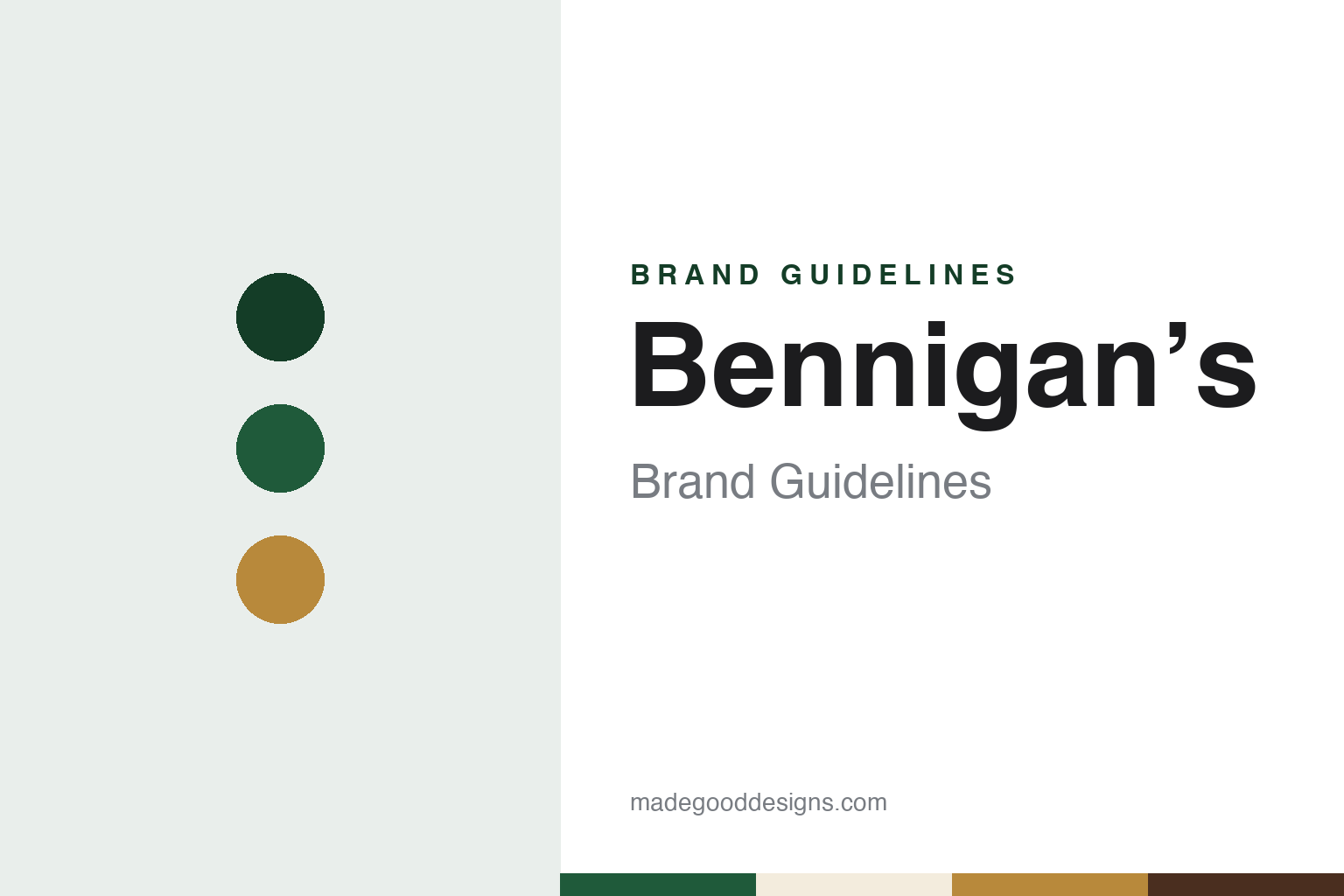
Two constants: a hunter green, rotisserie gold and cream palette and a market-sign serif register. Abstract homage — not a Boston Market product or mark; no sign, pack or logo is reproduced.
Boston Chicken
A rotisserie shop in Newtonville, 1985.
Boston Market started under another name. The New York Times reported in 2009 that Arthur Cores and his longtime friend Steven Kolow opened what was then called Boston Chicken in a small store in Newtonville, Massachusetts, in December 1985. English Wikipedia places the founding in 1985 in Newton, near Boston. The Times quoted Cores telling the Boston Business Journal in 1990 that the idea was to give customers an alternative to the usual fast food and a way to avoid the bother of cooking a fresh meal at home.
The paper described the original shop in some detail: chicken that had marinated for a day turned on brick-fired rotisseries, and the menu offered squash, mashed potatoes, sweet cornbread and salads, along with oatmeal cookies and chicken soup made from recipes the two founders had borrowed from their grandmothers. Lines formed outside, it said.
The concept became a chain through a third partner. According to the Times, George Naddaff, a local businessman who had opened Kentucky Fried Chicken stores in the Boston area, stood in one of those lines in 1988, liked the concept and within a year had made a deal with the founders to start the New Boston Chicken Corporation. Kolow kept running the original restaurant, while Cores joined the new firm as head of product development. Two other businessmen, Saad J. Nadhir and Scott Beck, bought a controlling interest in 1992, and the company went public the following year, the paper said; Cores retired in 1994.
Wikipedia says the chain expanded rapidly in the early and mid-1990s, and that while it was still called Boston Chicken its restaurants specialised in rotisserie chicken and a variety of side dishes.
Colour
A new name in 1995, and new owners since.
The name changed in 1995. Wikipedia says the chain added turkey, meatloaf and ham to its menu in February 1995 and changed its name to Boston Market that autumn to reflect the wider range; the corporate name stayed Boston Chicken, Inc. until 1997, when it became Boston Market Corporation. The Times also dated the change from Boston Chicken to Boston Market to 1995. Wikipedia says the company created the Einstein Bros. Bagels chain the same year from several smaller bagel bakeries, and that Boston Market-branded items have been sold in supermarkets since April 1999.
Wikipedia says the company filed for Chapter 11 bankruptcy in 1998 after borrowing heavily to fund its expansion.
McDonald’s bought the chain in 2000, the Times reported; Wikipedia dates the purchase to May 2000 and says McDonald’s bought it primarily for its real estate but went on to operate and expand the brand. Under McDonald’s, Wikipedia says, Boston Market ran two restaurants in Toronto and entered Australia in 2002 before leaving in 2004. In Canada, it says, Boston Pizza began a trademark case in 2002 over the use of the word “Boston”, which the parties settled in 2008. McDonald’s announced the sale of the chain to Sun Capital Partners on 6 August 2007 and completed it on 27 August 2007, according to Wikipedia, and the Times described Sun Capital as the owner in 2009.
Sun Capital’s affiliates completed the sale of Boston Market Corporation on 26 April 2020 to Engage Brands, one of the Rohan Group of companies owned by Jignesh (Jay) Pandya, according to a Sun Capital release on Business Wire dated 29 April 2020. Engage Brands has owned Boston Market since 2020, and Wikipedia gives the headquarters as Newtown Township, Pennsylvania. Under that ownership the chain faced unpaid-wage, rent and supplier claims and widespread closures from 2023, and Restaurant Business reported on 3 August 2026 that it had closed nearly all of its restaurants.
Typography
Design and documentation.
The restaurant names in this group grew up along American highways and suburban roads, where a chain had to be recognised from a moving car long before anyone read a menu. In that setting a brand’s identity is carried as much by buildings as by printed matter: a tall pole sign that can be seen from the road, a roof shape repeated from one site to the next, a colour that marks the building at a distance, and a name lettered large enough to read at speed.
Inside, the same identity continues in smaller pieces — the menu board and printed menu, placemats, cups and wrappers, staff uniforms and, for many chains, a character or mascot meant to make the name friendly and easy to remember. Because restaurant chains are often sold, merged, franchised or licensed, those pieces can outlast the company that first commissioned them, and a sign or roof can stay in place long after ownership has changed.
Each guide separates what independent sources record from what the company says about itself — who started the chain, who has owned and franchised it since, and how its name, signs and buildings have changed — and marks plainly what rests only on the company’s own word.
Aa
A market-sign serif — the register of a shopfront and a carry-out bag. (Specimen set in Libre Baskerville, a serif STAND-IN; NOT the Boston Market logo.)
Boston Market
One word kept, one word changed.
The brand’s defining design decision was a single word. The 1995 change kept the city and dropped the one product from the name, a move Wikipedia links directly to the wider menu of turkey, meatloaf and ham. The corporate name took two more years to follow, so for a time the restaurants and the company behind them used different words.
The rotisserie stayed at the centre. The Times account of the Newtonville shop puts brick-fired rotisseries at the start of the story, and Wikipedia says the rotisserie oven was later used for other meats as well. The name also moved onto supermarket shelves: Wikipedia says Boston Market-branded items have been sold in grocery stores since 1999, that chilled menu items were introduced there in 2004, and that the supermarket range is produced by Bellisio Foods, which as of 2024 still made items such as chicken pot pie bites, mashed potatoes and chicken fajita rice bowls.
The original name has also come back. Restaurant Business reported on 17 December 2024 that a restaurant called Boston Chicken India had opened in Delhi the previous month, according to posts on its Instagram page, which described it as an outlet of the U.S. brand and included photos featuring Pandya.
For a design guide, Boston Market shows how a restaurant can rename itself around a broader offer while keeping the place name that made it recognisable, and how that name can outlast nearly all of its restaurants on a grocery pack. Compare it with McDonald’s, which owned the chain from 2000 to 2007, and KFC, the chicken brand whose Boston-area franchisee helped turn Boston Chicken into a chain. For this guide we use hunter green, rotisserie gold and cream with a serif, an unofficial interpretation; no product or logo is reproduced.
Explore & save
Keep Boston Market’s identity on hand — save it to a board in the Made Good inspiration library.
Boston Market identity set
Pin the Boston Market hunter green, rotisserie gold and cream palette and the market-sign serif register to your own board.