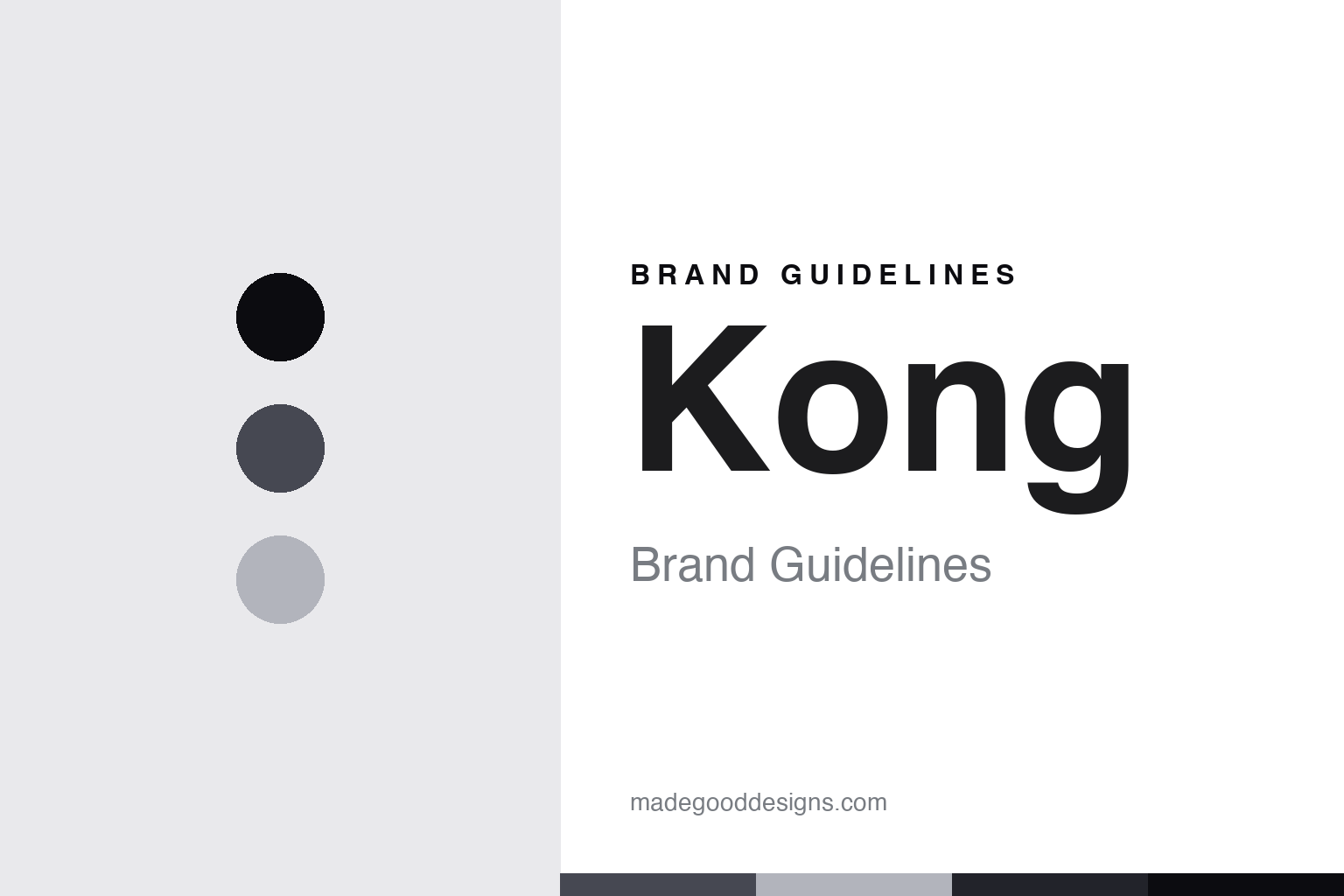
Kong Brand Guidelines
The Lecco carabiner, since Bonaiti.
Aa
Two constants: a steel-graphite palette and a carabiner-sans register. Abstract homage — not a Kong product or mark.
The Lecco carabiner, since Bonaiti
Kong is the Lecco carabiner maker — Bonaiti roots to 1830, family-owned and made in Italy.
Kong brings the round its connector specialist — the Lecco family firm whose metalworking roots run to an 1830 Bonaiti workshop, and which makes carabiners and connectors in Italy for climbing, rescue and industry. Kong makes carabiners and connectors, and its answer to a round about the hardware and the inventors is the deepest roots of all: a metalworking family from 1830, still making hardware in the Italian mountains. A carabiner, from Lecco.
Its identity is the Lecco carabiner, since Bonaiti. Kong’s Bonaiti roots, its Italian making and its family ownership are the story here. A connector, made in Italy. The Lecco carabiner, since Bonaiti.
(Honest notes, so the story stays precise. Kong — Kong S.p.A., at kong.it — makes carabiners, connectors, pulleys, descenders, belay devices and harnesses across three lines, outdoor, professional and rescue, and components, certified to ISO 9001 since 1994. Its metalworking roots go back to 1830, when Giuseppe Bonaiti started a workshop at the foot of the Alps, in the Lecco area; the company took the name Kong in 1977, so we keep the 1830 Bonaiti roots and the 1977 Kong name distinct. It is based in Monte Marenzo, in Lecco, Italy. On where it is made — a theme of this round — Kong runs the entire production cycle, from design to packaging, in its Monte Marenzo factory, so we say made in Italy. On ownership, it is still Bonaiti family-owned and independent, nearly two centuries on, with a Bonaiti descendant in current company materials, and we hedge the exact 2026 corporate structure. Its marks — Kong — are IP we describe but do not reproduce, and there is no official brand hex; these tones are an unofficial interpretation. This is design commentary and does not promote any product.)
Colour
Kong lives in a steel graphite. Click a swatch to copy the hex.
Kong’s identity is deep-rooted, Italian and family-made — a steel graphite, an ink, a silver, a deep graphite, and a paper. The palette leans steel graphite and silver: a machined, industrial register that nods to a carabiner and a two-century metalworking family rather than a loud palette. It signals a Lecco connector specialist. The honest caveat: with no published brand hex, these values are an original, unofficial interpretation, not first-party colours.
The lesson is a steel graphite signals a deep-rooted, made identity. Kong’s world is a machined, family object. For designers, it is a reminder that a machined graphite and a soft silver can carry a gear brand — the tone of machined steel. Because these tones can fail as small text, keep type dark and let the colour live in the accents, palette and band. The takeaways: own the deepest roots; make the full cycle at home; keep it in the family; and treat any single hex as unofficial.
Typography
The register is a carabiner sans — machined, industrial, made.
Kong’s identity carries a machined, industrial, made spirit — a connector specialist, not a fashion. A carabiner sans captures the mood: precise, functional and confident, the register of hardware made from design to packaging under one roof. Set in a steel-graphite palette, the carabiner sans feels machined and industrial — exactly the personality Kong carries. It is machining rather than a logo, mirroring machined steel. (Kong’s real wordmark is a thing we describe but do not reproduce, and the exact typeface is not ours to use.) Because it is not ours to use, the honest description is “a carabiner-sans spirit,” shown here in a stand-in. The type behaves like the connector: machined, industrial and made.
Aa
A carabiner-sans spirit — machined and industrial. (Specimen set in Work Sans, a carabiner-sans STAND-IN; NOT the Kong logo.)
The hardware & the inventors
Kong stands for the Lecco carabiner, since Bonaiti.
Kong brings the round its connector specialist. A steel-graphite palette, a carabiner sans and a machined connector make one thing — the Lecco carabiner, since Bonaiti — the whole identity: deep-rooted, Italian and family-made. The 1830 Bonaiti roots are the differentiator, and the Italian making is the meaning. The point is a metalworking family whose roots run to 1830, still making carabiners and connectors in the Lecco mountains, from design to packaging.
Put to work, the identity is deep roots told straight, as design. A maker in this spirit would own the deepest heritage, make the full cycle at home, and keep it in the family. A reader in this spirit would keep the facts right: the Bonaiti metalworking roots go to 1830; the company took the Kong name in 1977, so the two dates are distinct; it makes the full cycle in Monte Marenzo, Italy; and it is Bonaiti family-owned and independent. Kong sits in the round’s where-made thread at the made-in-Italy end and the owner thread at the family end with CAMP, and it is the other half of the Lecco cluster — Kong in Monte Marenzo, CAMP in Premana, both from the Italian metalworking region. The honest editorial moves are to keep the 1830 roots and the 1977 Kong name distinct, to name Giuseppe Bonaiti and not an unverified “Bruno,” to say made in Italy, and to hedge the current structure. The lesson Kong teaches is that the deepest roots can sit under a modern name, and honesty about the two dates keeps the roots credible.
For designers and brand-builders, Kong continues the hardware & the inventors: own the deepest roots — and make the full cycle at home. The lessons: separate a brand name from older roots; manufacture the whole cycle domestically; keep ownership in the family; do not invent a founder; and never reproduce a logo. It is also a reminder to stay precise: Kong is the Lecco carabiner maker, Bonaiti roots to 1830, family-owned and made in Italy — with the palette here an unofficial interpretation. Read that way, Kong is less a carabiner than a lineage: a metalworking family from 1830, connecting climbers, workers and sailors under a name it took in 1977. The lesson for a brand is that deep roots and honest date-keeping reinforce each other, and separating the roots from the name keeps the lineage earned. Kong made the-Lecco-carabiner-since-Bonaiti the identity — proof that a two-century family can be a hardware brand.
Explore & save
Keep Kong’s identity on hand — save it to a board in the Made Good inspiration library.
Kong identity set
Pin the steel-graphite palette and the carabiner-sans register to your own board.