McNally Jackson Brand Guidelines
A family name from Winnipeg, a renaming for a son and a city of shelves.
Aa
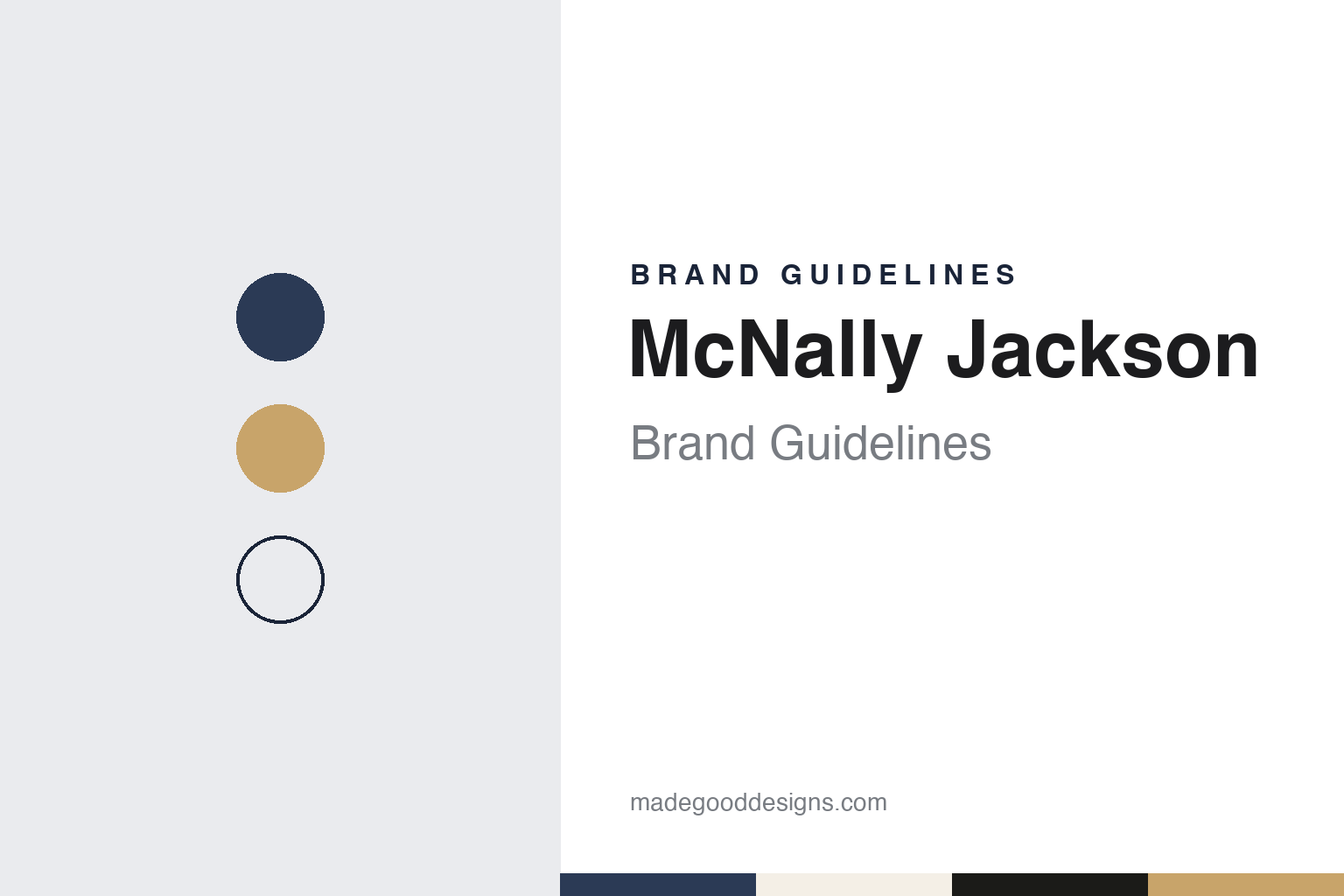
Two constants: a Prince Street navy, blond oak and paperback cream palette and a Bookish display serif register. Abstract homage — not a McNally Jackson asset or mark; no logo, bag design, sign or shopfront image is reproduced.
A Canadian family name in Nolita
Sarah McNally, her parents’ Winnipeg chain and a 2004 opening on Prince Street.
McNally Jackson began life under another family’s name. English Wikipedia says the New York bookseller has been owned and operated since 2004 by Sarah McNally, whose parents, Paul and Holly McNally, founded the Canadian bookstore chain McNally Robinson in 1981. Sarah McNally grew up in Winnipeg, and Wikipedia says she studied philosophy at McGill University, moved to New York in 1999 and worked as an editor at Basic Books before opening a shop of her own. New York magazine, in a long profile published on its Vulture site on 29 January 2025, explained the older name: McNally Robinson joined Holly McNally’s surname with that of her first business partner. The same profile says Sarah began working in the back room of her parents’ shop as a teenager, receiving deliveries, and that she later took a junior editing job at Basic Books but disliked being kept behind a desk.
The New York shop opened as a branch of the family name. Shelf Awareness, in its issue of 3 April 2023, said Sarah McNally opened the Prince Street store in 2004 as McNally Robinson, part of the Canadian chain that her parents founded. Wikipedia places it on Prince Street in Nolita and says it was paid for with money from her grandfather. New York magazine described how she chose the spot: she consulted public land-use records to find a part of Manhattan that lacked a bookshop, and settled on Prince Street.
The early store was small and run on a shoestring. New York magazine reported that the first staff were friends and acquaintances, many of them writers and people who had left publishing, and that early employees did a bit of everything. In December 2024 the company marked its 20th anniversary, the magazine noted, by which time the single Prince Street shop had become five.
Colour
A 2008 renaming, a son’s surname and shelves packed tight.
The current name dates from 2008. Shelf Awareness wrote in 2023 that in that year the store became independent and was renamed McNally Jackson. Wikipedia dates the change to August 2008 and says the name refers to Sarah McNally’s newborn son with Christopher Jackson, a senior editor in publishing who never held a formal position at the store. New York magazine put it the same way, writing that the shop was rechristened less after Jackson himself, as he has said, than after their son, born in 2008. Wikipedia adds that McNally’s parents sold the McNally Robinson chain to longtime employees in 2012, while McNally Jackson stayed under Sarah McNally’s ownership. Sarah McNally has owned McNally Jackson since its opening in 2004.
The identity is carried more by the rooms than by a mark. New York magazine reported that as more stores were built, McNally insisted on seating, including chaises longues for customers to stretch out on, and on book groups, dozens of them. Against the usual retail advice she filled the stores with books, putting shelf space ahead of display space, and the magazine said bookseller training specifies that books should sit on the shelves loosely enough to be removed as easily as “the petal of a rose”. It described the look as towering but orderly bookcases, and the in-store display signs as chatty and literary, giving the example “Books That Captured Their Zeitgeist Like a Fly in Amber”.
The shopping bag became part of the picture too. The same profile compared a McNally bag with a Strand tote as a sign of the wearer’s reading habits, and said the McNally bag grew more common on the city’s streets over the years. It also noted the blond wood and chatty displays that it associated with McNally Jackson interiors. Wikipedia says McNally does the frontlist buying herself and gives weight to backlist titles, international authors and books from small presses.
Typography
One owner, a family name and a renaming in 2008.
Some bookshops take their identity from the building they occupy before any sign goes up. A shop in a former theatre, warehouse, garage or bank inherits ceiling heights, columns, stairs and windows it did not design, and those features often end up doing the work a logo might do elsewhere. Exposed trusses, a balcony or an old frontage become the backdrop to every photograph and every event, and they are hard to copy in a branch somewhere else. When such a shop moves, the question becomes what to carry with it: the shelving, the fixtures, a sign, or only the name. Keeping one physical element from the old rooms can give regular customers a thread of continuity in an unfamiliar space.
Inside, a great deal of the identity is handwritten. Staff recommendation cards clipped to shelves give each bookseller a small public voice, and their handwriting, paper stock and length vary from card to card in a way a printed label does not. Events and readings add a calendar to the identity: posters, a printed or emailed programme, a chair layout and a microphone stand become recurring images of the shop. Gift wrapping at the till, loyalty cards stamped or punched by hand and a store newsletter written by staff all carry the name into homes. When a larger company buys an independent shop and keeps its name, these local habits are often what keeps the shop recognisable to the people who used it before, so for designers the task is to document them as carefully as the mark itself.
Aa
Bookish display serif — a nod to the printed covers and shelf signs of a city bookshop. (Specimen set in DM Serif Display, a serif STAND-IN; NOT the McNally Jackson logo, bag or any McNally Jackson lettering.)
McNally Jackson
Goods for the Study, new boroughs and a move six blocks west.
Expansion came slowly after the renaming. New York magazine reported that in 2013 McNally opened Goods for the Study, a stand-alone stationery and writing-supplies shop around the corner from the Prince Street store, followed by a second Goods for the Study on West 8th Street in 2016. Wikipedia says a second bookstore opened in Williamsburg, Brooklyn, in January 2018, in the Lewis Steel Building. The Tribeca Citizen reported on 5 September 2019 that McNally Jackson was open at the Seaport, with a children’s section still being finished. A store at City Point in Downtown Brooklyn followed; New York magazine dates its opening to 2020, while Wikipedia gives March 2022. Wikipedia says a fifth bookstore opened at Rockefeller Center in 2023, in the former Time & Life Building.
The original store then moved. Time Out New York reported in March 2023 that McNally Jackson was leaving its Prince Street home of 19 years in Nolita for a new address a few blocks along the same street, near West Broadway, and quoted Sarah McNally saying the new store was “larger and sturdier”. Shelf Awareness reported on 3 April 2023 that the flagship had completed the move six blocks west and was open, quoting the shop’s email to customers: “Farewell Nolita! Hello SoHo!” The same report listed a shop at LaGuardia Airport run with Hudson Group, two Goods for the Study stores and a McNally Jackson at the Shed.
Publishing extended the name. Lit Hub reported on 26 August 2021 that McNally had announced McNally Editions, a paperback reprint series “devoted to hidden gems”, with covers designed by Peter Mendelsund; New York magazine described the imprint’s launch as one of McNally’s pandemic projects.
For a design guide, McNally Jackson shows how a bookshop can carry a family name, rename itself for a child and build its identity from seating, tightly packed shelves, written display signs and a bag people carry around the city. Compare Strand Book Store, the Manhattan shop whose tote the bag is measured against, and Barnes & Noble, the national chain with its own long New York history. For this guide we use Prince Street navy, blond oak and paperback cream with a serif, an unofficial interpretation; no product or logo is reproduced.
Explore & save
Keep McNally Jackson’s identity on hand — save it to a board in the Made Good inspiration library.
McNally Jackson identity set
Pin the McNally Jackson Prince Street navy, blond oak and paperback cream palette and the Bookish display serif register to your own board.