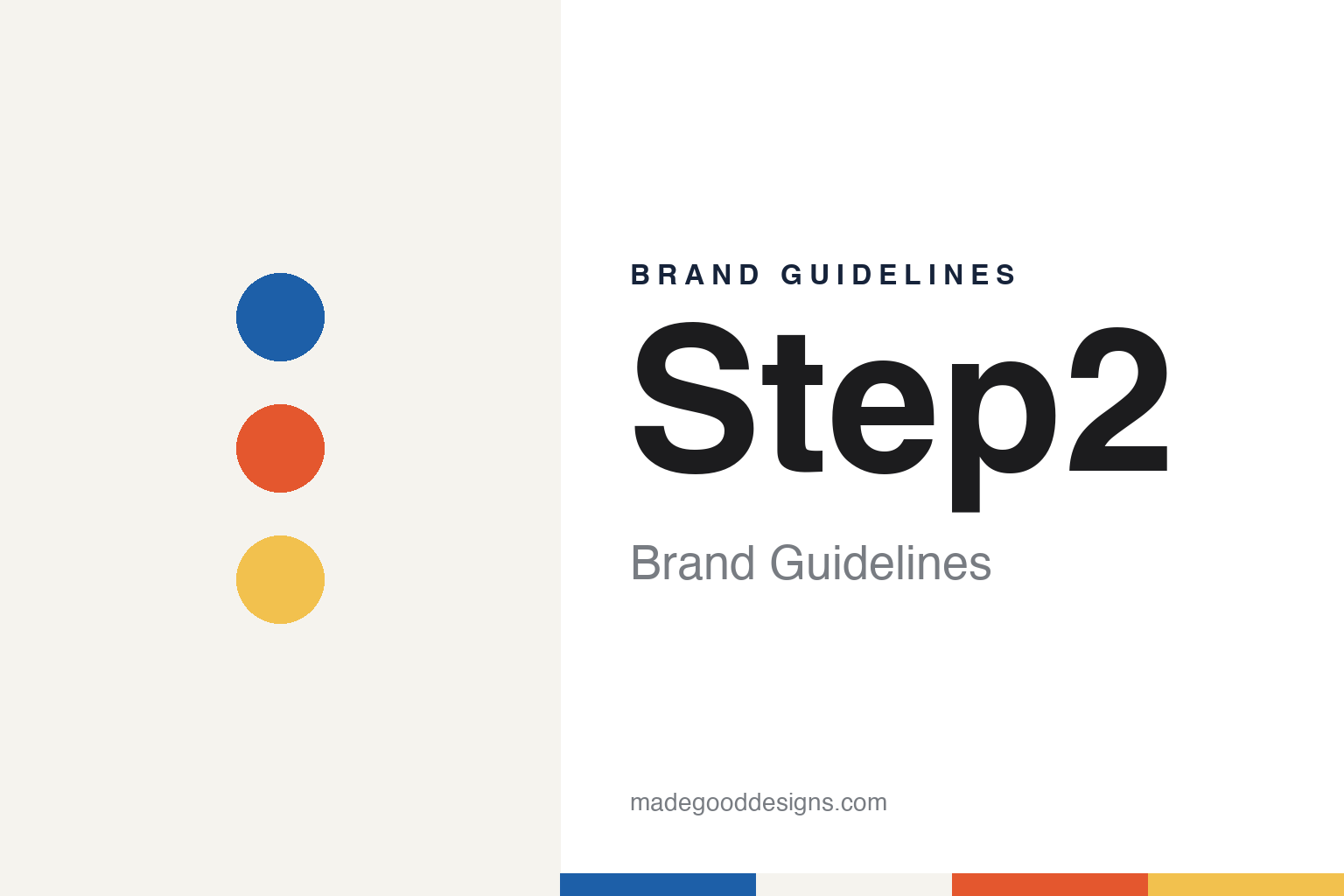
Step2 Brand Guidelines
A second toy company from the man behind the first.
Aa
Two constants: a play blue, roof red and sun yellow palette and a rounded sans register. Abstract homage — not a Step2 product or mark; no toy, box or logo is reproduced.
Leaving Little Tikes, starting again
A toy maker’s second company, a few miles from his first.
Step2 is the second big toy business built by Tom Murdough. The Alliance for American Manufacturing, in a profile by Jeffrey Bonior published on 10 November 2022, says Murdough launched Little Tikes in 1969 in Solon, Ohio, and sold that company to Rubbermaid in 1984.
He did not stay for good. A 2002 profile in SBN, the Ohio business magazine published by Smart Business Network, says Murdough left Little Tikes in 1989 “in frustration.” Two years later he was back in the toy trade with a company of his own. Both SBN (22 July 2002) and the Alliance for American Manufacturing (2022) date the founding of Step2 to 1991, and the Alliance says the new company had its operations in Streetsboro, Ohio, in the same corner of north-east Ohio as his first business.
The process behind both companies is the same. The Alliance says Murdough first came across rotational moulding while working at Wilson Sporting Goods, and that he was drawn to it because the machines cost considerably less than injection-moulding machines. In rotational moulding, plastic powder is heated inside a closed mould that turns slowly on two axes, coating the walls and leaving a hollow, seamless part. It suits large, thick-walled shapes such as playhouses, slides and ride-on bodies, the kind of product Step2 has long made.
By 2002 the company had settled on its territory. In a profile headlined “Toe-to-toe with Tom Murdough,” which set Step2 against its founder’s former company, SBN described big outdoor toys as Step2’s historical focus, and quoted Murdough’s simple rule for the business: “Let the product be king.”
Colour
Big outdoor toys, then smaller things for the house.
Step2’s range began large. SBN wrote in July 2002 that the company’s historical focus had been big outdoor toys, the moulded plastic play equipment that sits in a garden or on a patio and is meant to be climbed on, sat in or pushed around.
The range then widened. According to the same SBN profile, Step2 had introduced a line of smaller, lower-priced products about two years earlier, and Murdough said they had been “tremendously successful.” The magazine described one of them, a building-block table with storage underneath, and Murdough also discussed a product called the Wagon for Two.
Later descriptions of the business follow the same lines. When an affiliate of Aterian Investment Partners bought Step2 in 2016, aNb Media reported that the combined company it formed with Backyard Discovery covered swing sets, playhouses, activity tables, play kitchens, ride-ons and outdoor home and garden products. Step2’s own website groups its lines into toys and a separate home and patio range.
Typography
Toys and design.
Outdoor play and ride-on toys sit in a part of the toy trade where the product is meant to leave the house: things that are thrown, flown, launched, pushed, pedalled or ridden in gardens, parks, driveways and beaches. Many of the names in this field began with a single object and built a brand around it, while others grew into wider ranges of moulded, sewn or wooden goods sold through toy shops, garden centres and general retailers.
Because these toys are used outdoors and seen from a distance, their identities tend to lean on bright, saturated colour and simple, bold names that read on a box, a deck or a canopy. Behind the names, ownership can change over time, and design, sales and manufacturing are often in different places, so the country on the box and the country of production may not be the same.
Each guide separates what independent, dated sources record from what the company says about itself — who started it, who owns it now, where its products are made and how its look has developed — and marks plainly what rests only on the company’s own word.
Aa
A rounded, heavy sans — soft corners like a moulded toy. (Specimen set in Nunito, a sans STAND-IN; NOT the Step2 logo.)
Step2
From founder to private equity, and a merger with a playset maker.
The founder sold the company in the 2000s. The Alliance for American Manufacturing says Murdough sold Step2 in 2007 to a private equity firm. The business stayed in Streetsboro.
A second change of owner followed in 2016. aNb Media reported on 19 October 2016 that an affiliate of Aterian Investment Partners had acquired Step2 and would combine it with Backyard Discovery, a playset maker Aterian had bought in August 2015. Michael Fieldstone, a principal at Aterian, said the firm was “excited to acquire Step2” and that Aterian would back the team on “safety, innovation, quality, and durability” in its products and services. Step2’s website describes the two companies as “now one big family,” and gives the same dates for the two acquisitions. Mergermarket, writing on 10 May 2024, described Backyard Discovery as based in Pittsburg, Kansas, and Step2 as based in Streetsboro, Ohio, and reported that Aterian had begun a sale process for Backyard Discovery.
The manufacturing base has also shifted. In a news release dated 12 May 2022, Myers Industries of Akron, Ohio, announced that it was buying the Decatur, Georgia rotational-moulding manufacturing assets of Step2 Co, LLC, without disclosing the price. Myers said the Georgia facility would add production capacity for customers in the southern United States, and that its Material Handling segment uses rotational moulding to make products for outdoor recreation, construction, vehicle and industrial markets. Its chief executive, Mike McGaugh, called the Decatur site “another milestone in the execution of our long-term strategy.” The Mergermarket report of 2024 describes the same sale of Step2’s Decatur assets. The release did not say what happened to Step2’s toy production, and the company’s headquarters remained in Streetsboro.
Murdough himself went back to the process he started with. The Alliance says he came out of retirement in 2016 to launch Simplay3 in Streetsboro, a company whose toys are made from polyethylene resin by rotational moulding, which puts three of north-east Ohio’s moulded-toy names, Little Tikes, Step2 and Simplay3, back to a single founder.
For a design guide, Step2 shows how a manufacturing process can define a brand’s look: big hollow shapes, soft corners and blocks of solid colour that read as the company before any logo does. Compare Little Tikes, Murdough’s first company, and Radio Flyer, another American name built on things children ride and pull. For this guide we use play blue, roof red and sun yellow with a sans, an unofficial interpretation; no product or logo is reproduced.
Explore & save
Keep Step2’s identity on hand — save it to a board in the Made Good inspiration library.
Step2 identity set
Pin the Step2 play blue, roof red & sun yellow palette and the rounded sans register to your own board.


