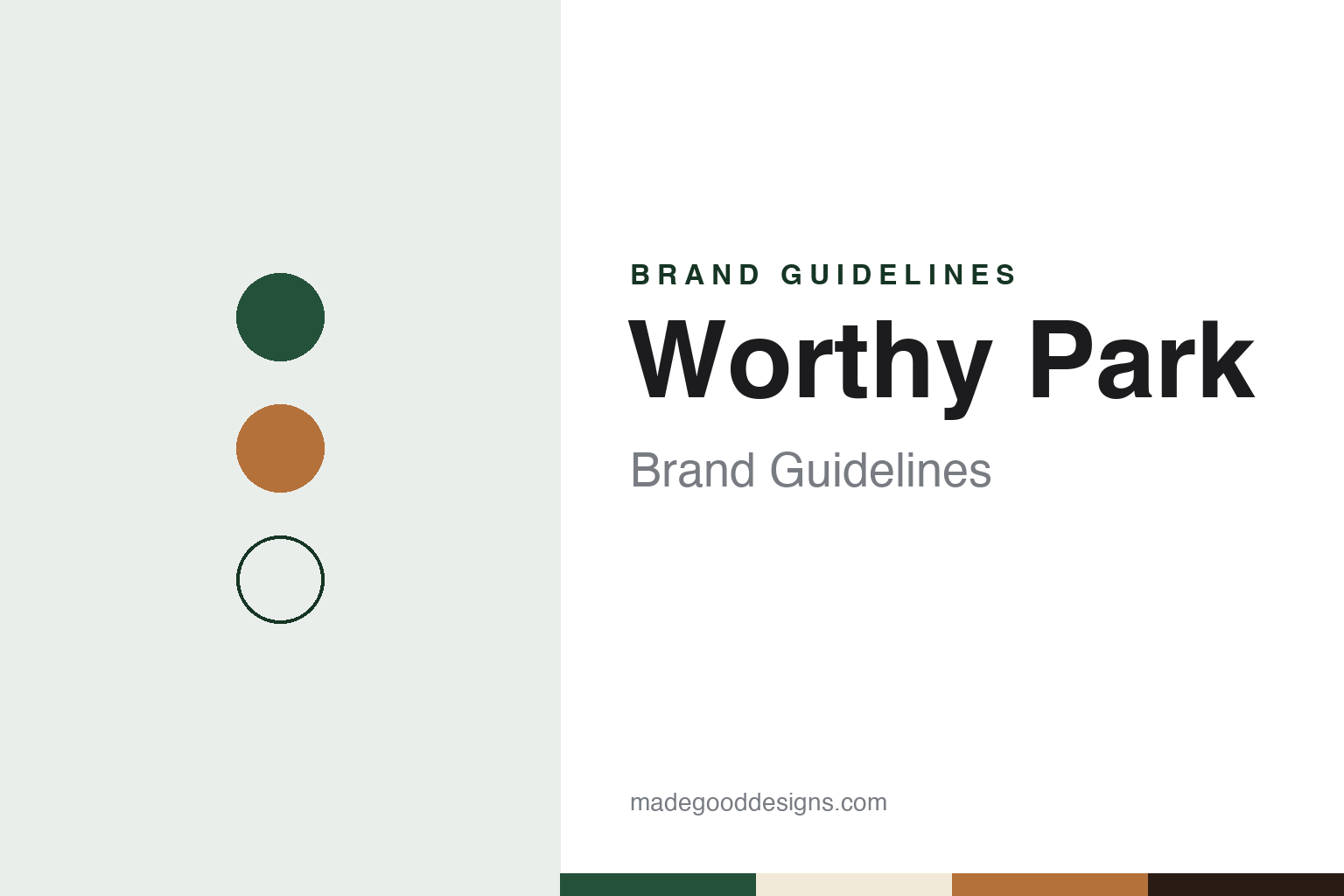
Worthy Park Brand Guidelines
The Lluidas Vale estate that returned to rum in 2007.
Aa
Two constants: a valley green, pot-still copper and raw sugar cream palette and an estate ledger serif register. Abstract homage — not a Worthy Park product or mark; no label, logo or bottle is reproduced.
A valley estate with a long ledger
A 1670 patent, an early rum record and three centuries of sugar.
Worthy Park is a sugar estate in Lluidas Vale, a valley in the parish of St Catherine in central Jamaica. The company says the estate was first patented in 1670 by Francis Price, a lieutenant in the English army who received the land for his service under Cromwell, and that the original holding covered 840 acres. A sign on the estate still gives the date as “Patented November 28th, 1670,” the rum writer Matt Pietrek reported on Cocktail Wonk in April 2016.
The estate’s own records are unusually complete. They were the basis of A Jamaican Plantation: The History of Worthy Park 1670–1970 by the historians Michael Craton and James Walvin, published in 1970 by W. H. Allen in London and by the University of Toronto Press. The publisher described it as the first complete history of a West Indian sugar estate, written from archives that span the estate’s three hundred years, and the Business Archives Council’s record of the book notes that it centres on sugar production through the end of the nineteenth century.
Rum came early. Worthy Park says its first record of rum production dates from 1741, in a ledger for the estate of the late Charles Price that lists sugar and 3,000 gallons of rum; Cocktail Wonk also reported in 2016 that records show the estate distilling as far back as 1741. The company says an aqueduct from Murmuring Brook to the estate was authorised by an Act of the Jamaican Assembly in 1752, under Speaker Charles Price, and that it still runs today.
The Price family era ended in the nineteenth century. Worthy Park says the estate was sold in 1863 to the Earl of Shrewsbury and Talbot, and in 1899 to John Vassal Calder, who added cattle, cocoa and bananas to the estate’s business.
Colour
The Clarkes, a long pause and a distillery built from scratch.
The family that runs Worthy Park today arrived in 1918. The company says Frederick L. Clarke of Westmoreland bought the estate that year, and that his three sons, Clement, Owen and George, carried it on after him; Cocktail Wonk also dates the Clarke purchase to 1918. The estate kept its sugar factory, and its importer in the United States, Skurnik, says the cane is still milled there and the molasses piped about a kilometre to the distillery without leaving the property.
Rum, however, stopped for more than four decades. Worthy Park says production ceased in the early 1960s under an agreement with the Spirits Pool Association of Jamaica, reached in 1962 after a post-war oversupply of rum; Cocktail Wonk gives 1960 as the year the original distillery stopped. The company says the family decided in 2004 to return to rum.
The driving force, the company says, was Gordon Clarke, Fred Clarke’s great-grandson and now a co-managing director. Rather than revive the old, obsolete distillery, he built a new one: Cocktail Wonk reported that construction began in 2005 around a single copper pot still made by Forsyths in Scotland, which was assembled there, taken apart and shipped to Jamaica. Worthy Park describes the arrangement as the classic pot still with twin retorts. The same report described fermentation in wooden vessels, with a slower, higher-ester style left to ferment for two to three weeks.
Worthy Park says it began shipping rum again in 2007, after a 45-year break. The first release was an unaged overproof white rum called Rum-Bar, Cocktail Wonk reported; the company says the name pays tribute to the traditional rum bars found in communities across Jamaica. A gold expression followed, and in 2017, the company says, it launched Worthy Park Single Estate Reserve, a blend of its pot-still rums aged between six and ten years. Worthy Park Select and a release called 109 followed in 2021, and a rum cream in 2022, the company says.
Typography
Design and documentation.
The seven brands in this group are all Caribbean rum houses: Neisson, Saint James, Trois-Rivières, La Favorite and Depaz from Martinique, and Hampden Estate and Worthy Park from Jamaica. Rum houses in general sit at many different points in the trade, from estates still run by the families that named them to labels that now belong to much larger drinks groups, and a single name can cover a white rum, a long-aged bottling and rum sold in bulk to other bottlers.
The two islands also make rum under different rules. Rum labelled with the French appellation Rhum de la Martinique must be a rhum agricole, made from the fermented juice of the sugar cane rather than from molasses; the appellation was first recognised by a decree of 5 November 1996, and its current specification, published by France’s INAO, names continuous column distillation as the traditional method and sets a distilling season that runs from January to early September. Jamaica’s rum geographical indication, enacted in 2016, allows both pot and column stills, requires pot stills to be made of copper and limits fermentation and distillation to defined areas of the island, Cocktail Wonk reported in its 2018 account of the full text.
A rum brand’s identity is usually carried less by a single bottle than by a label, a name and the place it promises, because the company behind the name may have changed hands, moved its distilling or grown far beyond the estate where it started. Each guide separates what independent sources record from what the company says about itself — its founding story, its owners over time, where its rum is actually distilled and aged, and how its labels have changed — and marks plainly what rests only on the company’s own word.
Aa
An estate ledger serif for a sugar estate patented in 1670. (Specimen set in Playfair Display, a serif STAND-IN; NOT the Worthy Park logo.)
Worthy Park
Two names on one estate: Rum-Bar and Worthy Park.
Worthy Park sells under two names. Rum-Bar carries the white overproof and a gold rum, and the company also lists Rum-Bar vodkas; the Worthy Park name sits on the aged estate rums. In 2016 Cocktail Wonk reported that most of the distillery’s sales were to the Jamaican market and that an aged rum then in preparation would likely appear under the Worthy Park name rather than Rum-Bar, the split the company’s range now shows. The company groups its products as Estate Originals, Estate Editions, Rum-Bar Originals and Estate Liqueurs.
Worthy Park’s rum has also reached drinkers under other labels. Cocktail Wonk reported in 2016 that the distillery sold rum in bulk to independent bottlers and blenders, naming the Amsterdam blender E&A Scheer as a buyer. The estate itself remains the centre of the story the company tells: Worthy Park says it sits about 1,200 feet above sea level and covers more than 10,000 acres of cane fields and forest, with its own sugar mill feeding the distillery.
Ownership has been settled for more than a century. The Clarke family has owned Worthy Park since 1918, the company and its US importer both say, and Gordon Clarke is described by the company as the fourth generation of the family to run it.
For a design guide, Worthy Park shows how a single estate with a 1670 patent and a long written record can carry two names at once — a street-level brand named for Jamaica’s rum bars and an estate name for its aged rums. Compare Appleton Estate, another Jamaican rum estate, and Hampden Estate, a Jamaican pot-still distillery. For this guide we use valley green, pot-still copper and raw sugar cream with a classical serif, an unofficial interpretation; no product or logo is reproduced.
Explore & save
Keep Worthy Park’s identity on hand — save it to a board in the Made Good inspiration library.
Worthy Park identity set
Pin the Worthy Park valley green, pot-still copper and raw sugar cream palette and the estate ledger serif register to your own board.