madelinetosh Brand Guidelines
The Fort Worth hand-dyer that began as an Etsy shop.
Aa
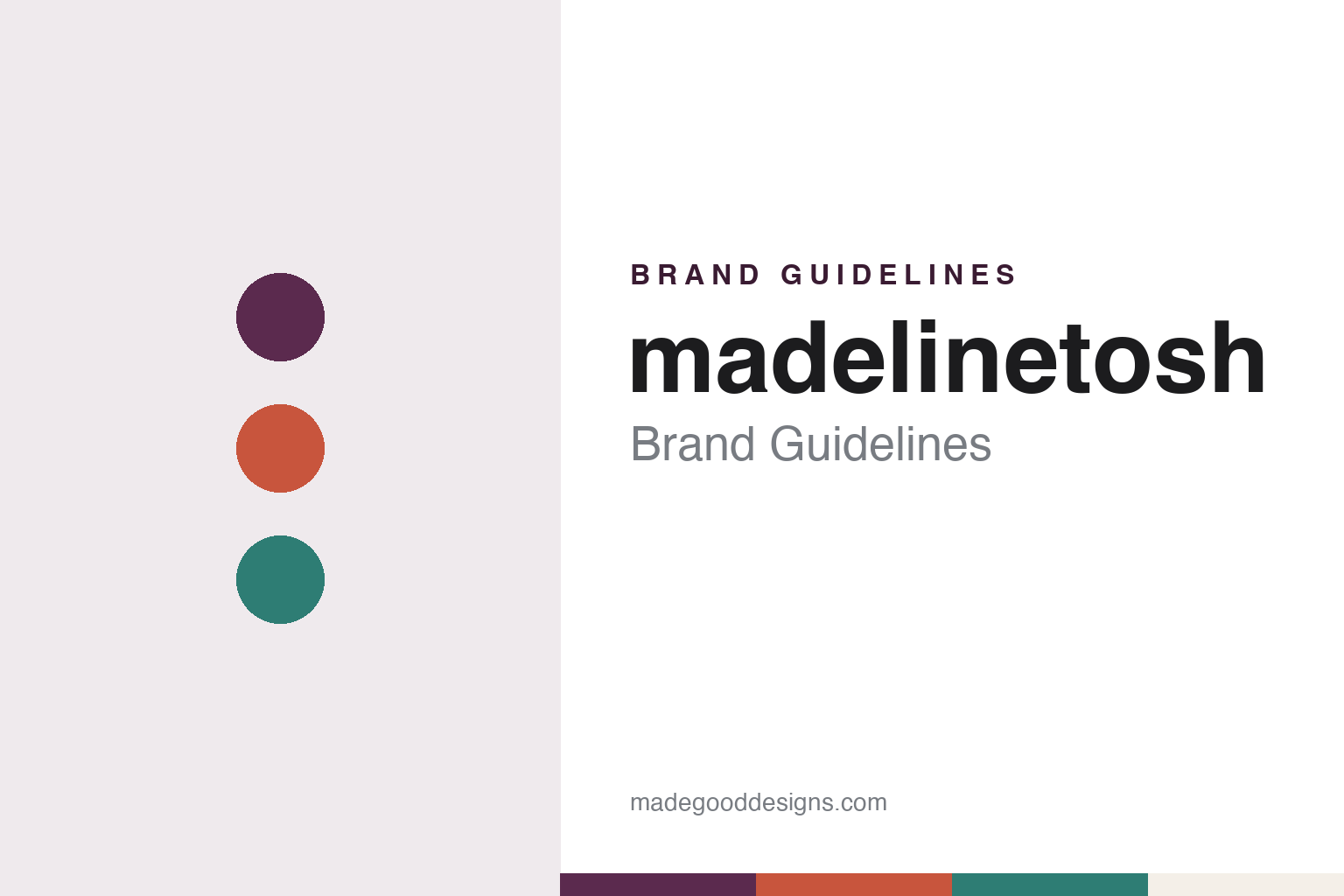
Two constants: a madelinetosh plum, terracotta and teal palette and a lower-case sans register. Abstract homage — not a madelinetosh product or mark; no skein, label or logo is reproduced.
An Etsy shop
Dyeing in a Fort Worth kitchen.
madelinetosh began in 2006 as an Etsy shop in Fort Worth, Texas, the company says. Its founders, named as Amy and John by the retailer that later bought the business, started by dyeing yarn at home: in 2019 Laura Zander of Jimmy Beans Wool praised their move from dyeing “in their kitchen” to becoming “the largest hand-dyer in the country,” Craft Industry Alliance reported. The brand is also known to knitters by its nickname, MadTosh, which the company uses itself.
The business moved quickly from a marketplace shop to a wholesale brand. By January 2009 its own website, preserved by the Internet Archive, described “the madelinetosh studio,” listed lines including tosh sock, tosh worsted and a pure silk lace yarn, ran a yarn club and a sweater club, offered patterns, and pointed knitters to a list of shops stocking the yarn. The yarn club went by the name “the magnolia society,” and the same site carried a 2008 copyright notice, two years after the Etsy start. Within about three years, in other words, the dyer was selling through independent yarn shops as well as directly to knitters.
That early site also set out the brand’s voice. Every word, from the name to the menu items, was written in lower case, and the company still styles its name that way, which we follow here. The yarn names carried a “tosh” prefix taken from the brand name, so each product line repeated the brand.
Colour
Colour as the product.
A hand-dyed yarn brand sells colour more than fibre. Hand-dyers buy undyed base yarns and dye them in small batches, so each colourway can vary from lot to lot, and the colourways themselves, with their names, become the catalogue. madelinetosh says it is known for “pioneering dye technique and original uses of color,” and calls itself one of the most dynamic and leading hand-dyed yarn companies in the world; we give those as its claims. When it was sold in 2019 the announcement, reported by Craft Industry Alliance, described it as the largest hand-dyed yarn producer in the United States, with more than 100 colourways.
Fort Worth has remained the base. The 2019 announcement said the headquarters and team would stay in Fort Worth, with operational and sales support from the buyer in Reno, Nevada. On its website the company still describes itself as a Fort Worth business that began on Etsy, and it lists the shops and yarn libraries where its colours can be seen in person. That matters for a hand-dyer: because a skein’s colour is hard to judge on a screen, the brand points knitters to stockists. Its “Hue of the Moment” programme, for example, debuts a new hand-dyed shade each month, and the company lists the local yarn shops that subscribe so that knitters can see each new colour in person.
The range has grown by addition as well as by dyeing. In December 2023 Craft Industry Alliance reported that the yarns of Shibui Knits, a Portland, Oregon, brand founded by Darcy Cameron in 2007 that had closed earlier that year, would move to madelinetosh, including the mohair-and-silk Silk Cloud and Pebble, with patterns and signature colours. The report said the rebranded yarns would be made at the same mill in Japan as before, which makes them a different kind of product from the brand’s hand-dyed lines. “Both Darcy and I wanted to see Shibui’s beautiful yarns live on in the market,” Laura Zander told the publication.
Typography
Design and documentation.
The seven brands in this group all sell yarn for hand knitting and crochet, and they come from seven countries: Bergère de France from France, Debbie Bliss from the United Kingdom, Rico Design from Germany, Hobbii from Denmark, Sandnes Garn from Norway, madelinetosh from the United States and We Are Knitters from Spain. What sets them apart is less the fibre than the route a ball or skein takes to reach a maker.
Yarn still travels by many roads. Some of it comes from old mills with long regional histories; some is sold under a designer’s own name; some sits in ranges stocked by craft shops and department stores; some is bought from online retailers that ship across borders; some arrives in a box as a kit, with needles and a pattern; and some is dyed in small batches by hand. Each guide shows which of those roads a brand travels, and how its name, colours and tone of voice change to suit it.
Each guide also separates what independent sources record from what the company says about itself — who founded it, who owns it now and where its yarn is made — and marks plainly what rests only on the company’s own word.
aa
A lower-case sans — for a brand that never capitalised its name. (Specimen set in DM Sans, a sans STAND-IN; NOT the madelinetosh logo.)
madelinetosh
From founders to a retailer.
The founders sold the business in 2019. On 30 October that year Craft Industry Alliance reported that Jimmy Beans Wool, a yarn retailer in Reno, Nevada, founded by Laura Zander, had agreed to buy madelinetosh, its largest acquisition after the purchases of Namaste in 2018 and della Q in 2019. Terms were not disclosed. Zander said the retailer had carried the yarn for years and hoped to “continue their legacy, while adding our customer service and marketing touch to the brand.” madelinetosh says it joined the Jimmy Beans Wool family in the autumn of 2019, led by Laura and Doug Zander, whom it calls longtime fans of the brand, and in 2023 Craft Industry Alliance described Laura Zander as leading madelinetosh.
Ownership moved again one level up. In April 2025 Craft Industry Alliance reported that Jimmy Beans Wool had itself been bought by Local Crafts, the needle-arts group owned by the private-equity firm Blue Point Capital Partners, whose brands include KnitPicks and Berroco, and that Laura Zander had joined it as chief brand officer. That report did not say how madelinetosh was treated in the deal, and we could not confirm its current ownership; its own website still describes it as part of the Jimmy Beans Wool family.
For a design guide, madelinetosh shows how a small dyer can build a brand from colour, product naming and a single typographic habit. Compare Hedgehog Fibres, another hand-dyer known for its colour, and Cascade Yarns, an American yarn company built around a wholesale range. For this guide we use plum, terracotta and teal with a sans, an unofficial interpretation; no product or logo is reproduced.
Explore & save
Keep madelinetosh’s identity on hand — save it to a board in the Made Good inspiration library.
madelinetosh identity set
Pin the madelinetosh plum, terracotta and teal palette and the lower-case sans register to your own board.