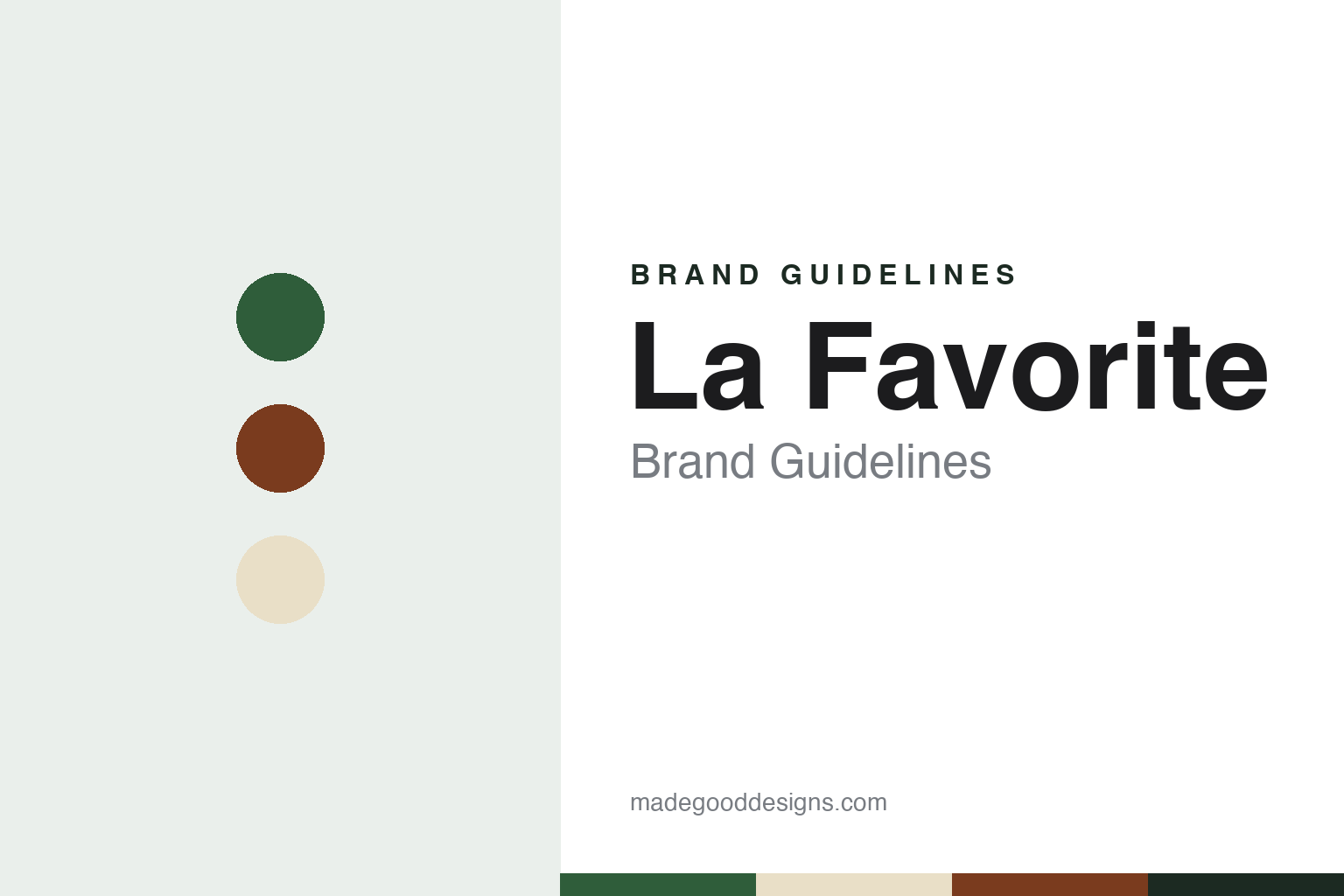
La Favorite Brand Guidelines
A family distillery near Fort-de-France, driven by steam.
Aa
Two constants: a cane green, mahogany and cream palette and a family serif register. Abstract homage — not a La Favorite product or mark; no label, logo or bottle is reproduced.
From sugar works to distillery
An 1842 estate bought by Henri Dormoy.
La Favorite is made at Le Lamentin, on the outskirts of Fort-de-France, the capital of Martinique. The company says the Habitation La Favorite was built in 1842 by a Charles Henri and began as a sugar works, like many estates on the island, and that traces of activity on the site may go back to 1770.
The family that runs it today arrived in 1905. The company says Henri Dormoy bought the estate that year intending to modernise it and turn it into a distillery, and a 2019 article by the Martinique radio station RCI describes him as the founder of the distillery in 1905. His son André Dormoy succeeded him in 1938, the company says, and in 2000 André’s six children took over, among them Paul Dormoy, the current manager; the company says they began a series of major investments in the business. Paul’s son Franck Dormoy, the fourth generation, joined in 2006; the company credits him with restructuring production and developing export markets and visits to the distillery.
The family has kept the business to itself. RCI reported in July 2019 that the La Favorite brand belongs to Paul Dormoy, the grandson of Henri Dormoy, at a time when several of the island’s rum houses were owned by groups based in mainland France or abroad. The company calls La Favorite a family-owned, independent distillery and one of the seven distilleries producing AOC Martinique rum. Its own motto for the house is a family line, “de père en fils depuis 1905” — from father to son since 1905.
Colour
A steam engine at the heart of the brand.
The brand’s best-known feature is a machine. The company says that in 1906, while turning the sugar works into a distillery, Henri Dormoy installed a steam engine built at Saint-Quentin, in the Aisne, by Henri Marriol, and that it is still in use. It calls the engine “the heart of the distillery” and part of the island’s industrial heritage, and describes the site as a living museum; in 2018, it says, the distillery added hydraulic mills to extract more juice from the cane, while keeping the engine at work.
The cane is part of the story too. La Favorite says it cuts its cane by hand during the dry season, from January to June, rather than by machine, so that whole stalks reach the distillery fresh. It argues that hand harvesting, now uncommon, also protects the soil and the roots, helps the cane grow back and keeps local people in work, and it says that other growers supply cane grown to the same standards. It names three varieties it grows — canne roseau, canne rouge and canne bleue — and some limited releases carry a variety in their name, such as Plaisance Canne Rouge and Plaisance Canne Bleue.
In the cellar, the company says, its cellar masters top up casks to replace evaporation, which it puts at about 8% a year in the tropical climate. It makes all three types allowed under the AOC Martinique rules — white, amber and aged rums — and sorts them into three ranges: Les Grands Classiques, its everyday rums such as L’Authentique and Cœur de Canne; Cuvées et Millésimes, limited vintage and single-plot releases; and La Collection, which it describes as the memory of the house’s great rums, including the long-aged La Flibuste.
Typography
Design and documentation.
The seven brands in this group are all Caribbean rum houses: Neisson, Saint James, Trois-Rivières, La Favorite and Depaz from Martinique, and Hampden Estate and Worthy Park from Jamaica. Rum houses in general sit at many different points in the trade, from estates still run by the families that named them to labels that now belong to much larger drinks groups, and a single name can cover a white rum, a long-aged bottling and rum sold in bulk to other bottlers.
The two islands also make rum under different rules. Rum labelled with the French appellation Rhum de la Martinique must be a rhum agricole, made from the fermented juice of the sugar cane rather than from molasses; the appellation was first recognised by a decree of 5 November 1996, and its current specification, published by France’s INAO, names continuous column distillation as the traditional method and sets a distilling season that runs from January to early September. Jamaica’s rum geographical indication, enacted in 2016, allows both pot and column stills, requires pot stills to be made of copper and limits fermentation and distillation to defined areas of the island, Cocktail Wonk reported in its 2018 account of the full text.
A rum brand’s identity is usually carried less by a single bottle than by a label, a name and the place it promises, because the company behind the name may have changed hands, moved its distilling or grown far beyond the estate where it started. Each guide separates what independent sources record from what the company says about itself — its founding story, its owners over time, where its rum is actually distilled and aged, and how its labels have changed — and marks plainly what rests only on the company’s own word.
Aa
A family serif for a distillery run by four generations of Dormoys. (Specimen set in Fraunces, a serif STAND-IN; NOT the La Favorite logo.)
La Favorite
Recognition, an appellation and two languages.
One of the family’s rums has been singled out by the trade press. In December 2017 the Caribbean Journal named La Favorite Privilège 1999 Cuvée André Dormoy its Rhum Agricole of the Year in its 2017 rum awards, describing it as a blend of 15 casks aged for at least 17 years in La Favorite’s cellars outside Fort-de-France. The cuvée carries the name of André Dormoy, who led the distillery from 1938, the company says.
The appellation frames everything the distillery sells. French Wikipedia records that a decree of 5 November 1996 created the controlled appellation for Martinique rhum agricole, renamed Rhum de la Martinique in 2015, and the company notes that André Dormoy lived to see it granted. French Wikipedia also lists La Favorite at Le Lamentin among the island’s AOC producers and says the family took over a second brand, Survi, which is now produced at La Favorite.
The brand speaks in two languages. Its current website, which credits the studio Les Grands Discrets, runs much of its history and distillery text in French and again in Martinican Creole. The company also says its development projects have received European Union regional funds through the Collectivité Territoriale de Martinique. The distillery is open to visitors, and the company says the same small team that makes the rum welcomes them.
For a design guide, La Favorite shows how a single working machine and a family name can carry a brand without outside owners. Compare Neisson, another family-run Martinique distillery, and Rhum Clément, a Martinique house now part of a larger group. For this guide we use cane green, mahogany and cream with a serif, an unofficial interpretation; no product or logo is reproduced.
Explore & save
Keep La Favorite’s identity on hand — save it to a board in the Made Good inspiration library.
La Favorite identity set
Pin the La Favorite cane green, mahogany and cream palette and the family serif register to your own board.


