Averna Brand Guidelines
The Caltanissetta amaro and its royal label.
Aa
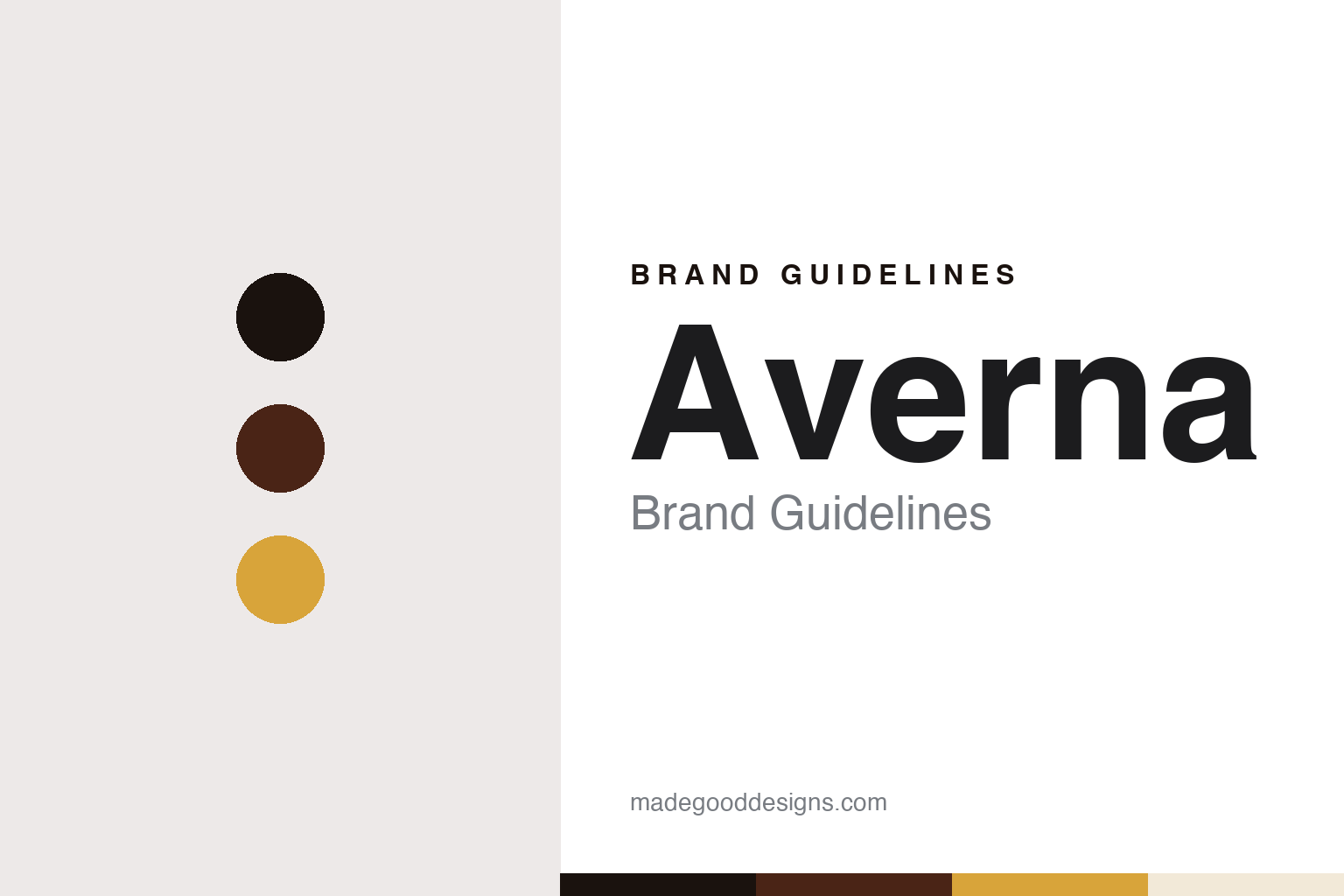
Two constants: an Averna brown, gold and ivory palette and a classical serif register. Abstract homage — not an Averna product or mark; no bottle, label or logo is reproduced.
Villa Xiboli
A textile merchant, a monastery recipe and a family estate.
Averna comes from Caltanissetta, in the interior of Sicily. The company tells its origin as a gift: it says the recipe was created early in the nineteenth century by the monks of the Abbey of Santo Spirito in Caltanissetta, and that in 1868 a monk, Frà Girolamo, gave it to Salvatore Averna, a textile merchant, in thanks for his service to the town. English and Italian Wikipedia describe Salvatore as one of the most active figures in local life, a justice of the peace and a benefactor of the abbey. Salvatore first made the liqueur for guests at Villa Xiboli, the family’s summer residence, the company says. English and Italian Wikipedia date the gift to 1859 and the start of production to 1868; Italian Wikipedia’s history of the group says Salvatore and his sons turned the Xiboli estate, a few kilometres from the town, into a small works to make it.
Salvatore’s son Francesco Averna took the drink beyond the family table, showing it at fairs in Italy and abroad. The company says that in 1895, during a visit by King Umberto I, Francesco received a gold medal bearing the emblem of the House of Savoy; Italian Wikipedia describes a gold pin and an appointment as supplier to the royal household. In 1912, the company says, King Victor Emmanuel III granted Averna the right to print “Brevetto della Real Casa” on its bottle.
Those honours reached the pack. English and Italian Wikipedia both say Francesco redesigned the original label to carry the certificates and prizes the amaro had collected.
Colour
Anna Maria, the third generation and Carosello.
After Francesco, his wife Anna Maria Averna took the reins. The company says she ran the business between the wars and, with her sons, expanded the brand as far as the American market; Italian Wikipedia calls her a rare example of a woman running a business in early twentieth-century Sicily. The third generation, Francesco’s sons Paolo, Emilio and Michele, kept production going through both world wars, Italian Wikipedia says.
In 1958 the business became a joint-stock company, Fratelli Averna S.p.A., and a new plant followed a few years later. Averna reached television in 1966, when it first appeared in Carosello, the evening advertising slot, according to Italian Wikipedia, which also records the long-running slogan “Averna, il gusto pieno della vita.” In 1978, the same source says, Averna overtook its Milan rival Ramazzotti to lead the Italian amaro market.
Under the fourth generation, led from the late 1970s by Francesco Rosario Averna, the family built a group. Italian Wikipedia lists the purchase of the Friuli winery Villa Frattina in 1989 and of the Piedmont confectioner Pernigotti, of Novi Ligure, in 1995; a partnership from 2005 with Casoni Liquori of Finale Emilia, maker of Amaro Braulio, in which the group took a majority the next year; and the sale of Pernigotti to Turkey’s Toksöz group in July 2013. In those years, the same source says, the infusion was still made in Sicily but the amaro was bottled in Emilia.
Typography
Amaro and the Italian bitter tradition.
The seven brands in this group are all Italian amaro and liqueur names: Fernet-Branca, Averna, Ramazzotti, Montenegro, Cynar, Strega and Galliano. Italian amaro and liqueur brands in general sit at many different points in the trade, from family firms that still carry a founder’s name to names that now belong to much larger drinks groups, and a single brand can be sold everywhere from a neighbourhood bar to a supermarket shelf.
A drinks brand’s identity is usually carried less by a single product than by a bottle, a label, a name and the ritual it promises, because the company behind the name may have changed hands, moved its production or grown far beyond the town where it started. That makes the questions behind each name worth asking plainly: who started it, who owns it now, and where its drinks are actually made and bottled.
Each guide separates what independent sources record from what the company says about itself — its founding story, its owners over time, where its drinks are made and how its bottles and labels have changed — and marks plainly what rests only on the company’s own word.
Aa
A classical serif with the formality of an old royal-warrant label. (Specimen set in Cormorant Garamond, a serif STAND-IN; NOT the Averna logo or lettering.)
Averna
From family firm to Campari to Disaronno.
The family sold in 2014. On 15 April 2014 Campari agreed to buy 100% of Fratelli Averna, which Reuters described as Italy’s second best-selling bitter; the deal brought Campari Amaro Braulio and the Frattina grappas as well, English Wikipedia says. Under Campari, Averna sat beside Cynar, another Italian amaro in its portfolio.
Campari’s ownership lasted about twelve years. On 18 December 2025 it agreed to sell the Averna amaro and the Sardinian mirto Zedda Piras to Illva Saronno Holding, the Saronno group behind Disaronno and the Sicilian wines Florio and Duca di Salaparuta, the news agency ANSA reported. A new company was to take over the brands, stock, some staff and the production plants — Caltanissetta for Averna and Alghero for Zedda Piras — while, under a transitional agreement, blending and bottling would take place for a time at Campari’s plant in Canale, in Piedmont, and Campari would keep selling the brands in some markets, including Germany, Austria and Switzerland, until they moved to the buyer’s own sales network. Il Sole 24 Ore reported in June 2026 that the Disaronno group had completed the purchase, through a newco called Meridia, and that the eleven employees at the two plants had all moved across. The group’s chief executive, Marco Ferrari, said the deal strengthened its position in the United States, Germany and Italy.
Today the brand’s website describes Averna as “authentically Sicilian since 1868” and speaks of a secret recipe with notes of citrus, Mediterranean herbs and liquorice; its legal footer now names Meridia. The domain averna.com belongs to an unrelated engineering company; the amaro’s site is amaroaverna.com. The lettering is covered in our guide What Font Does Averna Use?
For a design guide, Averna shows how a label can become a record of a brand’s history, with royal honours and medals worn on the bottle. Compare Cynar, its former stablemate at Campari, and Amaro Montenegro, another family-founded Italian amaro. For this guide we use a dark caramel, brown and a Sicilian gold with a serif, an unofficial interpretation; no product or logo is reproduced.
Explore & save
Keep Averna’s identity on hand — save it to a board in the Made Good inspiration library.
Averna identity set
Pin the Averna brown, gold and ivory palette and the classical serif register to your own board.