Chess King Brand Guidelines
Melville’s young men’s mall chain, from Dedham to Merry-Go-Round.
Aa
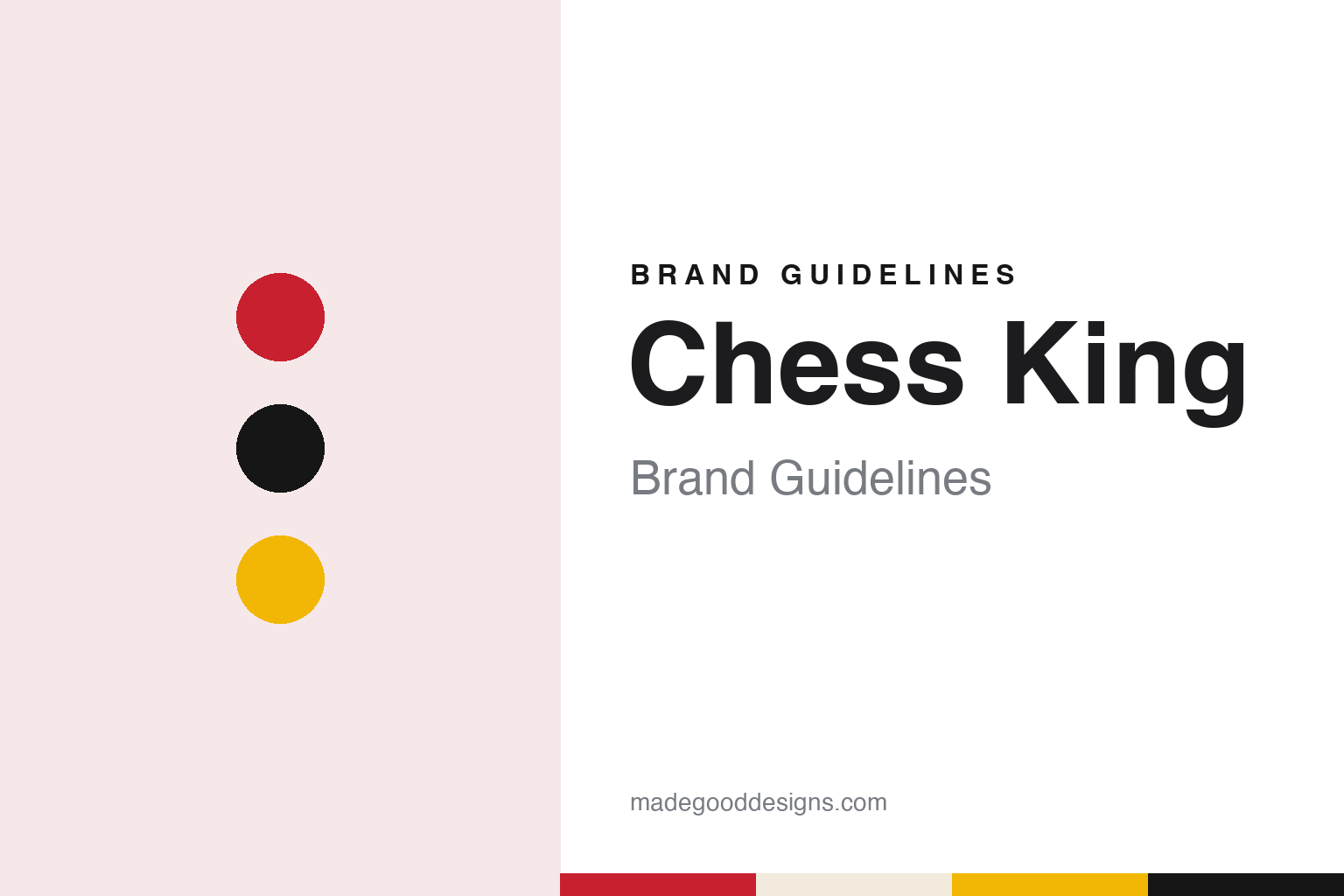
Two constants: a king red, board black and racing yellow palette and a heavy shopfront sans register. Abstract homage — not a Chess King sign, bag or mark; no logo or storefront is reproduced.
Dedham Mall
A shoe company’s salesmen, a mall in Massachusetts and a bold shop.
Chess King began inside an existing retail group. It was created by the Melville Corporation, whose shoe business ran the Thom McAn stores. English Wikipedia, citing a 1978 Los Angeles Times article titled “How It All Started at Chess King”, says that in 1967 travelling salespeople from the Thom McAn business saw a “wide open market” for young men’s clothing, which led to the idea of a young men’s clothing and shoe store, and that market research reportedly found that chess and auto racing were popular interests of young men.
The first branch opened in March 1968 at the Dedham Mall in Dedham, Massachusetts, just outside Boston, according to a 1970 New York Times report cited by Wikipedia. The same Times article, published on 4 August 1970 under the headline “Catering to Affluent Youth Market Found Profitable”, described the format as “teen-male apparel dress shops whose stores are highly identifiable, with bold coloring and designs aimed at appealing to the 12-to-20 male market.”
From Dedham the chain spread through the shopping malls of the 1970s and 1980s. A 1984 report in the trade paper Daily News Record, quoted on Wikipedia, described Marshalls as a division of Melville, which also owned Chess King, an operator of young men’s specialty stores. In 1993 the New York Times listed Melville’s other businesses as including Kay-Bee Toys, Marshalls and Linens and Things, among several specialty store chains.
Wikipedia says the company also tried three spin-off formats in the late 1980s and early 1990s: FreeFall, which carried designer labels for men and women; The B Club, which sold activewear; and Garage, which it describes as having a 1950s-inspired decor with a Nash Metropolitan car in most locations. The 1994 International Directory of Company Histories entry on Merry-Go-Round Enterprises refers to the business it bought as the Chess King/Garage men’s clothing stores.
Colour
From Melville to Merry-Go-Round, and the end of the chain.
The chain’s clothes followed the fads of the 1980s. Writing in February 1996, the New York Times called Chess King “the mall store for young men in need of flashy shirts”, and a 2000 article in the Triad Business Journal, quoted on Wikipedia, described it as “a mall-based staple of faddish clothes for young people.” Wikipedia says changing fashion trends contributed to the chain’s difficulties at the start of the 1990s.
Melville decided to sell. On 18 March 1993 the New York Times reported that Melville planned to sell its Chess King men’s clothing chain to Merry-Go-Round Enterprises, another specialty store company, with terms to be final in May. The paper noted that Melville had announced the previous December that it would close a share of its stores, including a number of Chess King branches, and quoted Gilbert Harrison of Financo, Melville’s financial adviser: “The stores had been performing poorly during the last two years despite attempts to redirect the merchandise focus.”
The buyer was itself a mall business built on young customers. The 1994 company-history entry says Merry-Go-Round Enterprises was founded in Baltimore in 1968 as a boutique selling only blue jeans, and the New York Times named Leonard Weinglass as its founder and placed its headquarters in Joppa, Maryland. Its own chains included Merry-Go-Round, DeJaiz and Cignal.
The combination did not last. Merry-Go-Round Enterprises filed for bankruptcy protection on 11 January 1994, the New York Times reported the next day. English Wikipedia, citing a Dallas Morning News report of 14 November 1995, says the whole Chess King chain was closed in November 1995 as part of the parent company’s efforts to emerge from bankruptcy. On 3 February 1996 the Times reported that Merry-Go-Round Enterprises would liquidate its remaining stores and cease operations; the chains it listed then were Merry-Go-Round, Dejaiz and Cignal.
Typography
Design and documentation.
The names in this group were shopping-mall apparel chains, and a mall chain’s identity was carried less by any one garment than by the shop itself. The storefront sign above an open gate, the lettering on a carrier bag, the swing tags on the clothes, the window posters and the catalogue or mailer were the places where a customer met the name, often within a few steps of a dozen competing signs on the same concourse.
That makes the questions behind each name practical ones: who opened the first store and where, which companies owned the chain over time, and what became of the name once the stores themselves closed or changed hands. A retail name can outlive its shops as a trademark, a website or a label sold through another retailer, so the brand on a sign and the company behind it are not always the same thing.
Each guide separates what independent, dated sources record from what a company says about itself, gives each date as its source states it, and treats the palette and type shown here as our own interpretation rather than a reproduction of any sign, bag or logo.
Aa
A heavy, upright sans — the register of a bold shopfront fascia. (Specimen set in Archivo Black, a sans-serif STAND-IN; NOT the Chess King logo.)
Chess King
A board-game name and a highly identifiable shop.
Chess King’s identity began with its name and its shops. English Wikipedia, citing the 1978 Los Angeles Times account of how the chain started, says market research at the time reportedly found that chess and auto racing were popular interests among young men, the customers Melville’s Thom McAn salespeople had identified the year before the first store opened.
The clearest contemporary record of the look is the 1970 New York Times description of shops that were “highly identifiable”, with “bold coloring and designs aimed at appealing to the 12-to-20 male market.” The same report, as cited on Wikipedia, dates the first branch to the Dedham Mall in March 1968 and records further openings later that year and in 1969.
Later formats added their own settings. Wikipedia describes the Garage stores as decorated in a 1950s style with a Nash Metropolitan car in most locations, while FreeFall was built around designer labels and The B Club around activewear. By 1993, when Merry-Go-Round Enterprises bought the business, the 1994 company-history entry was naming it as Chess King/Garage.
The press shorthand for the chain changed with the decades. In 1970 the New York Times wrote about bold, identifiable shops; in 1996 the same paper summed Chess King up as the mall store for young men in need of flashy shirts; and in 2000 the Triad Business Journal, as quoted on Wikipedia, called it a mall-based staple of faddish clothes.
For a design guide, Chess King shows how a mall chain could build its identity from a short name and a bold, recognisable shop rather than from a product, and how such a name could disappear with the stores that carried it. Compare it with Gadzooks, a later teen mall chain with its own shop-floor signature, and Wet Seal, a young women’s mall chain. For this guide we use king red, board black and racing yellow with a sans, an unofficial interpretation; no product or logo is reproduced.
Explore & save
Keep Chess King’s identity on hand — save it to a board in the Made Good inspiration library.
Chess King identity set
Pin the Chess King king red, board black and racing yellow palette and the heavy shopfront sans register to your own board.