G4 Brand Guidelines
Felipe Camarena’s rainwater tequila from El Pandillo.
Aa
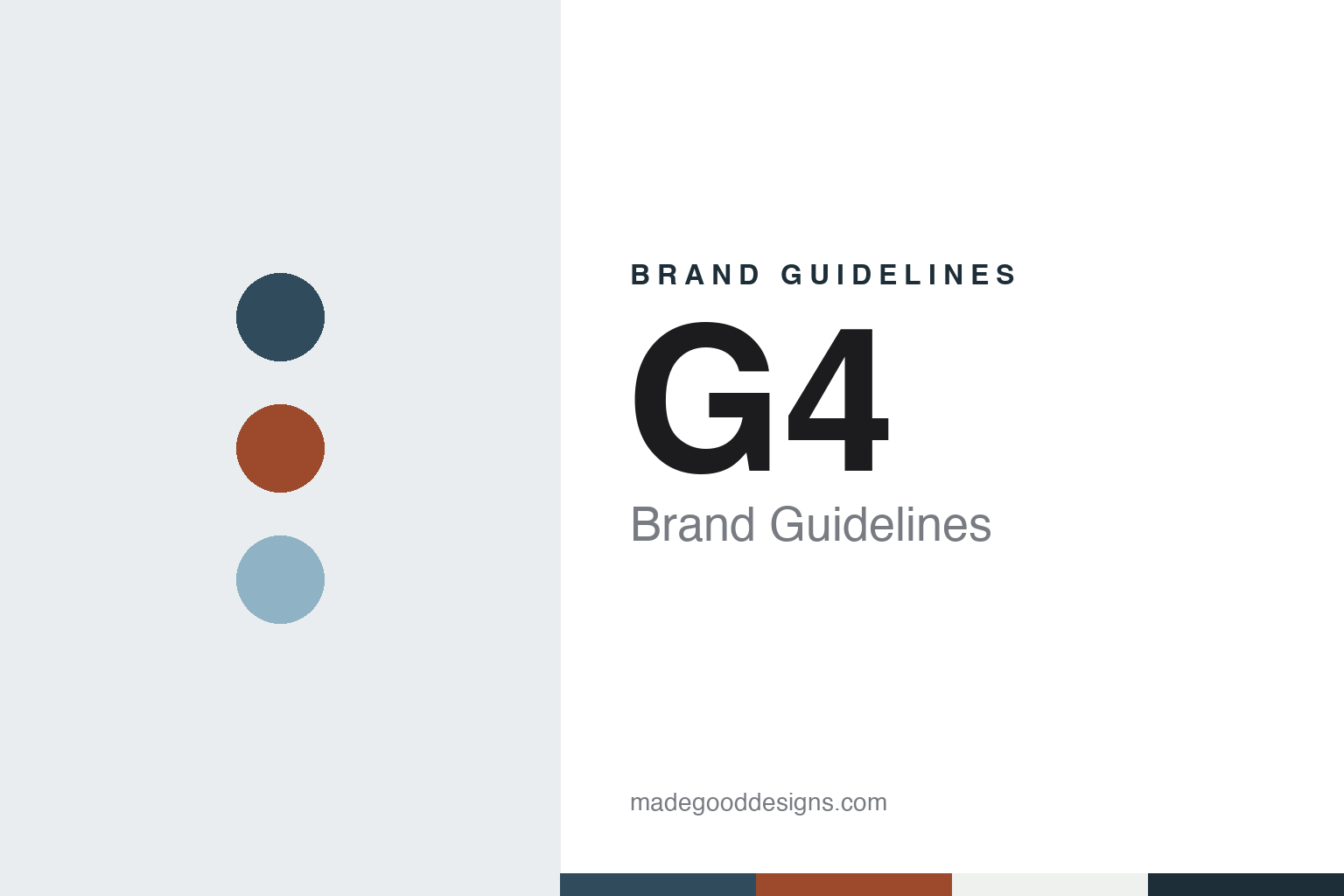
Two constants: a rainwater blue, spring sky and steamroller rust palette and an engineered sans register. Abstract homage — not a G4 product or mark; no label, logo or bottle is reproduced.
El Pandillo
A brother leaves La Alteña to build his own.
G4 is made at Destilería El Pandillo, in Jesús María, in the highlands of Jalisco, by Felipe Camarena. He comes from the family behind La Alteña, the Arandas distillery his grandfather Don Felipe Camarena opened in 1937, and he is the brother of Carlos Camarena, who made El Tesoro and Tequila Ocho there, Punch reported in 2013. The name stands for four generations. VinePair describes Felipe as the fourth generation of the family to work in tequila and the great-grandson of Don Pedro Camarena, who, Punch reported, lost his distillery to fire during the Mexican Revolution of 1910; VinePair adds that Don Pedro is often credited with bringing blue Weber agave to the highlands. The brand speaks of a “four-generation legacy” carried on by Felipe and his sons, and InsideHook reported in 2023 that he works with two of them, Luis Felipe and Alan.
Felipe worked at La Alteña before setting up on his own. VinePair says he left in 2007 to build El Pandillo, which officially opened in 2011; Punch, writing in 2013, said he broke ground in 2011. Punch placed the distillery southeast of Arandas, on a property of about 260 acres, and listed solar and wind power, water harvesting and the recycling of waste among its systems. The same article said Felipe grows his own agave rather than buying it on the open market, harvests it after at least seven years without chemicals, and steams each oven load from the top as well as the bottom. “We humans are evolving, and so is tequila,” he told the magazine. Agave Matchmaker, a tequila database, lists El Pandillo under NOM 1579 and records stone or brick ovens, crushing by tahona and roller mill, wooden and steel fermentation tanks and copper pot stills.
Colour
Felipestein, rainwater and an old yeast.
El Pandillo is known for its machinery. Felipe, who studied engineering, built a mechanical tahona nicknamed Felipestein — Punch spelled it Felipenstein — a crusher of about 19,000 pounds made from a reclaimed steamroller and driven by a one-horsepower engine; VinePair says parts of a railroad car went into it too, and that it rolls along rails over the cooked agave. The agave shredder is called Igor, Punch and Vice reported. The family’s old stone tahona survives as well: Punch described it as the last remnant of his great-grandfather’s still.
Water is the other theme. G4 is made with a mix of captured rainwater and spring water, Vice reported in 2016, quoting Felipe on the fountain at the distillery entrance: “That water in that fountain is what I catch whenever it rains here.” VinePair describes the blanco as half spring water and half rainwater. The brand also points to a yeast handed down from Felipe’s grandfather, agave from the family’s own ranches, slow roasting in stone ovens and distillation in copper stills. Vice reported that Felipe had planted cinnamon, guava, fig and citrus trees around the distillery to draw pollinators, and that he hoped one day to make two tequilas, one to show off each water. Some releases go further: InsideHook reported in 2023 that G4 runs a wood-fermentation project in which the juice ferments on the agave fibres.
The range is short. The brand lists a blanco, a reposado, an añejo and an extra añejo, along with a wood-rested blanco called Blanco de Madera and a higher-proof blanco. VinePair says the reposado is aged in former George Dickel Tennessee whiskey barrels, and InsideHook reported in 2023 on a six-year extra añejo, aged in ex-Dickel barrels in a cellar beneath the distillery floor, bottled at barrel strength and sold as a numbered limited edition in handmade wooden boxes. VinePair says G4 has also experimented with lightly used Jack Daniel’s casks and with barrels that held cognac, sherry and wine. “We use old barrels, over and over again,” Shawn Miller of the importer PKGD Group told InsideHook.
Typography
Design and documentation.
The seven brands in this group are all tequilas: El Tesoro, G4, Cascahuín, La Gritona, Siete Leguas, Arette and Mijenta. Tequila is a protected name. English Wikipedia records that it became Mexico’s first appellation of origin in 1974, and that under that appellation the agave may be grown and the spirit made only in Jalisco and in selected municipalities of a few other Mexican states, from blue Weber agave. Within that common frame, the brands here range from family houses to younger labels.
A tequila brand’s identity is often carried less by the liquid than by its label, its bottle and the place it names, because the name on the front and the distillery behind it are not always the same thing. Every bottle carries a NOM number, which English Wikipedia describes as the government-assigned number of the distillery where the tequila was produced, so a single distillery can make tequila for more than one brand. That makes the questions behind each name worth asking plainly: who started it, who owns it now, and where its tequila is actually distilled.
Each guide separates what independent sources record from what the company says about itself — its founding story, its owners over time, where its tequila is made and how its labels have changed — and marks plainly what rests only on the company’s own word.
Aa
An engineered sans for a tequila made with home-built machines. (Specimen set in Barlow Condensed, a sans STAND-IN; NOT the G4 logo.)
G4
A maker’s brand rather than a bottle brand.
G4 puts its maker ahead of its pack. “I’m not in the business of fancy bottles, I’m in the business of making tequila,” Felipe told Vice in 2016. In the United States the tequila is brought in by PKGD Group, InsideHook reported in 2023, quoting its managing partner Shawn Miller on Felipe: “He has two engineering degrees, and he’s always tinkering.” The address g4tequila.com now forwards to a G4 page on PKGD Group’s website, which carries the line “Let the Tequila speak!” and the date “Since 1937,” the year of La Alteña.
El Pandillo also makes tequila for other labels. Agave Matchmaker lists Terralta, Volans and the distillery’s own El Pandillo brand among those in production there, alongside G4. Within the family it sits beside La Alteña, where Felipe’s sister Jenny Camarena became master distiller of El Tesoro in 2025, the whiskey writer Fred Minnick reported.
The name needs care online. “G4” is shared with unrelated products, so the tequila is best searched as G4 tequila or with El Pandillo.
For a design guide, G4 shows how a tequila can build its identity on a person and a process — a home-built crusher, a rainwater fountain and a family count of four generations — rather than on an elaborate bottle. Compare Tequila Ocho, made by Felipe’s brother at La Alteña, and Fortaleza, another family tahona tequila from a small distillery. For this guide we use rainwater blue, spring sky and steamroller rust with a sans, an unofficial interpretation; no product or logo is reproduced.
Explore & save
Keep G4’s identity on hand — save it to a board in the Made Good inspiration library.
G4 identity set
Pin the G4 rainwater blue, spring sky and steamroller rust palette and the engineered sans register to your own board.


