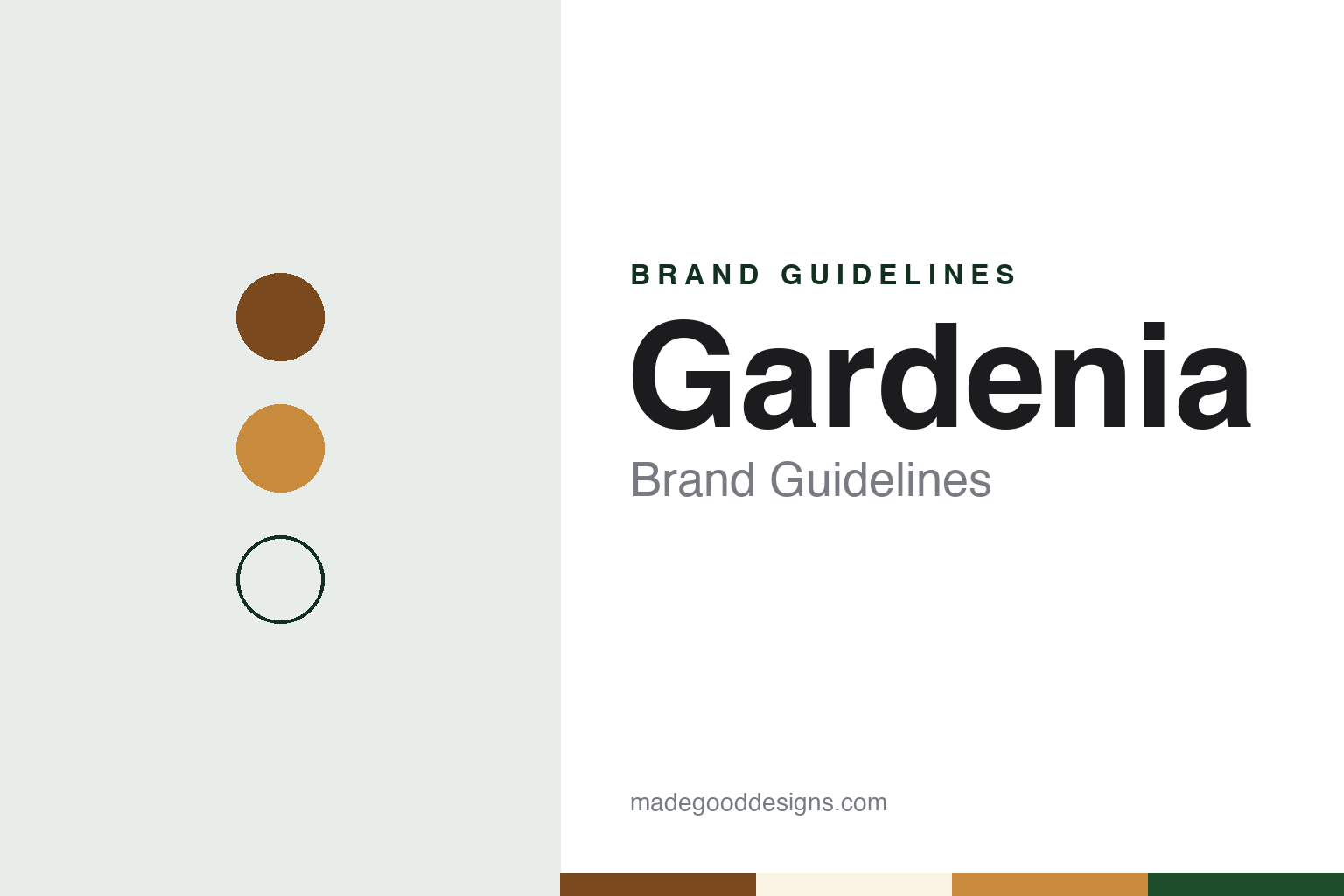
Gardenia Brand Guidelines
The Bukit Timah bakery behind Singapore’s sliced bread.
Aa
Two constants: a crust brown, golden toast and leaf green palette and a warm bakery serif register. Abstract homage — not a Gardenia product or mark; no pack, logo or loaf is reproduced.
A bakery in a shopping centre
An American baker, a Bukit Timah mall and a recipe from home.
Gardenia began in Singapore in 1978 as a small bakery in Bukit Timah Plaza, a Singapore shopping centre, the company says and CNA repeated in May 2026. The company describes it as an in-store bakery set up with the help of Horatio “Sye” Slocumm, an American baker with 35 years’ experience in the trade, and credits its success to a “traditional American recipe” that it says has been refined since, above all through automation.
Slocumm’s link to the region goes back further. Gardenia’s Malaysian company says its history dates to 1969, when Slocumm, after 35 years with a leading American bakery chain, was sent to Malaysia by the International Executive Service Corps, an American organisation, to start a bakery. English Wikipedia names a second founder of the earlier Gardenia business, the Sabah-born businessman Wong Tze Fatt, and says it began in Sabah, in Malaysian Borneo, before spreading to the peninsula; it adds, citing the Borneo Bulletin in 2019, that a Gardenia bakery company has operated in Brunei since 1972.
In Singapore the bakery soon outgrew its shopping-centre premises. The company dates its first commercial bakery, at Pandan Loop, to 1983; English Wikipedia, citing The Business Times of June 1993, gives the month as March. A second Singapore bakery followed in June 1993. Gardenia says its range has since grown to more than 60 kinds of bread, buns and other products.
Colour
QAF, Malaysia and the Philippines.
The brand’s owner since the mid-1980s has been QAF Limited, a Singapore-listed food group. QAF says it began in the 1950s as Ben and Company, a food trading and distribution business, was listed on the Singapore stock exchange in August 1967 and took the name QAF in 1984. QAF dates its purchase of the Gardenia bread-making operations in Singapore to 1985; Gardenia’s own timeline puts the acquisition in 1986.
Expansion followed under QAF. Gardenia Bakeries (KL) Sdn Bhd, set up in 1986, runs the brand in Peninsular Malaysia as a joint venture between QAF and the Malaysian rice company Padiberas Nasional Berhad, the Malaysian company says; it marked the 35th anniversary of its first loaf in 2021. In the Philippines, QAF says it set up Manila’s first fully automated and computerised Gardenia bread plant in 1997, while Gardenia Bakeries Philippines dates its first factory, at the Laguna International Industrial Park in Biñan, to 1998. The Philippine company has since added a plant that it says makes 4,000 loaves an hour (2002) and a plant in Lapu-Lapu, Cebu (2011), and launched its own pandesal, the Filipino breakfast roll, in 2001.
Gardenia’s reach is wider than its own bakeries. English Wikipedia, citing The Star in 2020, says production for the Malaysian states of Sabah and Sarawak and for Indonesian Kalimantan has been licensed since 2020 to Kim Teck Cheong Consolidated, using different recipes from those of the peninsula; citing a 2016 trade report, it says a QAF company, PT Gardenia Makmur Selaras, began baking near Bogor, Indonesia, in 2013. Gardenia’s Singapore timeline also lists a 1996 move into China.
Typography
Design and documentation.
The seven brands in this group all make food or drink, and all of them come from Indonesia, Singapore or Malaysia: SilverQueen, Garudafood, Nabati, F&N, Marigold, Hup Seng and Gardenia. Food and drink brands from the region in general sit at many different points in the trade, from family firms that still carry a founder’s name to names that now belong to much larger food groups, and a single brand can be sold everywhere from a corner shop to a supermarket shelf.
A food or drink brand’s identity is usually carried less by a single product than by a pack, a name and the everyday meal or drink it promises, because the company behind the name may have changed hands, moved its factory or grown far beyond the town where it started. That makes the questions behind each name worth asking plainly: who started it, who owns it now, and where its products are actually made and packed.
Each guide separates what independent sources record from what the company says about itself — its founding story, its owners over time, where its products are made and how its packaging has changed — and marks plainly what rests only on the company’s own word.
Aa
A warm bakery serif for a brand built on the everyday loaf. (Specimen set in Fraunces, a serif STAND-IN; NOT the Gardenia logo.)
Gardenia
A tagline, a bread clip and a factory move.
Gardenia’s identity rests on a promise about the bread itself. The Singapore company ends its own history with the line that its breads are “so good… you can even eat it on its own!” It also says that in 2014 it was ranked the best-selling bread brand and the best-selling wholemeal bread brand in Singapore by the market researcher A.C. Nielsen, and that in 2009 it became the first bakery in Singapore to sell bread from a vending machine.
In the Philippines the identity extends to the bag. Gardenia Bakeries Philippines says it was the first bread brand in the country to use the G-lock, a resealable plastic clip around the neck of the bag that carries the expiry date and batch details and works as a seven-day colour guide to the day the bread was baked. In Malaysia the brand has collected marketing prizes, including Putra Brand Awards platinum awards in several years from 2019 and a gold award for corporate branding at the Malaysia PR Awards 2022, the Malaysian company says.
Where Singapore’s Gardenia is made is now changing. On 20 May 2026 Gardenia Foods said it would move its bakery production from Singapore to Johor Bahru, Malaysia, with production at the Pandan Loop facility to end on 30 June and 141 employees retrenched, CNA reported. The company said Singapore, where about 250 staff would remain, would stay its hub for brand management, product development, quality and regulatory oversight, distribution and supply chain. QAF itself describes a bakery and distribution business with more than 9,000 employees across the Asia-Pacific; English Wikipedia names Andree Halim, a son of the Indonesian businessman Sudono Salim, as its largest shareholder, citing the group’s 2015 annual report.
For a design guide, Gardenia shows how a plain promise about everyday bread can travel from a Bukit Timah shopping centre to bakeries across Southeast Asia. Compare Khong Guan, the Singapore biscuit maker founded in 1947, and Prima Taste, the meal-kit brand from a Singapore flour miller. For this guide we use crust brown, golden toast and a leaf green with a serif, an unofficial interpretation; no product or logo is reproduced.
Explore & save
Keep Gardenia’s identity on hand — save it to a board in the Made Good inspiration library.
Gardenia identity set
Pin the Gardenia crust brown, golden toast and leaf green palette and the warm bakery serif register to your own board.