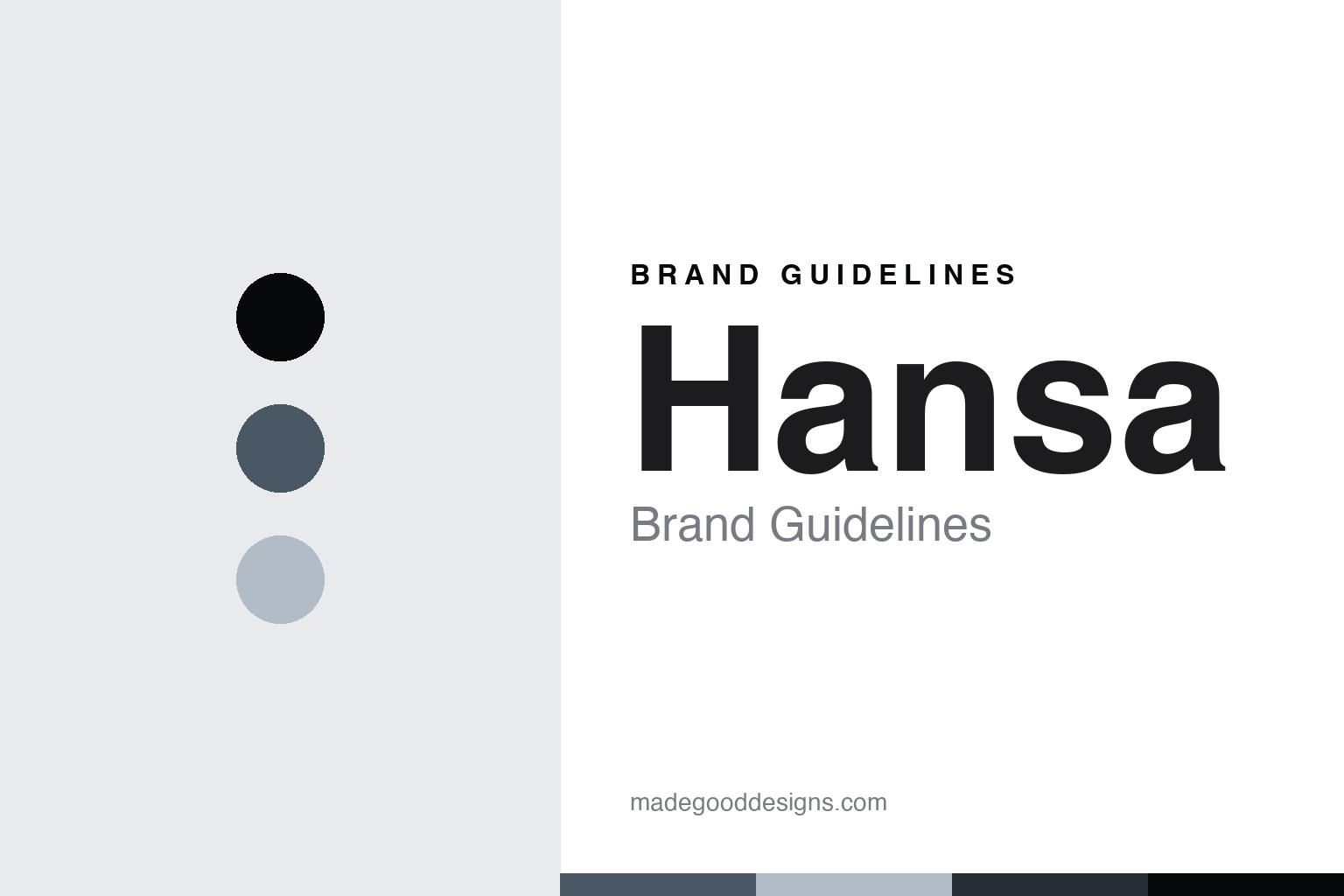
Hansa Brand Guidelines
German brand, Finnish owner.
Aa
Two constants: a steel palette and an engineered-sans register. Abstract homage — not a Hansa product or mark.
German brand, Finnish owner
Hansa is the German tapware house of 1911, owned by Finland’s Oras Group, its making now spread across Europe.
Hansa is the round’s German engineer under a Nordic owner — a Stuttgart tapware house that is now the German half of a Finnish group. Hansa makes bathroom and kitchen taps, showers and touchless faucets. Its answer to how a maker becomes a name is German engineering plus electronics: build precise, durable tapware, lead on touchless and sensor faucets, and do it under the Oras Group. A tap, German by design.
Its identity is German brand, Finnish owner. Hansa’s engineered tapware, its touchless faucets and its place inside Oras are the work it is known for. A tap, German in brand. German brand, Finnish owner.
(Honest notes, so the story stays precise. Hansa — Hansa Armaturen, at hansa.com — makes bathroom and kitchen taps, showers and touchless sensor faucets, engineered and design-led. It was founded in 1911 by Karl Göhring, near Stuttgart, and was long known as Hansa Metallwerke before becoming Hansa Armaturen. On ownership — the point of this round — Hansa has been part of the Oras Group of Finland since 2013; Oras, founded in 1945 in Rauma, is ultimately held by the Paasikivi family’s investment company. On where it is made — a theme of this vein — Hansa is a German brand and is headquartered in Stuttgart, but it is no longer German-made: production moved within the Oras Group to Finland, the Czech Republic and Poland, and its German plant closed in 2019, so we do not claim it is made in Germany. Its name — one shared with many unrelated “Hansa” companies, so we mean the tapware maker — and its marks are IP, described but never reproduced, and there is no official brand hex; these tones are an unofficial interpretation. This is design commentary and does not promote any product.)
Colour
Hansa lives in a steel palette. Click a swatch to copy the hex.
Hansa’s identity is engineered, owned and German — a steel, an ink, a silver, a deep steel, and a paper. The palette leans steel and silver: a precise, engineered register for German tapware. It signals an engineered tap house under a Nordic group. The honest caveat: with no published brand hex, these values are an original, unofficial interpretation, not first-party colours.
The lesson is a steel palette signals an engineered, Nordic-owned identity. Hansa’s world is an engineered, owned object. For designers, it is a reminder that a cool steel and a bright silver can carry a tapware house — the finish of precise German engineering. Because these tones can fail as small text, keep type dark and let the colour live in the accents, palette and band. The takeaways: engineer precisely; lead on the electronics; be honest about a relocated make and a foreign owner; and treat any single hex as unofficial.
Typography
The register is an engineered sans — precise, technical, owned.
Hansa’s identity carries a precise, technical, owned spirit — an engineering house, not a boutique. An engineered sans captures the mood: exact, dependable and German, the register of touchless, sensor-driven tapware. Set in a steel palette, the engineered sans feels precise and technical — exactly the personality Hansa carries. It is engineering rather than a logo, mirroring a sensor faucet built to last. (Hansa’s real wordmark is a thing we describe but do not reproduce, and the exact typeface is not ours to use.) Because it is not ours to use, the honest description is “an engineered-sans spirit,” shown here in a stand-in. The type behaves like the tap: precise, technical and owned.
Aa
An engineered-sans spirit — precise and technical. (Specimen set in Manrope, an engineered-sans STAND-IN; NOT the Hansa logo.)
The tap makers
Hansa stands for a German brand with a Finnish owner.
Hansa is a lesson in how a brand’s nationality can differ from its owner’s and its maker’s. A steel palette, an engineered sans and a sensor faucet make one thing — German brand, Finnish owner — the whole identity: engineered, owned and German. The German engineering is the differentiator, and the Oras ownership is the meaning. The point is a Stuttgart tapware house that is German in brand, Finnish in owner, and now made across the rest of Europe.
Put to work, the identity is a split of brand, owner and make, told straight, as design. A maker in this spirit would keep the German engineering identity under a Nordic owner — Hansa, within Oras. A reader in this spirit would hold three facts at once: the brand is German and dates to 1911; the owner is Finland’s Oras Group, ultimately the Paasikivi family; and the making is no longer German — it moved to Finland, the Czech Republic and Poland after the German plant closed in 2019. Hansa holds the round’s brand-isn’t-the-owner thread with Jacob Delafon and Damixa, and its where-made-complicated thread as a clear case. The honest editorial moves are to date the brand to 1911, to name Oras as the owner, and to state that it is no longer German-made. The lesson Hansa teaches is that brand, owner and maker can be three different nationalities: the German engineering gives it substance, and the honest telling of owner and make keeps it credible.
For designers and brand-builders, Hansa holds a Germany pole in the tap makers: keep the engineering identity — and be honest about owner and make. The lessons: lead on the technology; hold a design identity under a foreign owner; say where it is really made; disambiguate a shared name; and never reproduce a logo. It is also a reminder to stay precise: Hansa is the German tapware house of 1911, owned by Finland’s Oras Group, its making now spread across Europe — with the palette here an unofficial interpretation. Read that way, Hansa is less a tap than a lesson in labels: German by design, Finnish by owner, and pan-European by manufacture, all at once. The lesson for a brand is that these three nationalities need not be hidden — a maker can keep a German-engineering identity honestly while naming a Finnish owner and a make spread across the continent. Hansa made German-brand-Finnish-owner the identity — proof that a tap, honestly told, can be the difference.
Explore & save
Keep Hansa’s identity on hand — save it to a board in the Made Good inspiration library.
Hansa identity set
Pin the steel palette and the engineered-sans register to your own board.