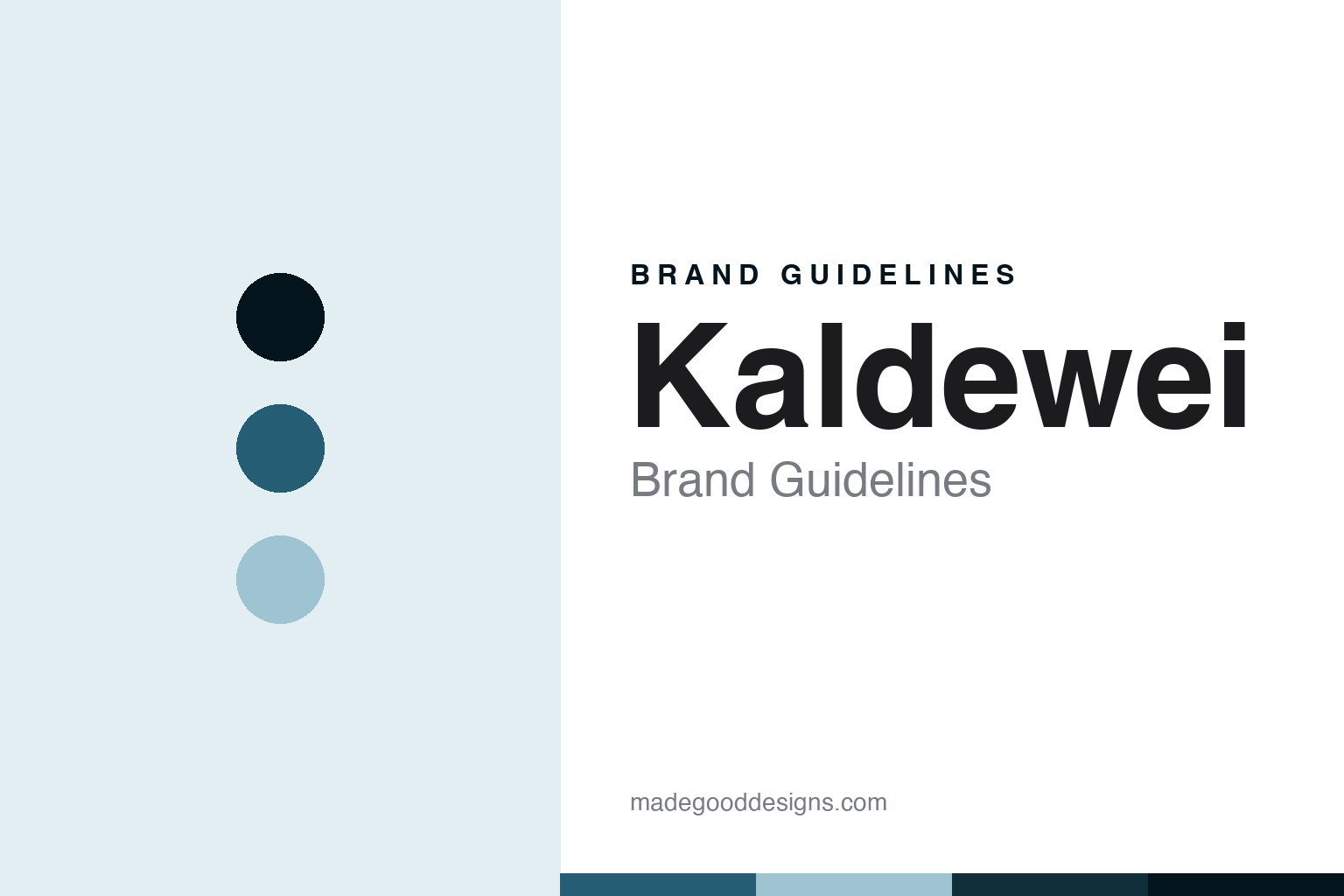
Kaldewei Brand Guidelines
Steel-enamel baths from Ahlen.
Aa
Two constants: an enamel-blue palette and an enamel-sans register. Abstract homage — not a Kaldewei product or mark.
Steel-enamel baths from Ahlen
Kaldewei is the German steel-enamel bath maker of 1918, making baths from a single sheet of steel in Ahlen.
Kaldewei is the round’s steel-enamel maker — a Westphalian house that forms a bath from one sheet of steel and glazes it in its own enamel. Kaldewei makes steel-enamel baths, shower surfaces and washbasins. Its answer to how a maker becomes a name is a single material done to the limit: press a bath from a single sheet of steel, coat it in enamel it makes itself, and guarantee the surface for decades, all from Ahlen. A bath, in steel-enamel.
Its identity is steel-enamel baths from Ahlen. Kaldewei’s enamelled-steel baths, its in-house enamel and its single-site German making are the work it is known for. A bath, made in Germany. Steel-enamel baths from Ahlen.
(Honest notes, so the story stays precise. Kaldewei — at kaldewei.com — makes steel-enamel baths, shower surfaces and washbasins, forming products from a single sheet of steel and producing its own enamel in-house, with a thirty-year warranty on the enamel surface. It was founded in 1918 by Franz Kaldewei in Ahlen, in Westphalia. On where it is made — a theme of this round — all Kaldewei products are made in Ahlen, Germany, at a single site, so made-in-Germany is genuine and central. On ownership — a recurring thread — it is reported to be family-owned into a fourth generation; because we could not re-verify the current management for 2026, we present the family ownership as reported. Its material is presented as recyclable, and it works with designers such as Sottsass Associati and Arik Levy. Its name and marks are IP, described but never reproduced, and there is no official brand hex; these tones are an unofficial interpretation. This is design commentary and does not promote any product.)
Colour
Kaldewei lives in an enamel-blue palette. Click a swatch to copy the hex.
Kaldewei’s identity is material, made and durable — an enamel blue, an ink, a sky, a deep blue, and a paper. The palette leans enamel blue and sky: the cool, glassy register of glazed enamel on steel. It signals a steel-enamel bath maker. The honest caveat: with no published brand hex, these values are an original, unofficial interpretation, not first-party colours.
The lesson is an enamel-blue palette signals a material, made-in-Germany identity. Kaldewei’s world is a material, durable object. For designers, it is a reminder that a cool enamel blue and a soft sky can carry a bath maker — the glassy sheen of enamelled steel. Because these tones can fail as small text, keep type dark and let the colour live in the accents, palette and band. The takeaways: master one material; make it at home on one site; warranty it for decades; and treat any single hex as unofficial.
Typography
The register is an enamel sans — material, precise, made.
Kaldewei’s identity carries a material, precise, made spirit — a single-material specialist, not a broad brand. An enamel sans captures the mood: exact, durable and German, the register of a bath pressed from one sheet of steel. Set in an enamel-blue palette, the enamel sans feels material and precise — exactly the personality Kaldewei carries. It is one material rather than a logo, mirroring enamel glazed onto steel. (Kaldewei’s real wordmark is a thing we describe but do not reproduce, and the exact typeface is not ours to use.) Because it is not ours to use, the honest description is “an enamel-sans spirit,” shown here in a stand-in. The type behaves like the bath: material, precise and made.
Aa
An enamel-sans spirit — material and made. (Specimen set in Work Sans, an enamel-sans STAND-IN; NOT the Kaldewei logo.)
The bathroom makers
Kaldewei stands for steel-enamel baths from Ahlen.
Kaldewei is a lesson in how one material can be an identity. An enamel-blue palette, an enamel sans and a single-sheet bath make one thing — steel-enamel baths from Ahlen — the whole identity: material, made and durable. The steel-enamel craft is the differentiator, and the single-site German making is the meaning. The point is a Westphalian house that presses baths from one sheet of steel, glazes them in its own enamel, and guarantees them for decades.
Put to work, the identity is one material taken to its limit, told straight, as design. A maker in this spirit would master a single material and make it at home — steel-enamel, in Ahlen. A reader in this spirit would keep the honest note: all Kaldewei products are made at one site in Ahlen, so made-in-Germany is genuine, and its family ownership into a fourth generation is best presented as reported. Kaldewei holds the round’s material thread on the steel-enamel side with Bette, its where-made thread at the single-site German end, and its who-owns-it thread at the German-family end. The honest editorial moves are to date the founding to 1918, to credit the in-house enamel, and to present the family ownership as reported. The lesson Kaldewei teaches is that one material can hold an identity: the single-site making gives it substance, and the thirty-year warranty keeps it credible.
For designers and brand-builders, Kaldewei holds a steel-enamel pole in the bathroom makers: master one material — and make it at home. The lessons: specialise in a single material; keep the making on one site; warranty it for decades; state ownership only as far as verified; and never reproduce a logo. It is also a reminder to stay precise: Kaldewei is the German steel-enamel bath maker of 1918, making baths from a single sheet of steel in Ahlen — with the palette here an unofficial interpretation. Read that way, Kaldewei is less a bath than a material conviction: that a single sheet of steel and the maker’s own enamel, done properly in one town, will outlast almost anything else in the room. The lesson for a brand is that a single material, mastered end to end — including making your own enamel — is a moat competitors cannot cross without decades of their own, which is why the thirty-year warranty reads as fact rather than marketing. Kaldewei made steel-enamel-baths-from-Ahlen the identity — proof that a fixture, honestly made, can be the difference.
Explore & save
Keep Kaldewei’s identity on hand — save it to a board in the Made Good inspiration library.
Kaldewei identity set
Pin the enamel-blue palette and the enamel-sans register to your own board.