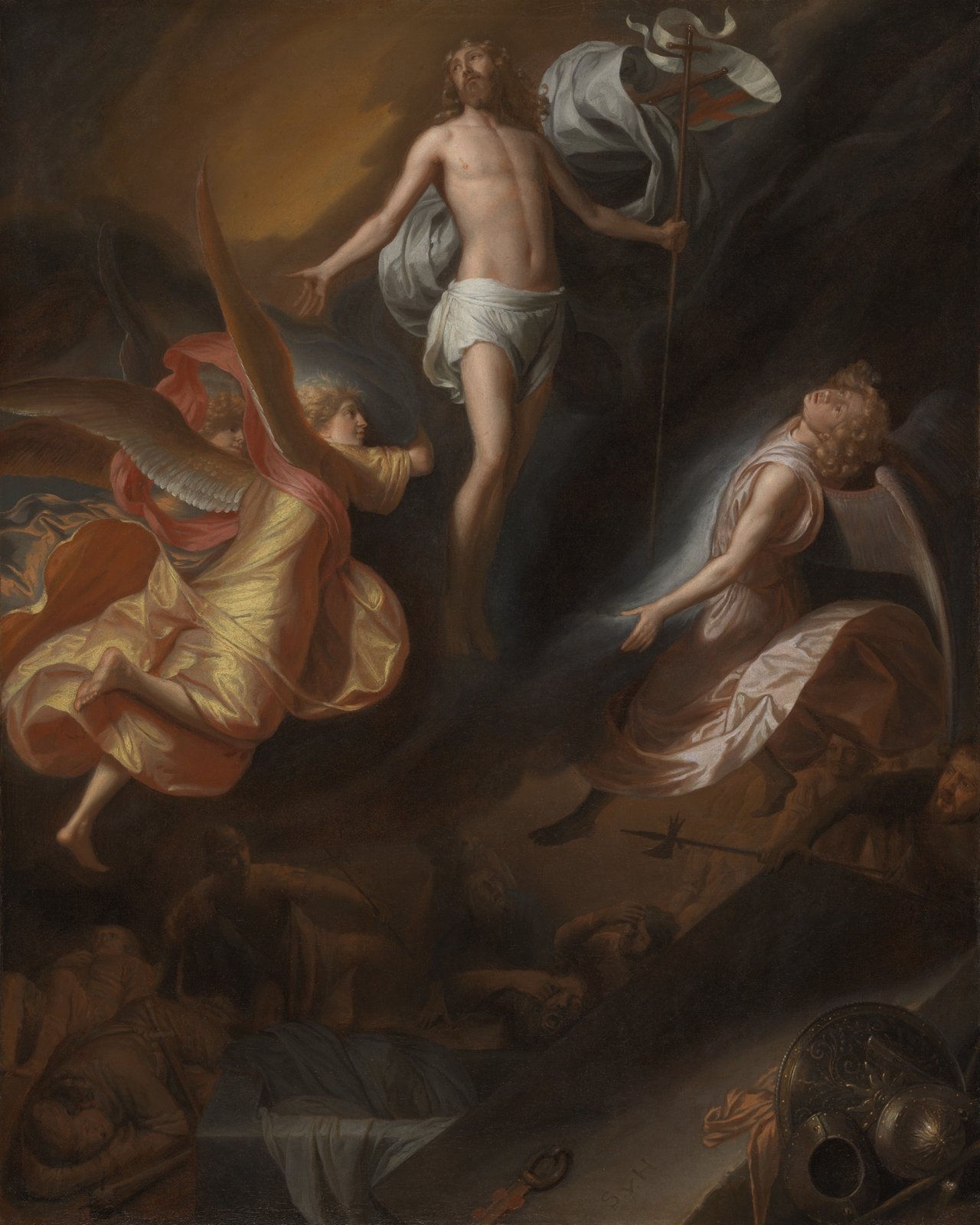
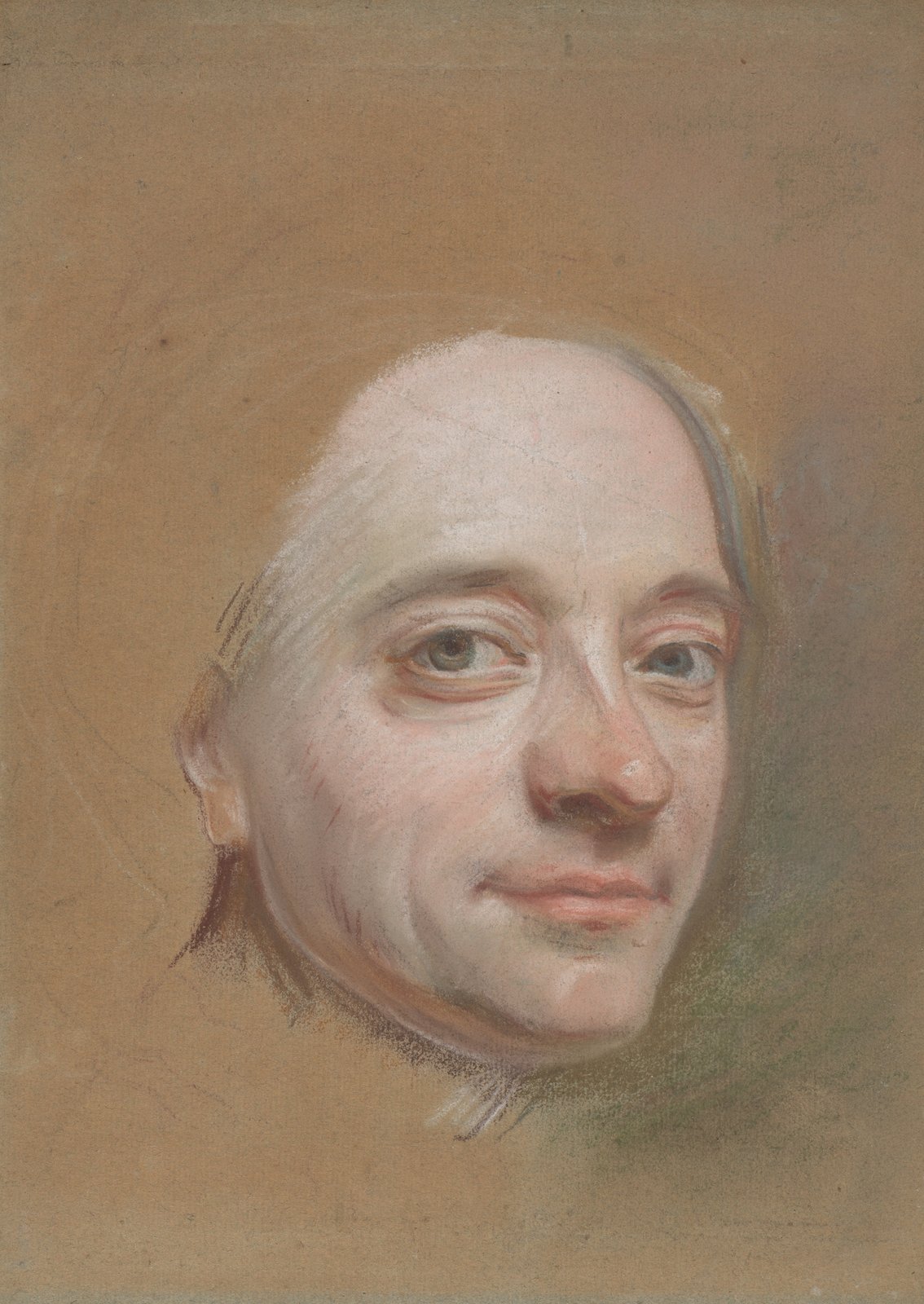
Veit Stoss made sculpture that behaves like theatre. His figures lean, gasp and gesture, and the cloth around them twists into folds that no real fabric would hold. He was a carver first, but he also painted and engraved, and his work touches problems every designer meets: how to organise a crowded scene, how to make a surface catch light, and when to add colour or leave a material alone.
The carving shown here comes from a museum open-access programme; browse more cleared images in the MGD museum inspiration collection.
Who was Veit Stoss?
The Metropolitan Museum of Art gives his life as Horb am Neckar about 1445 to Nuremberg 1533, and the Cleveland Museum of Art also dates him about 1445–1533. The Neue Deutsche Biographie, the German national biography, is more cautious: born around 1440–50, probably at Horb on the Neckar, and dead shortly after 17 September 1533 in Nuremberg. In Poland he is known as Wit Stwosz.
According to the Neue Deutsche Biographie, he first appears in the records in 1477, when he gave up his Nuremberg citizenship and moved to Kraków to work on the high altarpiece of St Mary’s Church. He built a large workshop there that produced stone tombs as well as wood sculpture, and he returned to Nuremberg in 1496.
The same source records a serious break in his career. Cheated out of a large investment, Stoss tried to recover the loss with a forged document; he was convicted, and in December 1503 he was branded through both cheeks and forbidden to leave the city without permission. He successfully appealed to Emperor Maximilian I for a pardon in 1506 and kept working for Nuremberg patrons.
For the wider style he belongs to, see our guide to Gothic art.
Key works and dates
1477–89: high altarpiece, St Mary’s Church, Kraków. Dated 1477–89 by the Neue Deutsche Biographie and the Web Gallery of Art. The central shrine shows the death and assumption of the Virgin among the apostles, with her coronation above and relief scenes on the wings. The tallest figures stand about 2.7 to 2.8 metres high, by the measurements of the Store norske leksikon and the Neue Deutsche Biographie.
1492: tomb of King Casimir IV. A red marble tomb in Kraków Cathedral, dated 1492 by the Neue Deutsche Biographie and the Web Gallery of Art.
About 1495: Virgin and Child. A boxwood statuette only 20.3 centimetres high, in the Victoria and Albert Museum, London, which dates it about 1495.
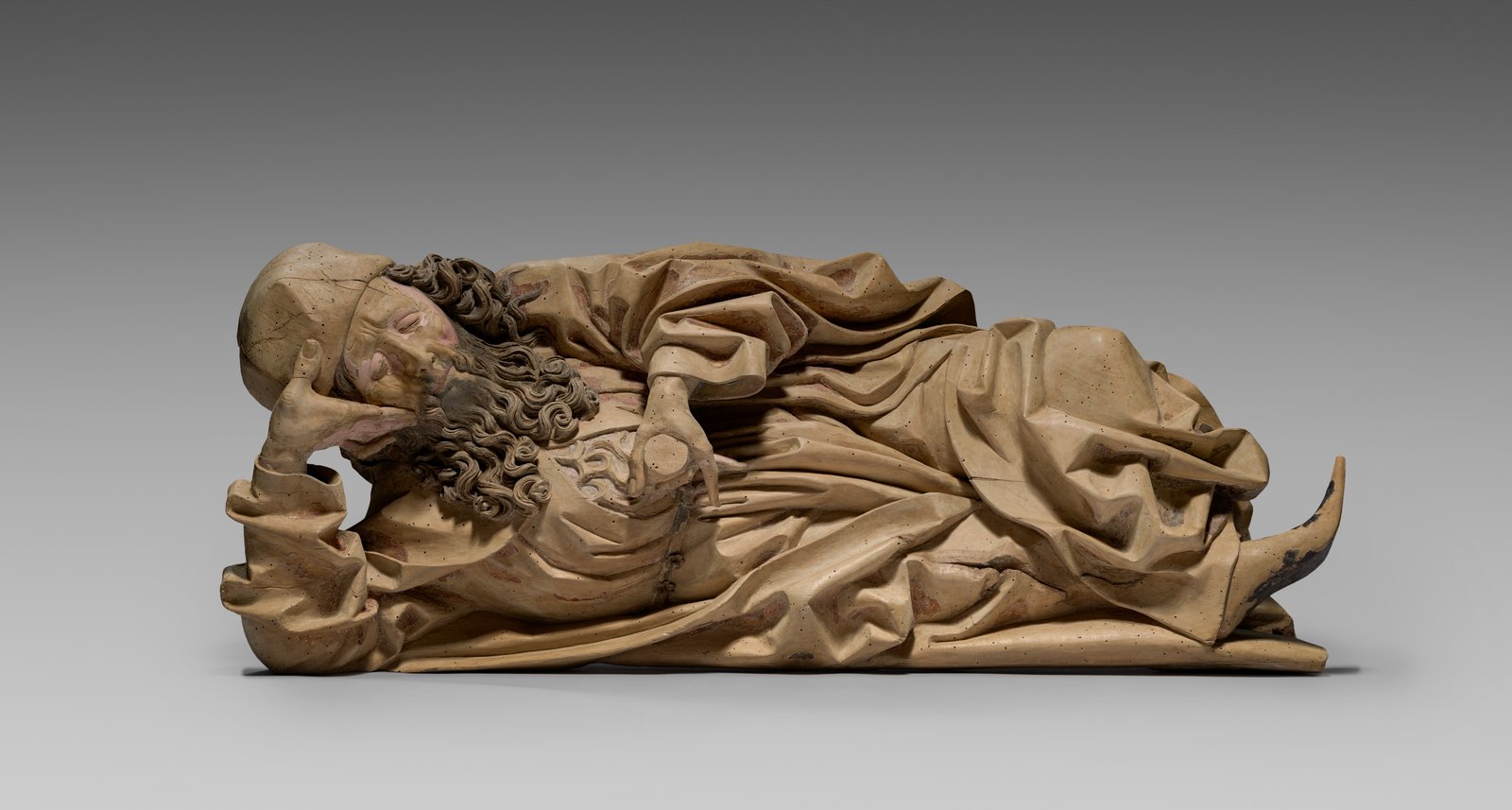
About 1500: Jesse. A limewood figure nearly a metre long, now in Cleveland. The museum says it comes from a lost altarpiece made for an unknown church, possibly in Nuremberg.
1517–18: Angelic Salutation, St Lorenz, Nuremberg. An over-life-size Annunciation in painted limewood, commissioned by the patrician Anton Tucher and hung in the choir inside a carved wreath of roses.
1520–23: Bamberg altarpiece. Ordered by his son Andreas for the Carmelite church in Nuremberg, finished in 1523 and in Bamberg since 1534.
What to look at in Veit Stoss’s carving
Drapery with a life of its own. The Neue Deutsche Biographie describes the folds of his early work as charged with pathos: abrupt breaks, deep gorges and courses that defy logic. Look at Cleveland’s Jesse. The sleeper lies still, yet his robe bunches into hard ridges at the hip, loops over the forearm and piles up over the legs, where a long pointed shoe juts out at the far right. The energy is in the cloth, not the body.
A signature fold. On the V&A’s little boxwood Virgin the cloak billows across the body in deep angular folds, in the museum’s words. German scholars call one recurring motif the ear-shaped fold, a curl of cloth that hangs in front of the body in defiance of gravity; the Neue Deutsche Biographie says he presents it almost like a trademark.
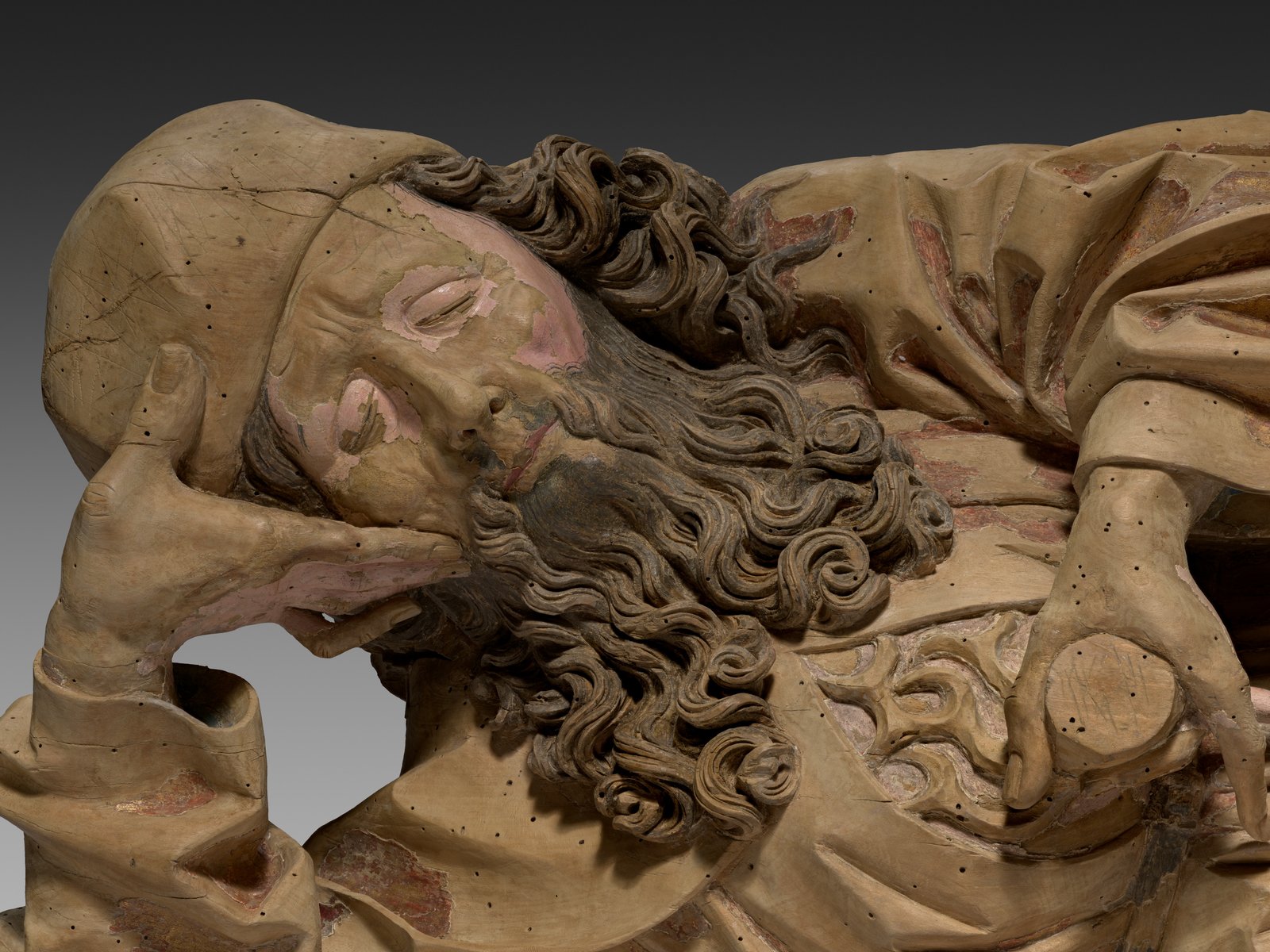
Quiet face, busy frame. In the detail of Jesse below, the eyelids are closed and the cheek rests on an open hand. Around that calm centre the hair and beard are cut as separate corkscrew curls, each undercut so it throws its own shadow.
A crowd staged in depth. The Store norske leksikon notes that the Kraków altarpiece grades its relief: low relief on the outer faces of the wings, high relief inside, and almost free-standing figures at the centre, with gilding increasing toward the middle. Depth and gold both rise as you approach the main scene.
The frame as part of the picture. The Angelic Salutation is described by the Neue Deutsche Biographie as a giant rosary: the two figures hover inside a ring of roses set with small relief medallions and wrapped with a string of beads. The border carries its own content and turns a pair of statues into a single emblem.
Technique: limewood, stone, boxwood and paint
Limewood was his main material. Cleveland catalogues Jesse as polychromed limewood, and the Store norske leksikon says the main figures of the Kraków altarpiece are limewood, with other parts in oak and a background of larch. The Neue Deutsche Biographie records that the lime tree for the Virgin of the Angelic Salutation was felled in 1517, a year before the work was finished.
He was not limited to limewood. The Casimir tomb is red marble, the reliefs of his Volckamer memorial of 1499 in St Sebald, Nuremberg, are stone, and the V&A statuette is boxwood, a fine-grained timber suited to miniature work.
Colour was a choice, not a default. The Kraków figures keep the paint applied in his own workshop, which the Neue Deutsche Biographie says heightens the naturalism of the faces. Yet the two wooden figures above the Volckamer reliefs were left unpainted, and when his son ordered the Bamberg altarpiece the contract stipulated that it should never be coloured. In between, in 1504, Stoss was paid to paint and gild an altarpiece at Münnerstadt that Tilman Riemenschneider had deliberately delivered bare twelve years earlier. The same carver worked on both sides of the argument.
Jesse shows what time does to a painted surface. Pink survives on the cheek and eyelids and red in the hollows of the robe, but most of the figure now reads as bare wood. Measured from the museum’s photograph of this carving, the tones run from a pale highlight (#b2a596) through mid browns (#957c60 and #785c3f) to a deep shadow (#3a2613). These values describe a studio photograph, not the original paint. You can sample your own swatches with our image colour picker.
The engravings: a sculptor on paper
Stoss also cut copper plates. The Neue Deutsche Biographie counts only ten subjects, surviving in 35 impressions, and dates them to about 1500–05. The Web Gallery of Art lists two of them: a Lamentation of about 1500 in Budapest and a Virgin and Child with Pomegranate of 1500–05 in Munich.
The biography calls the prints technically imperfect, with the same face types and sweeping movements as the carvings. They show a sculptor thinking in line. If you want to compare them with prints by specialist engravers of the period, start with the museum’s engraving collection.
His link to Nuremberg’s graphic artists was direct. In 1522, the Neue Deutsche Biographie records, he carved a dragon chandelier for the town hall after a design by Albrecht Dürer; it is now in the Germanisches Nationalmuseum.
How designers can borrow from Veit Stoss
Put the movement in the secondary element. Keep a face, product or headline still and let the surrounding material carry the energy, as the robe does around the sleeping Jesse. Ribbons, fabric, smoke or flowing type can all play the part of drapery.
Grade depth toward the focal point. In layered illustration, paper-cut work or 3D scenes, use flat shapes at the edges and full modelling at the centre, the way the Kraków wings step from low to high relief.
Make the border do a job. A wreath, ring or cartouche that carries small secondary scenes, like the rose garland of the Angelic Salutation, unifies separate figures into one mark.
Test the piece without colour. If the composition holds in a single tone, as his unpainted figures were meant to, colour becomes a decision instead of a crutch.
Frequently asked questions
Who was Veit Stoss?
Veit Stoss (about 1445–1533) was a late Gothic sculptor, painter and engraver, probably born at Horb am Neckar, who worked in Kraków from 1477 to 1496 and then in Nuremberg until his death.
What is Veit Stoss known for?
Two works above all: the high altarpiece of St Mary’s Church in Kraków, carved between 1477 and 1489, and the Angelic Salutation of 1517–18, which hangs in the choir of St Lorenz in Nuremberg.
What materials did Veit Stoss use?
Mostly limewood, often painted and gilded but sometimes left bare. He also worked in red marble and other stone, carved a small Virgin and Child in boxwood, and engraved a handful of copper plates.
Can I use the images of Jesse in my designs?
The Cleveland Museum of Art releases both photographs of Jesse shown here under CC0. Check each museum’s terms before reusing images of other works.