Kirks Brand Guidelines
The Brisbane soft drink named after a ginger ale.
Aa
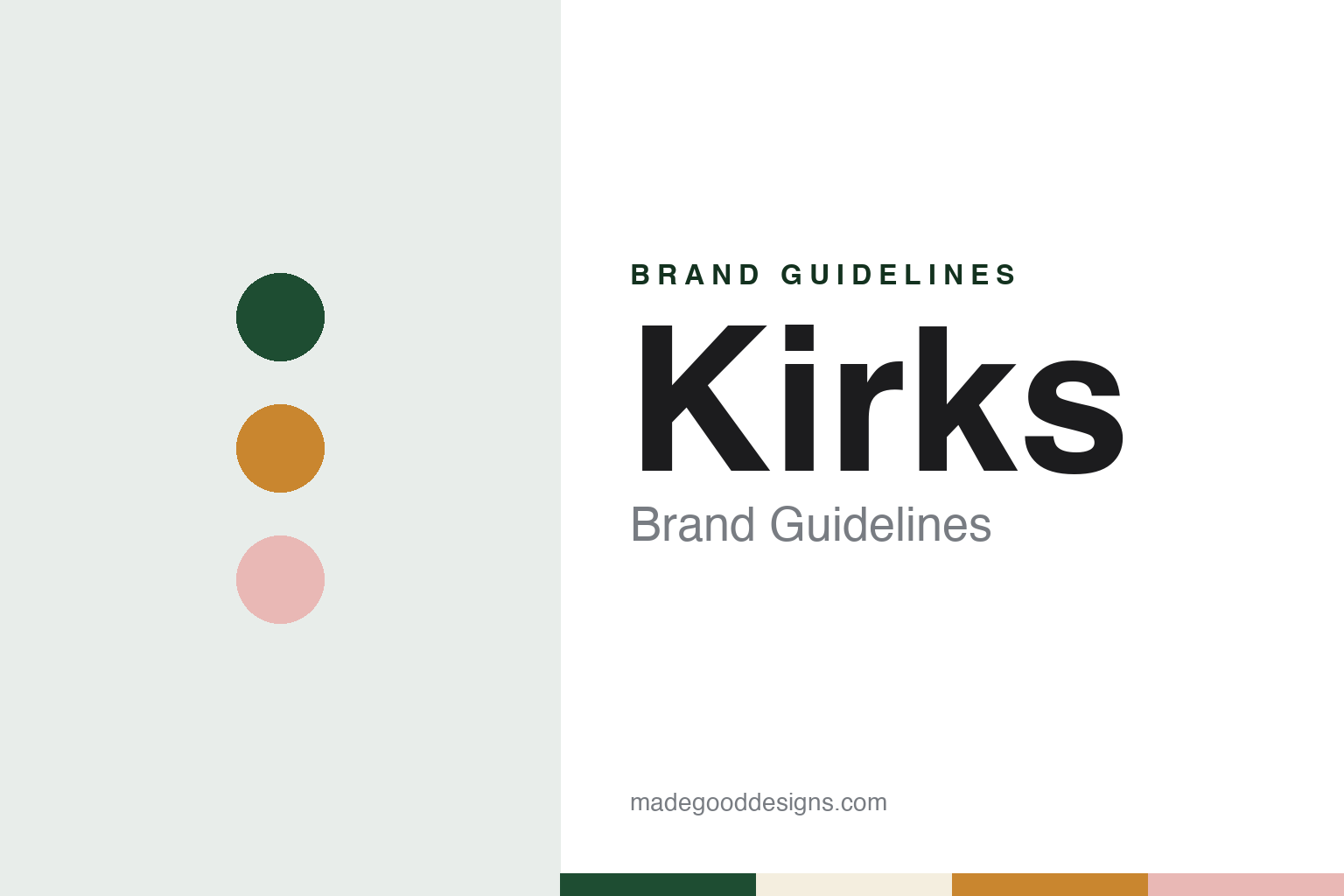
Two constants: a bottle green, ginger amber and creaming-soda pink palette and a heritage display serif register. Abstract homage — not a Kirks product or mark; no bottle, can, label or logo is reproduced.
Spa water and ginger ale
Two Brisbane rivals and a manager’s recipe.
Kirks is a Queensland brand built from two nineteenth-century businesses that spent decades as rivals. The local-history site There once was a creek, which traced the story in 2013 through Trove newspaper records and the State Library of Queensland, says the chemist Reginald Larard began selling bottled water from the springs at Helidon, in the Lockyer Valley west of Brisbane, in 1879. In 1881 he went into partnership with the Scottish-born landholder Gilbert Edward Primrose, and the pair set up the Helidon Spa Water Company. The water travelled by rail to a bottling works in Brisbane; in 1899 bottling moved to a new factory at North Quay.
The other business was Owen Gardner and Sons, which had been making and selling soft drinks in Brisbane since 1850, the same site says. When Gardner’s began selling Helidon water in 1896, Primrose went to court to stop it using the words “Helidon” or “Spa Water,” and the Brisbane Courier reported a judgment by consent in May 1897. Gardner’s relaunched its product as Gardner’s Spa Water in 1901 and later as Vita Spa.
The Kirks name came from inside Owen Gardner and Sons. From 1917, after Alfred Gardner, one of the founder’s sons, the business was managed by a Mr T. Kirkpatrick, who worked with a chemist, W. Doolan, on a new ginger ale. Kirk’s Ginger Ale became the company’s flagship. In 1935 Robert Sweeney, who had earlier revived the Coo-ee Cordials business, bought the struggling Owen Gardner and Sons; Kirkpatrick then left for the rival Brisbane bottler Tristram’s, which began selling its own Kirk’s Ginger Ale. Sweeney sued to protect his exclusive right to the product and won, and the publicity lifted sales, There once was a creek says.
Colour
A merger, a lowercase k and a national name.
By the 1950s, the same history says, local bottlers were under pressure from multinationals such as Schweppes and Coca-Cola. The Helidon Spa Water Company and Owen Gardner and Sons discussed a merger and invited Tristram’s, then Brisbane’s biggest soft-drink maker, to join them; Tristram’s chose to stay independent. In 1959 the two old rivals merged as Helidon Gardner Pty Ltd, but the company traded under a shorter name: kirk’s, written with a lowercase k and borrowed from the ginger ale that had won the court case a generation earlier.
The early kirk’s bottles show how the new brand built its history. A small, heavy six-ounce bottle described by There once was a creek carries a green kirk’s logo on the neck and the words “kirk’s sparkling table waters,” and on the back lists international gold medals from London in 1886, Paris in 1908 and San Francisco in 1915 together with “Established 1850.” The medals were the Helidon Spa company’s and the date was Owen Gardner and Sons’, the site notes. Today’s labels carry a different date: “Australian made since 1865.” English Wikipedia says it is unclear what that year refers to, since it matches neither founding company nor the adoption of the Kirks name.
Big-company ownership came quickly. In December 1964 Helidon Gardner became a subsidiary of Associated Products and Distribution Pty Ltd, itself part of British Tobacco (Australia) Ltd, the company later known as Coca-Cola Amatil. English Wikipedia says that during the 1980s Kirks in Queensland, Shelleys in New South Wales and Gest in Western Australia shared one range of drinks and one packaging style, each marketed in its own state.
Typography
Design and documentation.
The seven brands in this group are all soft-drink names from Australia, Britain and the United States: Kirks, Solo, Passiona, Bickford’s, Ben Shaws, Fever-Tree and Shasta. Australian, British and American soft-drink brands in general sit at many different points in the trade, from family firms that still carry a founder’s name to names that now belong to much larger drinks groups, and a single brand can be sold everywhere from a corner shop to a supermarket shelf.
A soft-drink brand’s identity is usually carried less by a single product than by a bottle or can, a name and the flavour it promises, because the company behind the name may have changed hands, moved its production or grown far beyond the place where it started. That makes the questions behind each name worth asking plainly: who started it, who owns it now, and where its drinks are actually made and bottled.
Each guide separates what independent sources record from what the company says about itself — its founding story, its owners over time, where its drinks are made and how its packaging has changed — and marks plainly what rests only on the company’s own word.
Aa
A heritage display serif for a brand that dates itself to the nineteenth century. (Specimen set in Abril Fatface, a serif STAND-IN; NOT the Kirks logo.)
Kirks
One name for five state brands, and a new owner.
In 2000 Coca-Cola Amatil folded its state soft-drink brands into one. Kirks, Shelleys, Gest, Halls from South Australia and Marchants were all renamed after the Queensland bottler and sold nationally as Kirks, English Wikipedia says. The relaunch campaign played on nostalgia for the local soft-drink delivery trucks that once called door to door, a case discussed by Kieran Flanagan and Dan Gregory in their 2014 book Selfish, Scared and Stupid. Traces of the old state brands survive in the range. English Wikipedia lists a ginger ale sold only in Queensland, Kolé Beer only in Western Australia, Sno Drop only in South Australia, and Fruita only in Victoria, South Australia and Tasmania.
The core range includes Creaming Soda, Pasito, Portello and Big Sars, alongside lemonade, lemon squash and mixers such as soda water and tonic. English Wikipedia says the packaging and advertising were redesigned in 2006 and again in 2014, and the brand has run limited editions under the name Kirks Surprises.
Ownership has changed twice in five years. In May 2021 Coca-Cola Amatil was acquired by the British bottler Coca-Cola Europacific Partners, and in February 2022 that company agreed to sell Kirks, together with Mount Franklin, Deep Spring and other Australian brands, to The Coca-Cola Company of Atlanta, The Australian reported at the time.
For a design guide, Kirks shows how a merged company can borrow a product name, a founding date and a set of medals to give a new brand an old voice. Compare Bundaberg, the Queensland brewed ginger beer, and Golden Circle, the Brisbane growers’ cannery. For this guide we use bottle green, a ginger amber and a creaming-soda pink with a heritage serif, an unofficial interpretation; no product or logo is reproduced.
Explore & save
Keep Kirks’s identity on hand — save it to a board in the Made Good inspiration library.
Kirks identity set
Pin the Kirks bottle green, ginger amber and creaming-soda pink palette and the heritage display serif register to your own board.