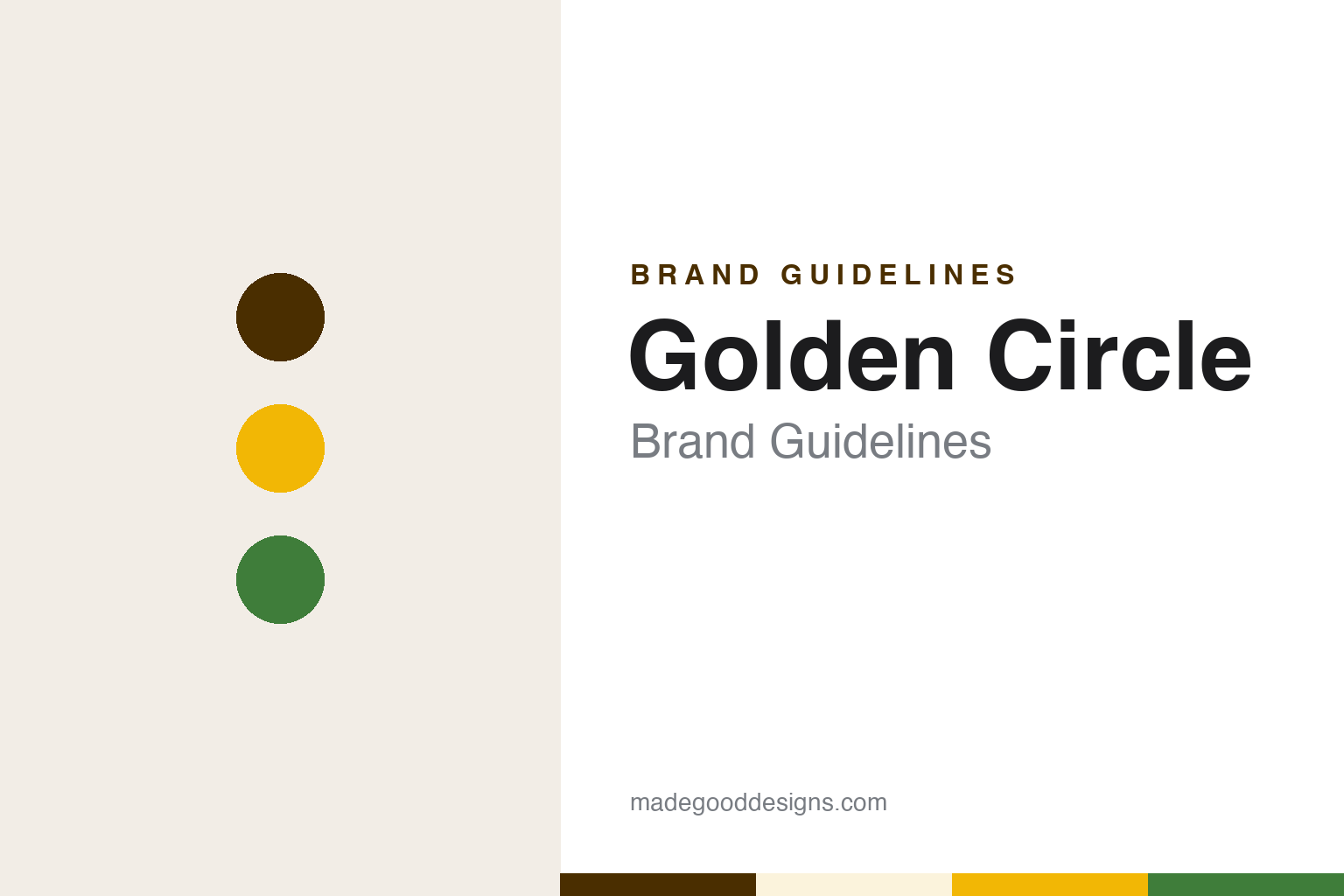
Golden Circle Brand Guidelines
The growers’ pineapple cannery of Northgate, since 1947.
Aa
Two constants: a pineapple gold, crown green and cannery brown palette and a warm display serif register. Abstract homage — not a Golden Circle product or mark; no can, label or logo is reproduced.
A growers’ cannery
Pineapple farmers, a railway line and a premier’s ribbon.
Golden Circle began as a cannery owned by the people who grew the fruit. By the mid-1940s Queensland’s pineapple industry was well established, and growers formed a cooperative to finance a cannery of their own, the Australian Food History Timeline says; more than 900 growers bought shares. The State Library of Queensland’s Business Leaders Hall of Fame, which inducted the company in 2010, says growers were frustrated that existing canners were not serving their needs and banded together to fix it, and that the new plant was built at Northgate, in Brisbane’s north, beside the railway line for ease of transport.
The cannery was opened on 28 October 1947 by the Premier of Queensland, Ned Hanlon. The Courier-Mail reported the next day that 1,500 people attended, among them 500 fruit growers from what is now the Sunshine Coast, who arrived on a special train. The business was first called Queensland Tropical Fruit Products, with Golden Circle used as its brand name, the company says. It began inside the Committee of Direction of Fruit Marketing, the Queensland growers’ marketing body, and in 1964, under the leadership of Bernard Flewell-Smith and Percival Savage, it was split off as a separate business by an amendment to the state’s Fruit Marketing Organisation Acts, according to the committee’s own 1973 history as cited by Wikipedia, an account the company repeats.
The first products were canned pineapple and jams. The company says the cannery initially produced around 40,000 tonnes of canned pineapple a year, along with some canned fruit salad, tropical fruit chutneys and fruit-juice cordials. In 1948, the Australian Food History Timeline says, it added canned pawpaw, pineapple jelly, citrus cordials and tropical fruit salad; pineapple juice and other juices followed in the 1950s, and canned beetroot was sold nationally from the 1960s. The same source says the Queensland Government sent Princess Elizabeth 500 cases of canned pineapple to mark her wedding in 1947.
Colour
Recipes, rings and a cannery that kept growing.
Golden Circle sold pineapple by showing people what to cook with it. Its advertising consistently took a recipe approach, the Australian Food History Timeline says, and ran regularly in The Australian Women’s Weekly; in the early 1960s the magazine’s Leila Howard test kitchen published pineapple recipes that specified Golden Circle rings, crushed pineapple or pineapple pieces. The same source says 1950s advertisements were aimed squarely at housewives, and records an unsweetened “Dietetic” line.
The cannery grew well beyond pineapple. The Hall of Fame says that at its peak the cooperative processed the produce of 700 growers and employed around 1,700 workers, and that the company came to make more than 500 products. In 1991 it commissioned its own sugar refinery on site, and two years later it introduced a computer-run can supply system able to handle 5,000 cans a minute, the Hall of Fame says. Wikipedia lists canned fruit and vegetables, cordials, juices, soft drinks and baby food among its lines.
The pineapple remained the centre of the brand. The company says Golden Circle began as a growers’ cooperative in the 1940s and that the Northgate cannery now produces more than 150,000 tonnes a year of canned pineapple, fruit juices and cordials. For the brand’s 75th anniversary it commissioned a mural, “Made From Sunshine,” by the artist Lexie Abel of the Munimba-ja artist collective, painted with the blessing of the Jagera traditional owners; the company says the work draws on shared memories of parties, especially children’s parties, where a Golden Circle product was on the table, with the pineapple at its centre, and that staff painted part of it through a paint-by-numbers section.
The Hall of Fame describes the brand as “synonymous with the Queensland pineapple,” and counts among the company’s achievements its survival against cheaper imported fruit from countries with lower labour costs.
Typography
Design and documentation.
The seven brands in this group are all food and drink brands, and all of them come from Australia: Golden Circle, Bundaberg, Uncle Tobys, Rosella, MasterFoods, Leggo’s and Bega. Australian food and drink brands in general sit at many different points in the trade, from companies that still carry a founder’s name or a home town to names that now belong to much larger food groups, and a single brand can be sold everywhere from a corner store to a supermarket shelf.
A food or drink brand’s identity is usually carried less by a single product than by a pack, a name and the meal or moment it promises, because the company behind the name may have changed hands, moved its factory or grown far beyond the town where it started. That makes the questions behind each name worth asking plainly: who started it, who owns it now, and where its products are actually made and packed.
Each guide separates what independent sources record from what the company says about itself — its founding story, its owners over time, where its products are made and how its packaging has changed — and marks plainly what rests only on the company’s own word.
Aa
A warm display serif for a sunny cannery brand. (Specimen set in Fraunces, a serif STAND-IN; NOT the Golden Circle logo.)
Golden Circle
From grower shareholders to Heinz and Kraft Heinz.
Golden Circle stayed in growers’ hands for most of its life. It became an unlisted public company in 1992, the Australian Food History Timeline says. In 2003 its board bought the rights to The Original Juice Company of Griffith, New South Wales, an investment the same source calls unsound; in 2007 Golden Circle sold 35% of the business to a US equity company, the first sale of shares to anyone other than the growers.
Two bigger bidders followed. On 26 September 2007 Coca-Cola Amatil announced a conditional takeover bid, The Age reported. On 6 October 2008 the US food company H. J. Heinz launched its own bid, which Phillip Cave called “attractive” given the economic conditions, ABC News reported. Wikipedia, citing a company release, says the Heinz takeover was completed on 19 December 2008, ending Golden Circle’s Australian ownership. Heinz merged with Kraft in 2015, and Wikipedia lists Golden Circle today as a subsidiary of Kraft Heinz.
Under Heinz the operation was reshaped. In May 2011 the company said it would move beetroot canning to New Zealand, at a cost of 160 jobs at Northgate, ABC News and The Courier-Mail reported. In October 2013 Heinz announced it would close the Golden Circle beverage plant at Mill Park, on Melbourne’s northern edge, in 2014, with more than 150 jobs lost, and invest $8 million in upgrading juice production at Northgate, Food & Drink Business reported; the company said the Victorian plant was too small to justify investing in robotics. The Hall of Fame says Heinz’s purchase brought capital and expertise while the brand kept its Queensland home, and Wikipedia records factory outlets at Capalaba and Morayfield, on Brisbane’s fringes.
For a design guide, Golden Circle shows how a growers’ cooperative turned one fruit into a household name through recipes, rings and a sunny name. Compare Lea & Perrins, another Kraft Heinz label, and Bundaberg, the Queensland ginger-beer brewer. For this guide we use pineapple gold, a crown green and a cannery brown with a warm serif, an unofficial interpretation; no product or logo is reproduced.
Explore & save
Keep Golden Circle’s identity on hand — save it to a board in the Made Good inspiration library.
Golden Circle identity set
Pin the Golden Circle pineapple gold, crown green and cannery brown palette and the warm display serif register to your own board.


