La Casera Brand Guidelines
The Madrid gaseosa that Spain asked for by name.
Aa
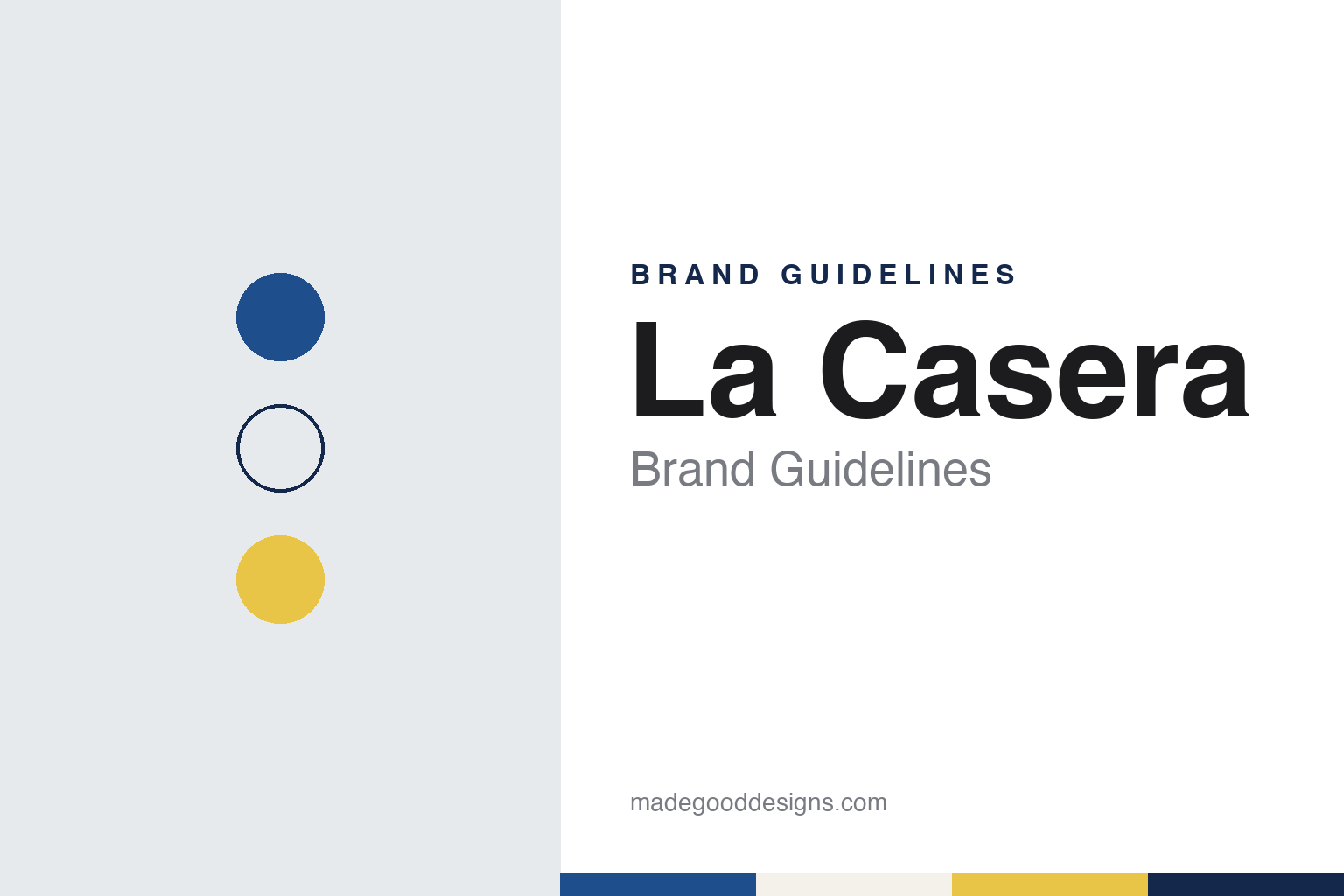
Two constants: a La Casera blue, white and lemon palette and a homely serif register. Abstract homage — not a La Casera product or mark; no bottle, label or logo is reproduced.
The Duffo family
A siphon trade, a French émigré and a Madrid gaseosa.
La Casera is a Spanish gaseosa — the clear, lightly sweet sparkling drink that Spaniards drink on its own or mix with wine or beer. Its roots lie with Francisco Duffo Foix, born in Saint-Laurent-de-Neste in France, who married Victoria González after meeting her on a trip to San Sebastián, El Mundo reported in 1995. Spanish Wikipedia, citing Eugenio Torres Villanueva’s 2017 book Cien empresarios madrileños, says Duffo became the agent in Spain for the English siphon maker British Siphon and for the French bottling-equipment firm SMA. Citing a 2003 history of Coca-Cola in Spain by Javier Olave, it adds that in 1928 he obtained the first Coca-Cola concession for the peninsula, which he bottled until the Civil War.
The brand itself belongs to the next generation. According to Spanish Wikipedia, Duffo’s son Félix Duffo González had the idea of making a standardised gaseosa that could be sold across the whole country, at a time when most gaseosas were small local brands. His brothers took their own parts: Francisco the distribution, and Víctor, a maker of essences and syrups, the flavour, with Félix coordinating. La Casera S.L. was constituted on 31 May 1949, and premises in Madrid followed that summer.
The first bottles reached the market in April 1950, Spanish Wikipedia says. They were one-litre bottles closed not with the old cork and string but with a mechanical swing-top and a porcelain stopper, which gave the drink an air of something modern and hygienic. Wherever the company wanted to establish itself, the same source says, it bought the strongest local gaseosa factory or signed a partnership, building its own distribution network across a poorly connected post-war country. Lemon and orange flavours followed in the 1960s.
By the mid-1980s La Casera was the best-selling gaseosa in Spain and the country’s third soft-drink company after Coca-Cola and Pepsi, El País reported in 1986, with 40 bottling plants, its own brands including Monte Verde and Surfing, and a licence to sell Seven Up.
Colour
From “A mí La Casera” to the rooftop of 13 Rue del Percebe.
Advertising carried the brand. Spanish Wikipedia records the slogan “A mí La Casera” in 1967 and, the year after, a turn to hyperbolic humour with “¿Te acuerdas cuando bebíamos agua?” — “Remember when we used to drink water?” — a tone it says became part of the brand’s identity. About a decade later came “La Casera es de casa,” and later still “Si no hay Casera nos vamos,” “If there’s no Casera, we’re leaving,” which Cinco Días reported in July 2005 was being brought back in a new campaign.
That 2005 campaign set the slogan to a pasodoble. In January 2006 El País reported that Cadbury Schweppes, then the owner, used the mix of traditional music and young people to make La Casera at once a family brand and a young one, drawing on what its marketing director called the drink’s Mediterranean profile. She also told the paper that gaseosa “is a Spanish category that does not exist in other countries,” and the paper noted that customers asked for “una casera” when they simply wanted a gaseosa.
In 2010 the brand turned to comics. El País reported that May that a campaign directed by the film-maker Javier Fesser and created by the agency Grey was based on Francisco Ibáñez’s strip 13 Rue del Percebe, first drawn in 1961; across 13 television spots, the neighbours of Ibáñez’s cut-away apartment building watch a La Casera sign being installed on their roof.
The packaging has its own history. Spanish Wikipedia says that for the brand’s 50th anniversary in 1999 a commemorative edition of the old glass bottle — a replica of those withdrawn in the 1970s — was made in more than a million units, and that until the early 1990s the logo included a smiling little house illustrating the brand name, a design it says was revived in 2008.
The company also publishes rules for the name. Its basic brand-use guidelines ask that “La Casera” be written with a capital L and C, or entirely in capitals, followed by the ® symbol and paired with the product word — “gaseosa La Casera®” — and that it never be used as a common noun, as in “una casera.”
Typography
Design and documentation.
The seven brands in this group are all soft drink and water names from Spain and Italy: La Casera, Trina, Font Vella, Bezoya, Aquarius, Lemonsoda and Levissima. Spanish and Italian soft drink and water brands in general sit at many different points in the trade, from family firms that still carry a founder’s name to names that now belong to much larger food and drink groups, and a single brand can be sold everywhere from a corner bar to a supermarket shelf.
A soft drink or water brand’s identity is usually carried less by a single product than by a bottle, a label, a name and the drink it promises, because the company behind the name may have changed hands, moved its bottling or grown far beyond the place where it started. That makes the questions behind each name worth asking plainly: who started it, who owns it now, and where its drinks are actually made and bottled.
Each guide separates what independent sources record from what the company says about itself — its founding story, its owners over time, where its drinks are made and how its packaging has changed — and marks plainly what rests only on the company’s own word.
Aa
A warm, homely serif for a family table drink. (Specimen set in DM Serif Display, a serif STAND-IN; NOT the La Casera logo.)
La Casera
From the Duffo family to Cadbury Schweppes and Suntory.
The family did not keep the company. Its share of the soft-drink market fell from 19.1% in 1990 to 12.3% in 1995, El País reported, and in November 1995 the Iberian Beverage Group — formed by the brewer Bavaria, controlled by Colombia’s Santo Domingo family, the Berggruen family and the US investment fund Westford — bought 51% from the Duffo family. In May 1996 it took control of 100%, the same paper reported.
In July 2001 Cadbury Schweppes bought La Casera, Cinco Días reported. In November 2005 the British group agreed to sell its continental European drinks business, La Casera and Trina included, to the investment firms Lion Capital and Blackstone, according to El País. That business later traded as Orangina Schweppes, and in 2009 it was bought by Japan’s Suntory. In September 2020 Schweppes Suntory España was renamed Suntory Beverage & Food Spain, the trade magazine Financial Food reported.
Today the brand calls itself “El refresco mediterráneo” and marked its 75th anniversary on its website. Its range runs from the original gaseosa and lemon, orange and cola drinks to ready-mixed tinto de verano, the summer mix of red wine and gaseosa that Spanish Wikipedia says was long made with La Casera. Its brand-use guidelines name Schweppes International Limited as owner of the mark and Schweppes, S.A. as licensee. The company says the Guajaraz reservoir, where it runs a water-conservation project, is one of three that supply water to “our Toledo factory”; it does not say on that page which drinks are made there.
For a design guide, La Casera shows how a brand can become the everyday word for its own category — and why its owner works to keep the name a proper noun. Compare Trina, the Valencian orange drink that passed to the same owners, and Kas, another Spanish soft drink with a long advertising history. For this guide we use blue, white and a lemon yellow with a serif, an unofficial interpretation; no product or logo is reproduced.
Explore & save
Keep La Casera’s identity on hand — save it to a board in the Made Good inspiration library.
La Casera identity set
Pin the La Casera blue, white and lemon palette and the homely serif register to your own board.