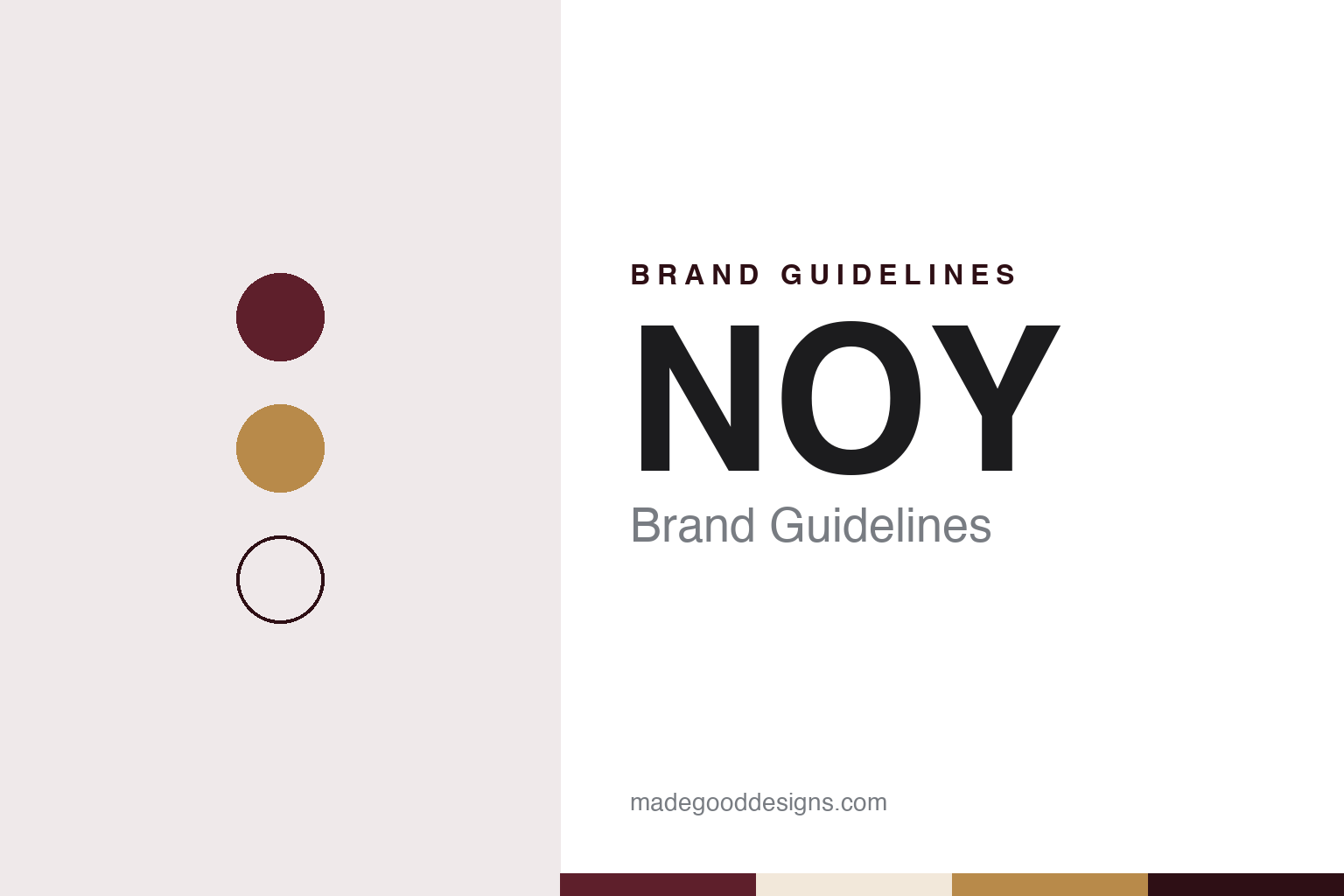
NOY Brand Guidelines
The Armenian brandy made on the site of Yerevan’s old fortress.
Aa
Two constants: a fortress garnet, oak gold and stone cream palette and a high-contrast display serif register. Abstract homage — not a NOY product or mark; no label, logo or bottle is reproduced.
A winery in the Hrazdan gorge
Tairyan, Shustov and the old Erivan Fortress.
NOY is the brandy of the Yerevan Ararat Brandy-Wine-Vodka Factory, a company whose legal name still carries the word Ararat even though its brandy does not. The factory dates itself to 1877. Its owner, the Multi Group concern, says the plant was built that year by Nerses Tairyan, a merchant of the first guild, in the Hrazdan gorge in Yerevan. English Wikipedia places it on the left bank of the Hrazdan in the centre of the city, on the grounds of the old Erivan Fortress, and says Tairyan began with wine before adding brandy.
Tairyan did not keep the business. Multi Group says the factory was bought in 1899 by N. L. Shustov and Sons, the Moscow firm then among the leading drinks producers of the Russian Empire; English Wikipedia says Nikolay Shustov first leased the plant in 1899 and bought it a year later, and that he brought in the distiller Kirill Silchenko. In a 2020 statement issued through the Russian drinks group Beluga, the factory said its site had housed the first brandy factory in Armenia and that in tsarist times it was a supplier to the imperial court.
That shared beginning explains a lasting overlap. Tairyan’s distillery is also the starting point of the story told by the ARARAT brandy of the Yerevan Brandy Company, which dates its own origin to 1887. Each company presents itself as an heir of Tairyan and Shustov. In 2000, as the two sides argued over the Ararat name, the head of the Great Ararat Company told the Mediamax agency that the rival Yerevan Brandy Factory building dated only from 1953, and called the “Ararat” brandy-wine-vodka enterprise on the historic site the true successor of the Shustov tradition, PanArmenian reported.
Colour
A Soviet parent plant and a 2002 revival.
The Soviet years reshaped the factory. Multi Group says it was nationalised in 1920, renamed in May 1921 and became the parent enterprise of brandy and wine making in Soviet Armenia. Its main buildings date from 1938: English Wikipedia, citing a 1982 guide to Yerevan, says they were built on the site of the former sardar’s palace of the Erivan Fortress, to a design by the architect Rafael Israelyan. English Wikipedia adds that in 1948 Armenian brandy making was reorganised into two separate entities, this factory and the Yerevan Brandy Company.
The modern brand dates from the factory’s privatisation. Multi Group says the plant was in an abandoned state after the Soviet collapse and was revived in 2002 under Gagik Tsarukyan, the founder of the Multi Group concern, after which it spent two years restoring its brandy production base. The brandy was given the name NOY, the Armenian form of the name Noah. The factory runs a museum on site.
The range is built in tiers. Among its lines are NOY Classic, the 25-year-old NOY Tirakal, NOY Araspel and NOY Kremlin Award; the factory also makes brandies sold as Erivan Fortress and Legends of Sevan. The Kremlin Award name reflects a status the factory says it won in 2006, when it became an official supplier to the Moscow Kremlin. On 21 April 2016 the factory presented two older brandies, NOY 30 and NOY 50, at a gala in Yerevan, according to its then Russian distributor, Luding. On the question of where NOY is made, the factory said in 2020 that its distillates come from local grape varieties grown only in Armenia.
Typography
Design and documentation.
The seven brands in this group are Armenian brandy houses and Georgian, Lebanese and Israeli wineries: Ararat, Noy, Tbilvino, Teliani Valley, Château Musar, Ixsir and Golan Heights Winery. Brandy and wine brands in general sit at many different points in the trade, from family houses that still carry a founder’s name to labels that now belong to much larger drinks groups, and a single brand can be sold everywhere from a corner shop to a restaurant list.
A brandy or wine brand’s identity is usually carried less by a single bottle than by a label, a name and the place it promises, because the company behind the name may have changed hands, moved its production or grown far beyond the place where it started. That makes the questions behind each name worth asking plainly: who started it, who owns it now, and where its brandy or wine is actually made and bottled.
Each guide separates what independent sources record from what the company says about itself — its founding story, its owners over time, where its brandy or wine is made and how its labels have changed — and marks plainly what rests only on the company’s own word.
Aa
A high-contrast display serif for a brandy house that dates its site to 1877. (Specimen set in Playfair Display, a serif STAND-IN; NOT the NOY logo.)
NOY
Russia, Multi Group and the state.
NOY reaches Russia through Moscow importers. In 2016 the Moscow importer Luding described itself as the official and sole distributor of NOY in Russia. In February 2020 the drinks group then called Beluga Group, now Novabev, announced that it would become NOY’s exclusive Russian distributor from 1 March 2020, describing NOY as present in more than 30 countries. In that announcement Tsarukyan, named as an owner of the factory, said NOY had long been sold in Russia but still had untapped potential there.
The ownership picture changed in 2026. In late July 2026 an Armenian court placed the factory’s shares under government management pending a ruling on prosecutors’ demand to confiscate assets of Gagik Tsarukyan, who has denied the fraud charges brought against him and was also charged with tax evasion relating to the distillery, RFE/RL’s Armenian service, Azatutyun, reported on 31 July 2026. The factory itself remains on its historic site in the Hrazdan gorge.
The name is a source of easy confusion. NOY comes from the Yerevan Ararat Brandy-Wine-Vodka Factory, while ARARAT brandy comes from the Yerevan Brandy Company, a Pernod Ricard subsidiary on the hill across the river; the two have been separate businesses since the Soviet period. Both firms describe their brandy as made in Armenia from Armenian-grown grapes, the rule for Armenian brandy.
For a design guide, NOY shows how a factory can build a brand on a site, a fortress and a founding date while sharing its early history with a rival. Compare ARARAT, the Yerevan brandy that claims the same founder, and Beluga, the vodka whose parent group became NOY’s Russian distributor in 2020. For this guide we use fortress garnet, oak gold and stone cream with a high-contrast serif, an unofficial interpretation; no product or logo is reproduced.
Explore & save
Keep NOY’s identity on hand — save it to a board in the Made Good inspiration library.
NOY identity set
Pin the NOY fortress garnet, oak gold and stone cream palette and the high-contrast display serif register to your own board.