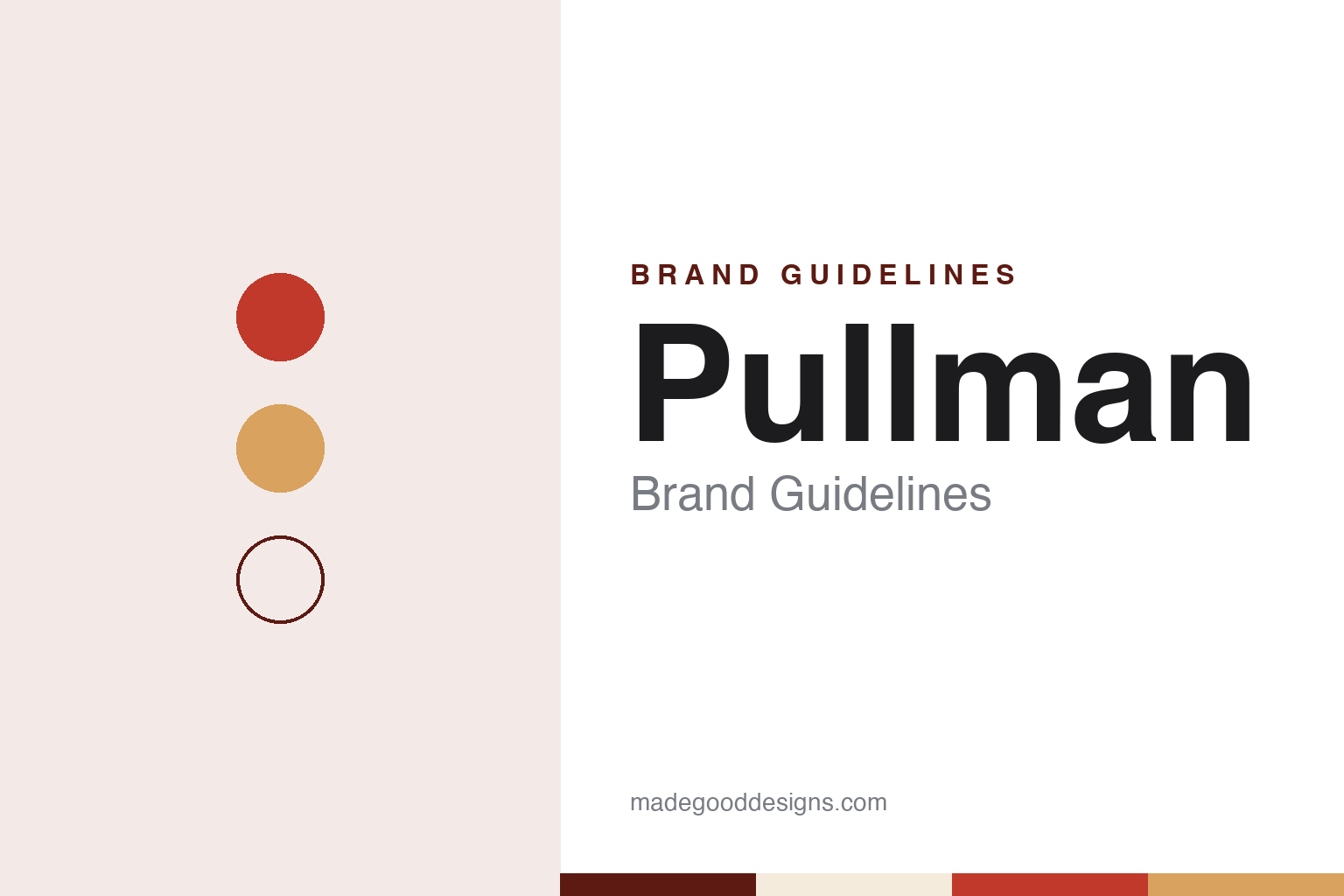
Pullman Brand Guidelines
The Brazilian sliced loaf that Bimbo bought in 2001.
Aa
Two constants: a crust red, golden crust and crumb cream palette and a warm bakery serif register. Abstract homage — not a Pullman product or mark; no pack, logo or loaf is reproduced.
A loaf from the 1950s
An American-style loaf and a name that became a word.
Pullman is one of the best-known names in Brazilian packaged bread. Its owner today, Bimbo do Brasil, says that Pullman has been part of the routine of Brazilian families since 1950 and describes the brand as a pioneer of the pão de forma category in the country — pão de forma being the Brazilian term for soft, sliced loaf bread baked in a tin. The brand’s own line on its owner’s website is “O sabor da família brasileira,” the taste of the Brazilian family.
Portuguese Wikipedia, citing the Brazilian trivia publication O Guia dos Curiosos, gives the origin story in more detail. In the 1950s, it says, Manoel Correa de Souza Filho, returning from a trip to the United States, founded a company called Pão Americano Indústria e Comércio, using technology imported from the United States. With it, the encyclopedia says, the traditional pão de forma — the “pão pullman” — arrived on the Brazilian market.
The word itself has a longer history than the brand. In English, a Pullman loaf is a rectangular loaf of white bread baked in a long, narrow tin with a lid, which gives it flat sides and a square slice. English and Portuguese Wikipedia, citing The Oxford Companion to American Food and Drink (2007), say the name comes from the compact kitchens of the Pullman railway cars in the United States, where three of the square loaves took up the space of two ordinary round-topped ones. The French call the same style of loaf pain de mie.
In Brazil the brand name went further still. Portuguese Wikipedia, citing the business magazine IstoÉ Dinheiro, says Pullman became a generic name for pão de forma in the country — the kind of brand that shoppers use for the whole category, whoever baked the loaf.
Colour
From bread to cakes, then into larger groups.
Success with sliced bread carried the brand into neighbouring shelves. According to Portuguese Wikipedia, citing IstoÉ Dinheiro, Pullman expanded from bread into industrially made cakes and sweet goods as the business grew.
The brand then changed hands twice in five years. In 1996, Portuguese Wikipedia says, Pullman was sold to the agribusiness and food group Bunge. In 2001 Bunge sold the Pullman and Plus Vita brands to Grupo Bimbo of Mexico, the encyclopedia says, again citing IstoÉ Dinheiro. English and Spanish Wikipedia list the same 2001 purchase in Grupo Bimbo’s acquisition history, citing the Mexican newspaper Excélsior, and Bimbo’s own Brazilian timeline puts it plainly: in 2001, it says, the group entered the Brazilian market through the Pullman and Plus Vita brands.
Grupo Bimbo itself dates from 2 December 1945, when, the company says, Panificación Bimbo began operating in a small factory in Mexico City; the company also says it was a pioneer in wrapping its bread in clear cellophane so that shoppers could see the loaf before buying.
The two brands acquired together still sit side by side. Bimbo do Brasil says that in some regions of the country its Pullman products are sold under the Plusvita name, with the same care for quality and freshness. On Bimbo’s brand page the Pullman range is led by a traditional loaf made with natural fermentation, and the company describes Pullman as a leader in the traditional-bread category — a claim that is the company’s own. The brand also keeps its own website, which groups the range into categories including traditional loaves and bisnagas, the soft Brazilian bread rolls, and links to a separate site for a Pullman Artesano line.
Typography
Design and documentation.
The seven brands in this group are all food and drink names from Latin America: Club Colombia, Jet, Cachantun, Evercrisp, Yoki, Vigor and Pullman. Latin American food and drink brands in general sit at many different points in the trade, from family firms that still carry a founder’s name to names that now belong to much larger food and drink groups, and a single brand can be sold everywhere from a corner shop to a supermarket shelf.
A food or drink brand’s identity is usually carried less by a single product than by a pack, a name and the meal, snack or drink it promises, because the company behind the name may have changed hands, moved its production or grown far beyond the place where it started. That makes the questions behind each name worth asking plainly: who started it, who owns it now, and where its products are actually made and packed.
Each guide separates what independent sources record from what the company says about itself — its founding story, its owners over time, where its products are made and how its packaging has changed — and marks plainly what rests only on the company’s own word.
Aa
A warm bakery serif for a brand that made sliced bread a household word in Brazil. (Specimen set in Fraunces, a serif STAND-IN; NOT the Pullman logo.)
Pullman
One brand inside a growing Brazilian bakery group.
Pullman is today one of several bread and snack brands run by Bimbo do Brasil Ltda., a wholly owned subsidiary of the Mexican Grupo Bimbo. A September 2025 report by Estadão Conteúdo, carried by CNN Brasil, listed the company’s Brazilian brands as Pullman, Plusvita, Ana Maria, Nutrella, Rap10 and Bisnaguito, covering breads, bisnagas, cakes and snacks. Bimbo added Nutrella in 2008, according to English and Portuguese Wikipedia.
The group has kept growing in the same market. On 17 September 2025, CNN Brasil reported, the tribunal of CADE, Brazil’s competition authority, approved Bimbo’s purchase of Wickbold, a Brazilian bread maker founded in 1938, on condition of an agreement between the companies. Among the remedies, the report said, Bimbo was to sell the Nutrella brand and Wickbold its Tá Pronto! wraps, with Bimbo barred from buying Nutrella back for ten years. Bimbo do Brasil’s own timeline now says that Wickbold and Seven Boys have joined the business.
Bimbo do Brasil presents Pullman as the brand that has been on Brazilian tables since 1950, and the company says that its wide distribution gets the bread to shops quickly, so that it arrives fresh “from our oven to your home.”
For a design guide, Pullman shows how a brand can borrow a word for a style of loaf, make it its own and then watch it become the everyday name for the whole category in its country. Compare Bimbo, the Mexico City baker that bought it in 2001, and Warburtons, the British family baker built on sliced bread. For this guide we use a crust red, a golden crust tone and a crumb cream with a warm serif, an unofficial interpretation; no product or logo is reproduced.
Explore & save
Keep Pullman’s identity on hand — save it to a board in the Made Good inspiration library.
Pullman identity set
Pin the Pullman crust red, golden crust and crumb cream palette and the warm bakery serif register to your own board.