Vindija Brand Guidelines
The Varaždin dairy named after a cave.
Aa
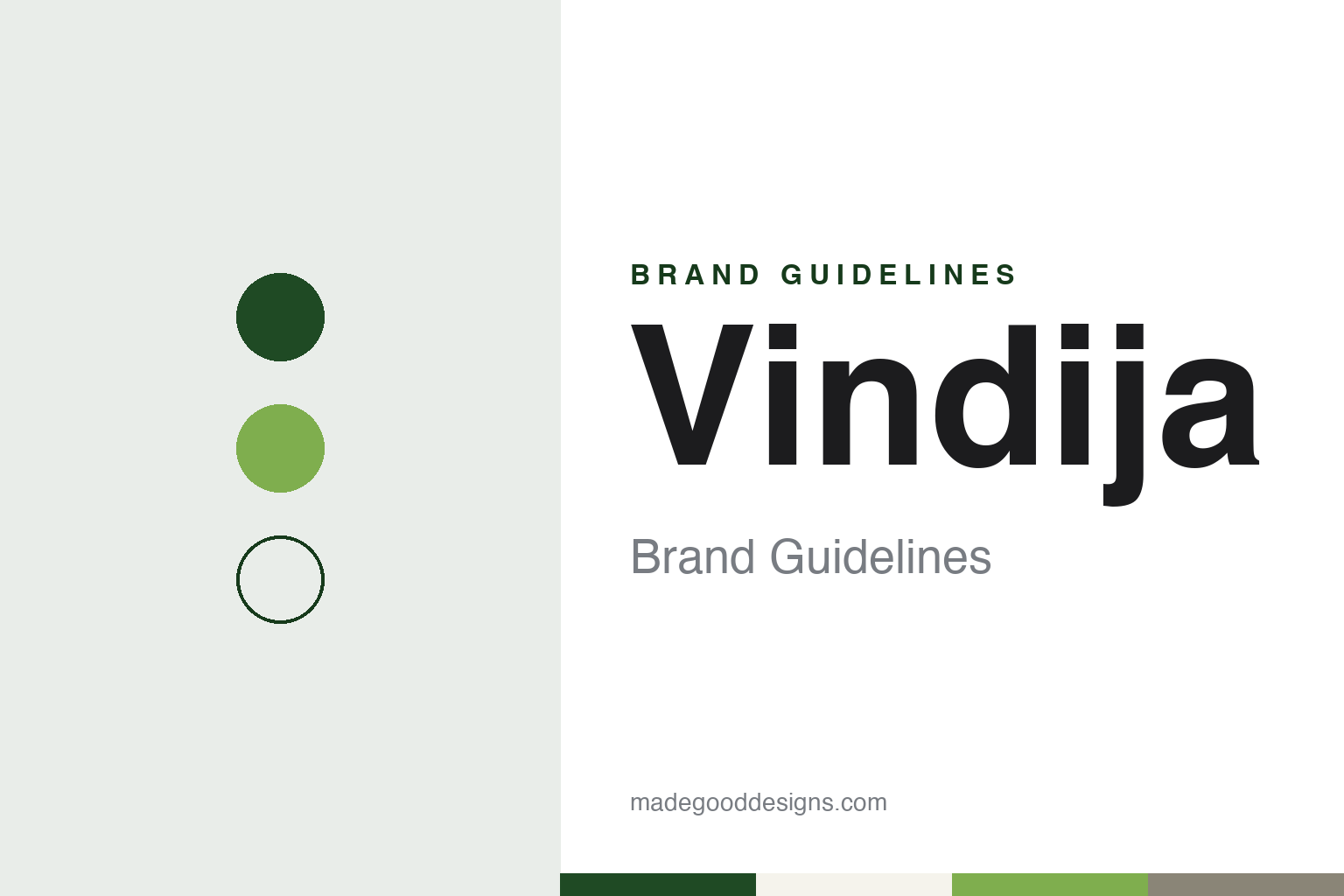
Two constants: a hill green, meadow green and cave stone palette and a warm country serif register. Abstract homage — not a Vindija product or mark; no pack, logo or carton is reproduced.
The town dairy
Glass bottles, wire crates and a cave for a name.
Vindija began as the town dairy of Varaždin, in northern Croatia, in 1959. English Wikipedia, citing a 1994 history of the company in the dairy journal Mljekarstvo, says it was founded when the town needed a dairy to supply it with fresh milk. The company’s archived history from 2014 says the town dairy employed only about fifteen people and bought up to 1.5 million litres of milk a year from villages around Varaždin and Čakovec; Croatian Wikipedia puts the early staff at about twenty. The company today greets customers with the line “Dobar vam dan, baš svaki dan od 1959.,” a good day to you, every day since 1959.
Delivery was by hand. Croatian Wikipedia says milk was packed in glass bottles that were carried around town early in the morning in sturdy wire crates, and the company’s 2014 history says Varaždin households had their bottles delivered to the doorstep. Croatian Wikipedia says that lasted until 1970, when fresh milk began to be packed in plastic bags. The archived history adds that from 1961 the dairy invested in reconstruction and also began making drinks, including bottled lemonade.
In 1965, English Wikipedia says, the dairy was folded into a larger company, ZPPK Kalnik, and Dragutin Drk became its director. The name Vindija was adopted in 1970. It comes from Vindija Cave, a known archaeological site near Donja Voća in Varaždin County. English Wikipedia, citing Mljekarstvo, says the name was picked because the cave was assumed to have served as a natural place for ripening cheese; the company says cheesemakers have long ripened cheeses in caves, and that Vindija took the name after becoming the first in Croatia to make mould-ripened cheeses. The cave and the company share only the name.
Colour
’z bregov, Tetra Pak and a turn through Zagreb.
The early 1970s brought a detour. English Wikipedia, again citing Mljekarstvo, says that in 1970 Kalnik’s slaughterhouse and meat business became a separate company, PPK Koka Varaždin, while the rest of the business was grouped with Zagrebačka mljekara, the Zagreb dairy that later became Dukat. In 1972 the combined company was renamed OOUR Zagrebačka mljekara, and in 1979 the Varaždin dairy was set up on its own again as RO Vindija.
The best-known brand arrived in between. The company says that in 1977 it became the first in Croatia to replace glass milk bottles with Tetra Pak cartons, and that the same year saw the birth of ’z bregov, launched with a whole run of new products; its archived history calls it the first in the region to use the cartons. The company’s 2014 history says that by the end of the 1970s it had opened a new factory for semi-hard cheese and begun making juices in cartons and ready-made milk puddings. English Wikipedia says that in 1990 a large investment made it one of the most modern dairies in Europe at the time, and that in 1992 it was named the best company in Croatia, both citing the 1994 Mljekarstvo history. The dairy campus covers 22,000 square metres inside the town, the same source says.
Today ’z bregov is the name on Vindija’s milk, and the company says ’z bregov fresh and long-life milk is Croatia’s number one milk by consumers’ choice; that is its own claim. Croatian Wikipedia says its products are grouped under a single mark, “Kvaliteta Vindija.” Its website lists brands across dairy, drinks and meat: alongside ’z bregov sit Vindi juices, the Uragan energy drink, the ISO Sport range, the Dar plant-based line and the Vindino desserts for children. The company says it works with more than 1,000 Croatian farmers and is the only buyer in Croatia of cow’s, goat’s and sheep’s milk, and that its meat and dairy products reach shops within 24 hours; those are its own statements.
Typography
Design and documentation.
The seven brands in this group all make food or drink, and all of them come from Croatia: Dukat, Vindija, Zvečevo, Franck, Cedevita, Jamnica and Ledo. Croatian food and drink brands in general sit at many different points in the trade, from firms that still carry the name of the town or region where they started to names that now belong to much larger food groups, and a single brand can be sold everywhere from a corner kiosk to a supermarket shelf.
A food or drink brand’s identity is usually carried less by a single product than by a pack, a name and the everyday moment it promises, because the company behind the name may have changed hands, moved its production or grown far beyond the town where it started. That makes the questions behind each name worth asking plainly: who started it, who owns it now, and where its products are actually made and packed.
Each guide separates what independent sources record from what the company says about itself — its founding story, its owners over time, where its products are made and how its packaging has changed — and marks plainly what rests only on the company’s own word.
Aa
A warm country serif for a dairy named after a cave in the hills. (Specimen set in Lora, a serif STAND-IN; NOT the Vindija logo.)
Vindija
Chicken, bread, turkey and a director for 56 years.
From the 1990s Vindija grew well beyond milk. The company’s 2014 history says it took over Koka, Croatia’s largest producer of chickens and chicken products, whose goods are sold under the Cekin brand; the same page dates the takeover to both 1993 and 1995. It also brought in Latica, the largest bakery in Varaždin County, the Rijeka meat processor ViR 1898 in 1997 and the Županja dairy Novi Domil in 2003. That same year it opened Vindon, a turkey plant in Slavonski Brod, and in 2006 it added its own animal-feed factory, BIOdar, the company says.
The man behind that growth was Dragutin Drk. Croatian Wikipedia says he trained at a dairy school in Varaždin and started as a foreman at the town dairy, became director in 1965 and, through privatisation, became the owner of Vindija. He was also deputy mayor of Varaždin from 1997 to 2000. Drk died on 8 February 2021, aged 84, the Rijeka daily Novi list reported that day, describing him as the majority shareholder and sole member of the management board, who had led Vindija for more than 50 years. The company today calls him the visionary who created Vindija.
The group is large by Croatian standards. The company says it has 4,272 employees, ten companies, twelve brands, about 1,400 products and sales in 19 markets. Croatian Wikipedia, citing a list of Croatia’s largest companies, says that in 2007 Vindija was the country’s second-largest food company after Podravka. The company says it runs its own feed factory, poultry rearing, veterinary service and laboratory, which carries out some 100,000 quality analyses a year.
For a design guide, Vindija shows how a cave, a carton milk brand and a town dairy’s morning bottle round can grow into a national food group. Compare Dukat, the Zagreb dairy it was grouped with in the 1970s, and Ledo, the Croatian ice-cream maker. For this guide we use a hill green, a meadow green and a cave-stone grey with a serif, an unofficial interpretation; no product or logo is reproduced.
Explore & save
Keep Vindija’s identity on hand — save it to a board in the Made Good inspiration library.
Vindija identity set
Pin the Vindija hill green, meadow green and cave stone palette and the warm country serif register to your own board.