Yeni Rakı Brand Guidelines
The Tekel rakı now distilled in Alaşehir & Nevşehir.
Aa
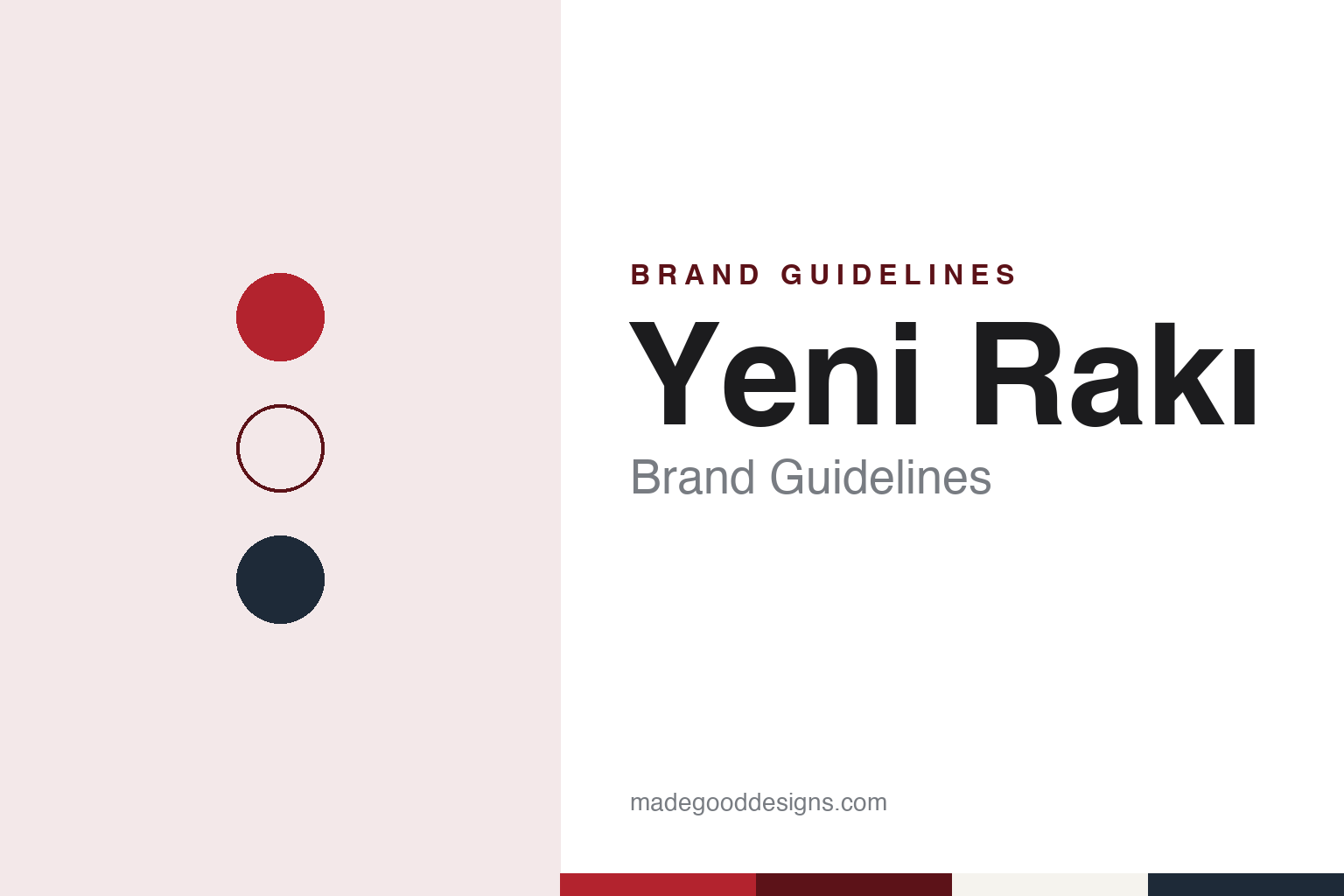
Two constants: a meyhane red, Bosphorus navy and lion’s-milk white palette and a high-contrast display serif register. Abstract homage — not a Yeni Rakı product or mark; no label, logo or bottle is reproduced.
A state monopoly’s “new rakı”
From Tekel’s factories to a private company and then to Diageo.
Yeni Rakı means simply “new rakı,” and for most of its life it was a product of the Turkish state. English Wikipedia’s history of rakı says that under the Republic, grape-based rakı was distilled by the state spirits and tobacco monopoly Tekel, and that when rising sugar-beet production let Tekel distil alcohol from molasses, a new brand made with sugar-beet alcohol was introduced under the name Yeni Rakı; the molasses, the same article says, gave it a distinctive bitter edge that helped its popularity. Turkish Wikipedia dates the earliest known use of the name to 1937 and says Tekel made the brand from then until 2004.
That year the state left the business. English Wikipedia’s article on Tekel says the monopoly’s alcoholic-beverages division was privatised separately in 2004, leading to the creation of Mey İçki. A Reuters report from 2006, reprinted by the construction group Limak, one of the buyers, said a Turkish consortium had bought Mey İçki, “the alcoholic drinks arm” of Tekel, in a privatisation tender in February 2004, and that the US private-equity firm Texas Pacific Group had now bought 90 percent of the company.
The last handover so far came five years later. Diageo completed its acquisition of Mey İçki from TPG Capital and the Actera group in 2011. English Wikipedia’s rakı article now describes Diageo, through Mey İçki, as the largest rakı producer and Yeni Rakı as the largest brand. Tekel’s tobacco side took a separate path: English Wikipedia says British American Tobacco acquired its cigarette business in June 2008.
Colour
Grapes, aniseed and a bottle that narrows at the waist.
Rakı is an anise spirit, and Yeni Rakı’s recipe is set out in some detail. Turkish Wikipedia lists its main raw materials as suma distilled from fresh or dried grapes, alcohol made from sugar-beet molasses, and aniseed, and says at least 65 percent of the alcohol in the bottle comes from grape suma; the standard bottling is 45% ABV. Like other rakı, it turns milky white when water is added, which English Wikipedia says is why the drink is popularly called aslan sütü, “lion’s milk.”
Where it is made is documented by the owner. Diageo Türkiye, the name under which Mey İçki now trades, lists seven production sites; its Alaşehir Spirits Factory in Manisa province is described as a rakı plant, its Nevşehir Spirits Factory in Cappadocia makes rakı and suma, a factory in Tarsus makes suma and agricultural alcohol, and an anise-processing site operates in Acıpayam. Turkish Wikipedia names the Alaşehir and Nevşehir factories as the places Yeni Rakı is produced today, and English Wikipedia notes an innovation centre in Alaşehir, the Yenilikhane, with two small copper stills for developing new rakı recipes.
The brand has become a family since privatisation. Turkish Wikipedia says that after the 2004 sale the classic bottle was redrawn in a softer shape that narrows in the middle; that Yeni Seri, launched in 2008 and made only from first-harvest aniseed, has its own bottle, colour and graphics; that Yeni Rakı Âlâ, introduced in 2011 and triple-distilled from dried-grape suma, is told apart by its colour coding; and that Ustaların Karışımı joined in 2016. The brand and its sub-brands are registered trademarks of Mey İçki in Turkey and more than 20 other countries, the same article says. It also cites a rakı sensory aroma wheel, developed with Çukurova University and published in 2021 in the scientific journal Foods, which it uses to set out tasting notes for each variant in the family.
Typography
Design and documentation.
The seven brands in this group are all pisco, cachaça and anise-spirit names: Pisco Capel, Pisco Portón, BarSol, Leblon, Novo Fogo, Yeni Rakı and Ksarak. Spirit brands in general sit at many different points in the trade, from family houses and cooperatives that still carry a founder’s or a place’s name to labels that now belong to much larger drinks groups, and a single brand can be sold everywhere from a corner shop to a cocktail bar.
A spirit brand’s identity is usually carried less by a single bottle than by a label, a name and the place it promises, because the company behind the name may have changed hands, moved its production or grown far beyond the place where it started. That makes the questions behind each name worth asking plainly: who started it, who owns it now, and where its spirit is actually distilled and bottled.
Each guide separates what independent sources record from what the company says about itself — its founding story, its owners over time, where its spirit is made and how its labels have changed — and marks plainly what rests only on the company’s own word.
Aa
A high-contrast display serif for a traditional, ceremonial register. (Specimen set in Playfair Display, a serif STAND-IN; NOT the Yeni Rakı logo.)
Yeni Rakı
A Turkish national spirit inside a global drinks group.
Under Diageo the brand has been pushed abroad as a cultural export as much as a drink. English Wikipedia, citing Diageo Türkiye releases, says Yeni Rakı has organised World Rakı Week since 2023; the 2024 edition ran from 29 November to 8 December in London, Berlin, Hamburg, Amsterdam, Paris, Vienna and Dubai, with pop-up venues called “The House of Yeni Rakı.” Turkish Wikipedia says the brand is exported to more than 30 countries, with Germany, Northern Cyprus and the United Kingdom among its largest markets.
The name needs care in search, because “rakı” is a generic word and Diageo owns several of the category’s other labels too. English Wikipedia lists Tekirdağ Rakısı, Kulüp Rakı, Altınbaş and İzmir Rakısı among Diageo’s rakı brands, alongside independent producers such as Efe, Burgaz and Tariş. Turkish Wikipedia traces Yeni Rakı itself in an unbroken line from Tekel to Mey İçki.
For a design guide, Yeni Rakı shows how a brand born inside a state monopoly can keep its name and bottle silhouette through privatisation and two changes of private owner — compare the Greek anise spirit Ouzo 12 and the Lebanese arak Ksarak, or, for another Turkish drinks name, Efes. For this guide we use meyhane red, Bosphorus navy and lion’s-milk white with a serif, an unofficial interpretation; no product or logo is reproduced.
Explore & save
Keep Yeni Rakı’s identity on hand — save it to a board in the Made Good inspiration library.
Yeni Rakı identity set
Pin the Yeni Rakı meyhane red, Bosphorus navy and lion’s-milk white palette and the high-contrast display serif register to your own board.