Westland Brand Guidelines
The Seattle single malt distillery owned by Rémy Cointreau.
Aa
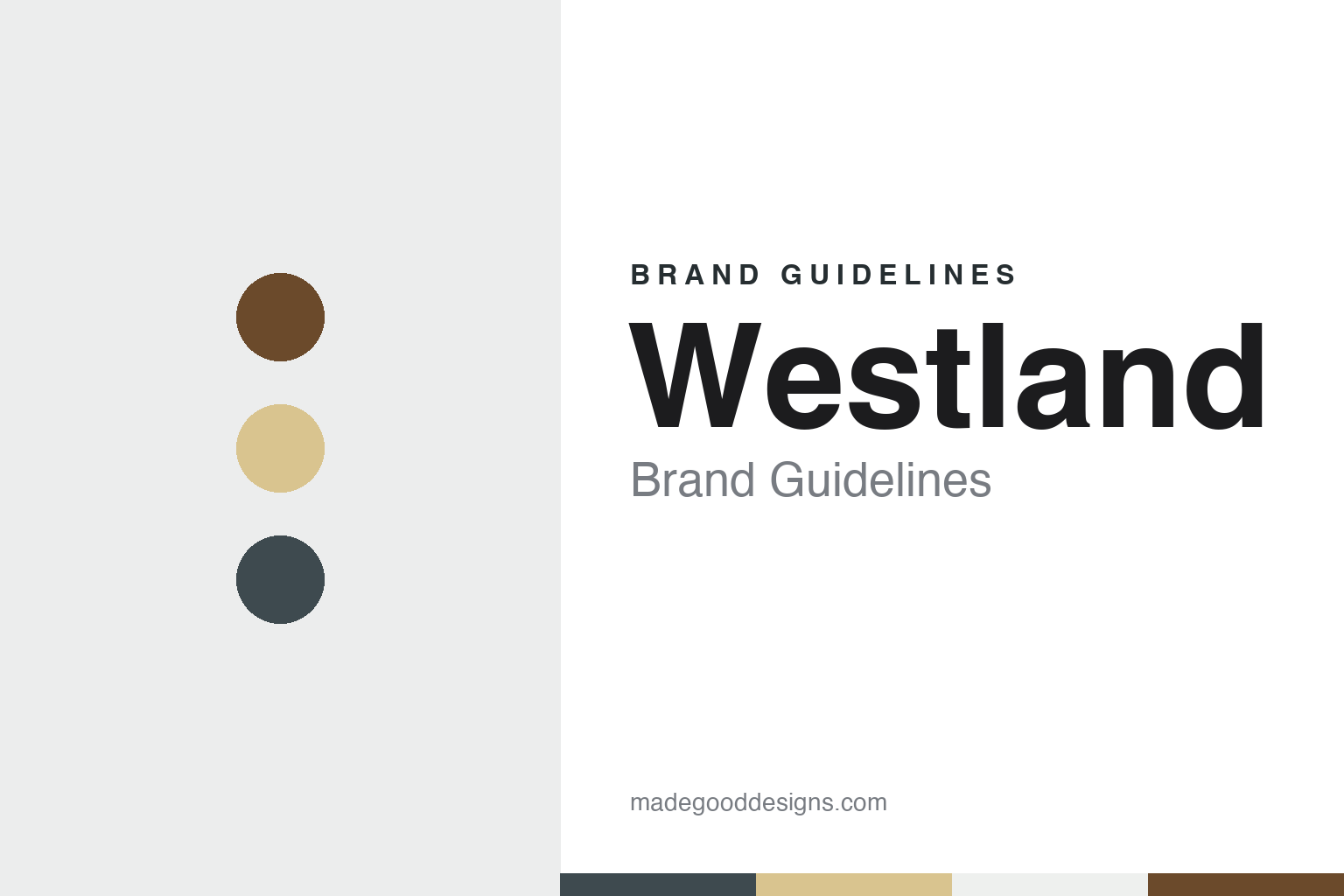
Two constants: a Puget grey, malted barley and Garry oak palette and a refined spaced serif register. Abstract homage — not a Westland product or mark; no label, logo or bottle is reproduced.
A single malt in SoDo
Two young founders, Washington barley and a Scottish model.
Westland was founded in Seattle in 2010 by Emerson Lamb and Matt Hofmann, Whisky Advocate reported in 2016; English Wikipedia gives 2011. The distillery sits in Seattle’s SoDo district, south of downtown. From the start its subject was a single style: whiskey made only from malted barley in the manner associated with Scotland, but made in the Pacific Northwest. Crosscut, in a 2015 profile, wrote that the two founders spent time visiting distilleries before they began, and that Lamb’s family had a long history in timber, pulp and paper in Hoquiam, on Washington’s coast, where Westland’s whiskey was then being aged in a rackhouse.
The first Westland whiskey was released in September 2013, according to Whisky Advocate, which named the early core range as American Single Malt, Peated and Sherry Wood. Hofmann, who began as master distiller in 2010, explained the idea in terms of place: “here in Washington state, one of the great things is we have a perfect barley-growing climate,” he told the magazine. Washington barley, Washington peat and Pacific Northwest oak became the three materials the brand talks about most.
The founders’ roles changed within a few years. Whisky Advocate reported that Lamb left the company in 2015, while Hofmann stayed on as master distiller. Hofmann later served as managing director, and The Whiskey Wash reported in July 2023 that he was leaving Westland after 13 years, with the distillery manager Tyler Pederson taking over his role; Westland named Pederson as master distiller in a December 2024 statement. Hofmann went on to lead the whiskey programme at Talking Cedar, a tribe-owned distillery in Rochester, Washington, Whisky Advocate reported.
Colour
Garry oak, Skagit barley and local peat.
Westland’s best-known releases are built around single ingredients from its own region. Garryana is aged partly in casks made from Garry oak, Quercus garryana, an oak native to the Pacific Northwest, the Robb Report explained in January 2023. Colere is built around barley varieties grown and malted outside the commodity grain system, and Solum around local peat, The Whiskey Wash wrote in 2023, adding that the barley variety behind the third Colere edition had been pilot-grown in the Skagit Valley in 2016. English Wikipedia, citing the Skagit Valley Herald in 2021, says the company runs a farm for experimental barley varieties in the Skagit Valley, north of Seattle, and also buys barley from Skagit Valley Malting.
The approach brought attention from critics. Whisky Advocate ranked Garryana Edition 8 third in its Top 20 whiskies of 2023, the highest-placed American whiskey on that list, KIRO-TV and KOMO News reported, and a Westland wine cask finish appeared at number 20 on the magazine’s 2024 list, The Seattle Times reported.
For a closer look at the lettering on the bottles, see our Westland Distillery font guide.
Westland also argued for a legal definition of its category. The US Alcohol and Tobacco Tax and Trade Bureau received petitions in October 2017 from Westland, Rémy Cointreau and XO Alambic, each filed with the American Single Malt Whiskey Commission, a producers’ group that Westland says it founded in 2016. The bureau published a final rule recognising “American single malt whisky” in the Federal Register on 18 December 2024, effective 19 January 2025, requiring among other things that it be made from 100 percent malted barley and distilled entirely at one US distillery, stored in oak barrels of no more than 700 litres and bottled at no less than 80 proof. Westland’s December 2024 statement welcomed the ruling.
Typography
Design and documentation.
The seven brands in this group are all craft whiskey, gin and tequila names: Tequila Ocho, Fortaleza, High West, Westland, Balcones, St. George Spirits and Empress 1908. Craft spirits brands in general sit at many different points in the trade, from small distilleries that still carry a founder’s name to labels that now belong to much larger drinks groups, and a single brand can be sold everywhere from a local bottle shop to a bar list far from home.
A craft spirits brand’s identity is usually carried less by a single bottle than by a label, a name and the place it promises, because the company behind the name may have changed hands, moved its production or grown far beyond the place where it started. That makes the questions behind each name worth asking plainly: who started it, who owns it now, and where its spirit is actually distilled and bottled.
Each guide separates what independent sources record from what the company says about itself — its founding story, its owners over time, where its spirit is made and how its labels have changed — and marks plainly what rests only on the company’s own word.
Aa
A refined, widely spaced serif for a single malt distillery. (Specimen set in Cormorant Garamond, a serif STAND-IN; NOT the Westland logo.)
Westland
A Seattle distillery inside a French spirits group.
On 1 December 2016 Whisky Advocate reported that Rémy Cointreau, the French cognac and liqueur group, had signed an agreement to acquire Westland, with the deal expected to close by the end of that year. The purchase fitted a pattern: Rémy had bought the Islay distillery Bruichladdich in 2012 and, in October 2016, Domaine des Hautes Glaces, a farm distillery in the French Alps, the magazine noted. Rémy Cointreau still lists Westland among its brands on its website in 2026, and English Wikipedia names it as the owner.
The whiskey is still made in Seattle, with barley work in the Skagit Valley. The company’s warehouses have occasionally made the news for other reasons: in September 2025 The Seattle Times and the Associated Press reported that thieves using apparently valid paperwork had driven off with about 12,000 bottles, including ten-year-old Garryana, from a Westland warehouse in Burlington, Washington, in July that year.
The name needs a little care online. “Westland” is a common word in place names and company names on several continents; the distillery’s own site is westlanddistillery.com.
For a design guide, Westland shows how a young distillery can build a brand on a single regional argument, Washington barley, Pacific Northwest oak and local peat, and then help write that argument into federal rules. Compare Bruichladdich, its Islay stablemate at Rémy Cointreau, and High West, the Utah whiskey distillery. For this guide we use Puget grey, malted barley and Garry oak with a refined serif, an unofficial interpretation; no product or logo is reproduced.
Explore & save
Keep Westland’s identity on hand — save it to a board in the Made Good inspiration library.
Westland identity set
Pin the Westland Puget grey, malted barley and Garry oak palette and the refined spaced serif register to your own board.