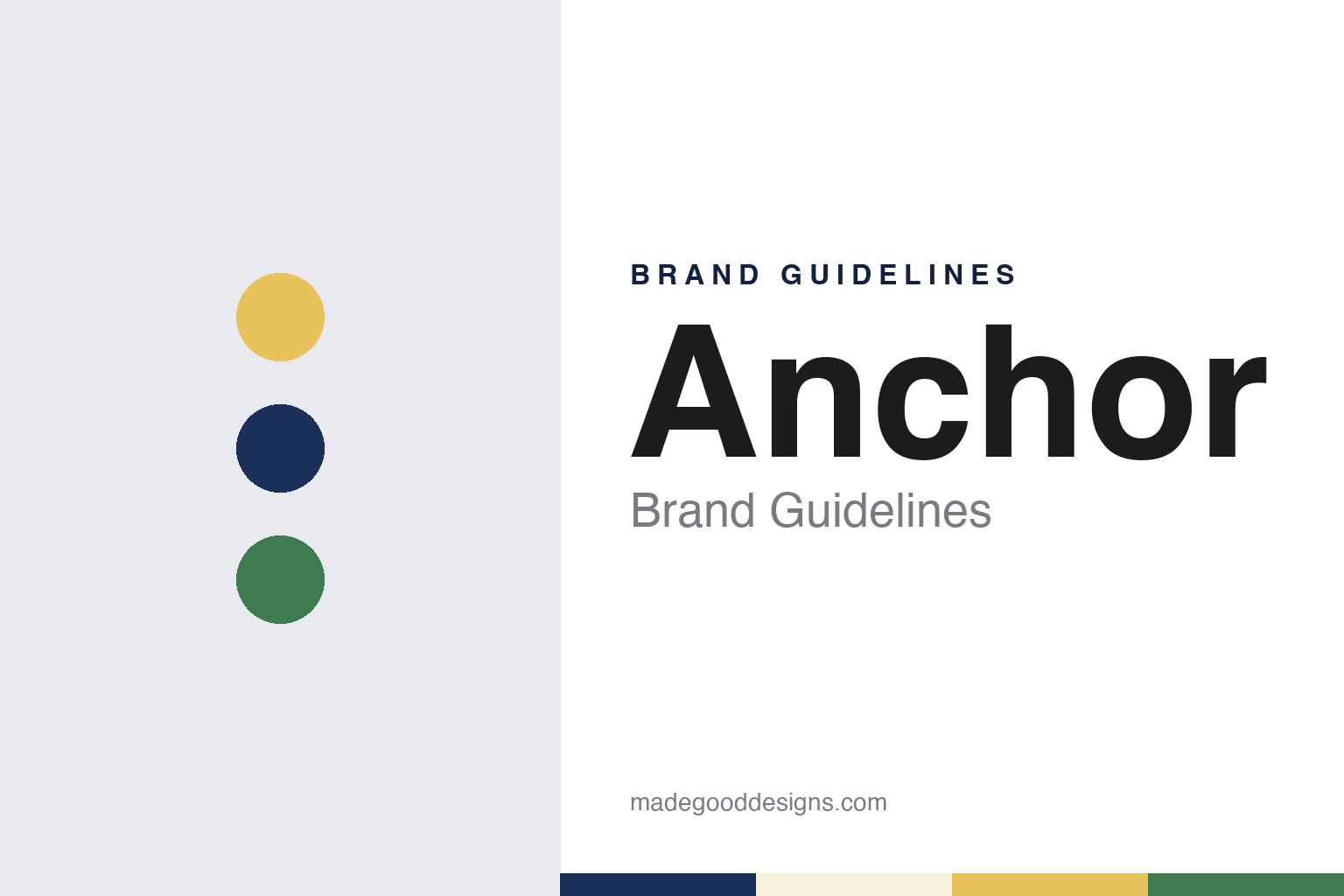
Anchor Brand Guidelines
The 1886 Waikato butter mark that sailed to Britain.
Aa
Two constants: a butter gold, harbour navy and pasture green palette and a Victorian label serif register. Abstract homage — not an Anchor product or mark; no pack, logo or anchor emblem is reproduced.
Henry Reynolds’ butter
A Cornish farm manager, a Waikato factory and a sailor’s symbol.
Anchor began as one man’s butter. English Wikipedia says that Henry Chidley Reynolds, a Cornish-born farm manager in the Waikato, started making butter in 1886 and soon adopted “Anchor” as his brand name; his brother Richard helped him set up the butter factory. The English Wikipedia article on the brand gives its date as 3 November 1886. Reynolds’ factory stood at Pukekura; English Wikipedia, citing Waipā District Council heritage records, says most of it was demolished in 1981 and that roadside plaques now mark the site.
The company tells a story about the name. On its heritage page, Anchor says Reynolds chose the anchor symbol after seeing it as a sailor’s tattoo, and that he picked it to stand for “safe arrival” and reliability.
That crossing came quickly. Anchor says its butter won a gold award at the Melbourne Centennial Exhibition in 1888, and English Wikipedia says that after the Melbourne prize Reynolds began exporting butter to England. The business did not stay his for long. In 1896, facing financial difficulties, he sold it to the New Zealand Dairy Association, which adopted the Anchor brand, English Wikipedia says. The company adds that the association then ran eight factories across the Waikato, the Bay of Plenty and Taranaki, and that the Anchor trademark was registered in 1900. Reynolds himself went on to found a dairy business in Argentina, the River Plate Dairy Company, in 1903, according to English Wikipedia.
Colour
The British table, rationing and the wobbly cows.
For most of the twentieth century Anchor’s main market was Britain. The company’s heritage timeline says that in 1911 the London Daily Mail ran a front-page story praising New Zealand butter, from grass-fed cows under government supervision, as the finest obtainable. In 1919, it says, the New Zealand Dairy Association merged with the Waikato Co-operative Dairy Company to form the New Zealand Co-operative Dairy Company, which carried the Anchor name forward. By 1920, according to the company, up to 90% of New Zealand’s dairy exports went to the United Kingdom, where Anchor became the best-selling butter brand.
War interrupted the brand. Anchor says that rationing in Britain during the 1940s removed branded products from the shelves, and that during those years it diversified into cheese; Anchor products returned to British shops when rationing ended in 1954. At home the company widened its range too. Anchor says it began making milk powder at Makino in 1901, launched UHT cream in aerosol cans in 1982, and began distributing Anchor milk in 1988, when town milk was deregulated and glass bottles were phased out.
Advertising has given the brand some of its best-remembered moments in Britain. In 2003, English Wikipedia says, a campaign for Anchor Spreadable, a butter softened with canola oil, used television spots of wobbly animated cows created by Jonti Picking, the animator behind Weebl and Bob.
The British butter is no longer shipped from New Zealand. English Wikipedia says Anchor block butter for the UK was imported from New Zealand until August 2012, when Arla Foods UK moved production to a factory in Westbury, Wiltshire, using English cream.
Typography
Design and documentation.
The seven brands in this group all make food, and all of them come from New Zealand and Australia: Cottee’s, Griffin’s, Wattie’s, Eta, Bluebird, Anchor and Mainland. Food brands from the two countries in general sit at many different points in the trade, from names that still carry a founder’s surname to names that now belong to much larger food groups, and a single brand can be sold everywhere from a corner dairy to a supermarket shelf.
A food brand’s identity is usually carried less by a single product than by a pack, a name and the meal or snack it promises, because the company behind the name may have changed hands, moved its factory or grown far beyond the town where it started. That makes the questions behind each name worth asking plainly: who started it, who owns it now, and where its food is actually made and packed.
Each guide separates what independent sources record from what the company says about itself — its founding story, its owners over time, where its food is made and how its packaging has changed — and marks plainly what rests only on the company’s own word.
Aa
A Victorian label serif for a butter mark registered in 1900. (Specimen set in Libre Baskerville, a serif STAND-IN; NOT the Anchor logo.)
Anchor
Fonterra, a domestic swap and a French owner.
The co-operative era ended in a merger. Fonterra Co-operative Group was formed on 16 October 2001 from the New Zealand Dairy Group, Kiwi Co-operative Dairies and the New Zealand Dairy Board, English Wikipedia says, and Anchor, previously owned by the New Zealand Dairy Group, became one of its brands.
Inside New Zealand the picture is more tangled. English Wikipedia says that, because of competition rules attached to Fonterra’s formation, the Anchor brand in New Zealand was divested to Goodman Fielder, and that Fonterra later regained the Anchor milk brand by swapping it for its Meadow Fresh brand. The same article says Anchor butter and cheese sold in New Zealand are still under a brand owned by a Goodman Fielder subsidiary, while the Goodman Fielder article describes its Anchor cheese as held under licence. Anchor milk for New Zealand is processed at Takanini, in Auckland, English Wikipedia says. Abroad the brand reaches markets from Australia and the Pacific to China, where Anchor says it launched in 2010, and in Malaysia, Singapore and Taiwan the same products carry the Fernleaf name instead.
Anchor has now left farmer ownership. Fonterra announced in May 2024 that it would look at divesting its global consumer business, and on 22 August 2025 it agreed to sell that business, including Anchor, Mainland, Kāpiti and Western Star, to the French dairy group Lactalis, RNZ reported; the sale needed approval from Fonterra’s farmer shareholders and from regulators. English Wikipedia says the acquisition was completed in April 2026 and that the business was renamed Lactalis-Mainland Dairy.
For a design guide, Anchor shows how a nineteenth-century symbol chosen for “safe arrival” can carry a brand across oceans, owners and markets. Compare Président, the Lactalis label that is now Anchor’s stablemate, and Lurpak, the Danish butter of Arla, the company that makes Anchor butter in Britain. For this guide we use butter gold, harbour navy and a pasture green with a serif, an unofficial interpretation; no product or logo is reproduced.
Explore & save
Keep Anchor’s identity on hand — save it to a board in the Made Good inspiration library.
Anchor identity set
Pin the Anchor butter gold, harbour navy and pasture green palette and the Victorian label serif register to your own board.