Beeztees Brand Guidelines
A Dutch family firm that turned a distributor into a brand.
Aa
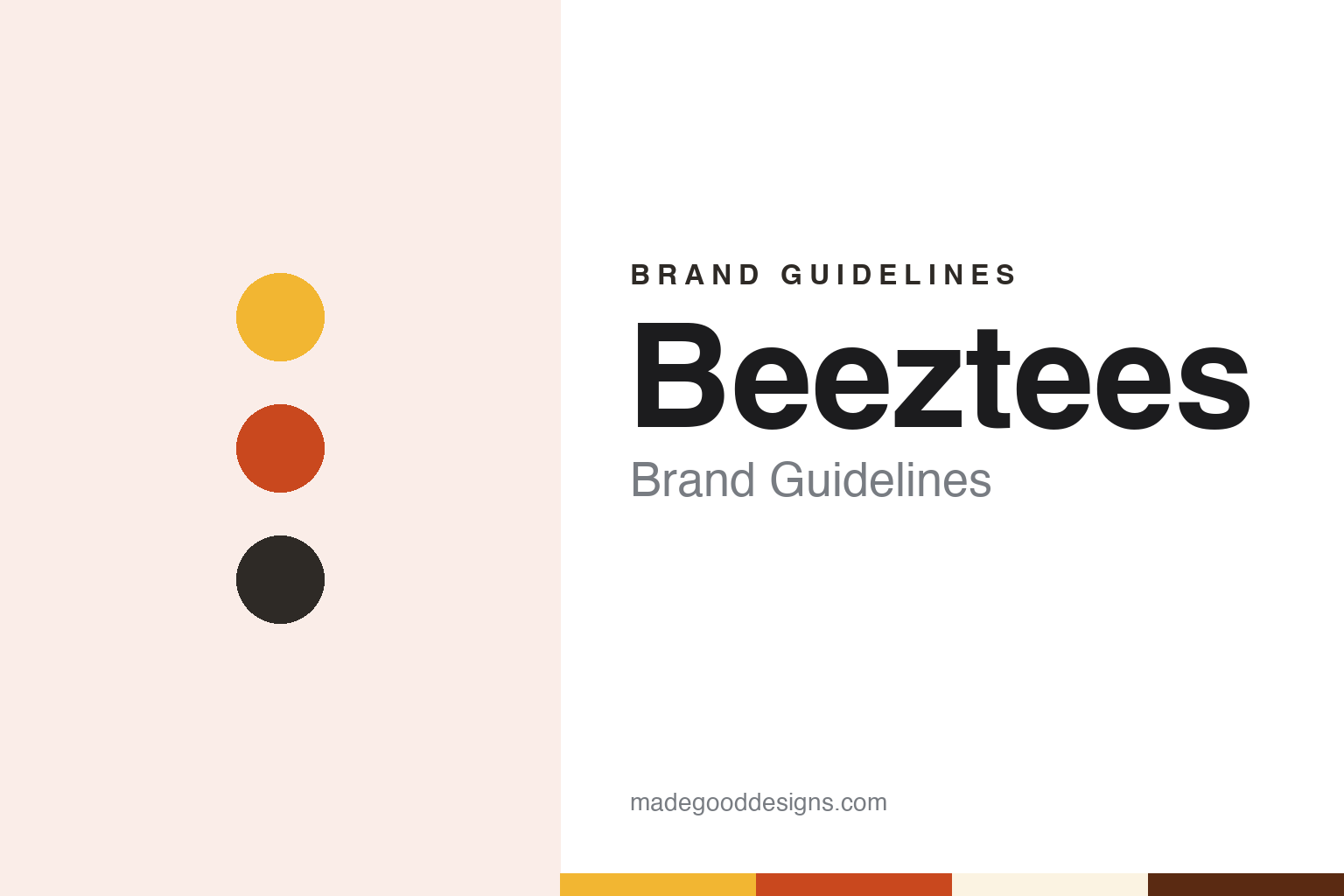
Two constants: a honey yellow, brick orange and burnt umber palette and a bouncy rounded sans register. Abstract homage — not a Beeztees product or mark; no toy, pack or logo is reproduced.
A family name becomes a brand
From Van Riel Distripet to a name of its own.
Beeztees is a Dutch pet accessory brand, and its story is a family one. The company’s Dutch website says the business behind it, Van Riel Distripet, has existed since 1969 and carried on under the name Beeztees from 2014. When the trade publication GlobalPETS profiled the company on 6 September 2017, it named the owners as Guusje and Job van Riel and described them as brother and sister, so the family name that once sat on the distribution business still sits behind the brand.
The renaming mattered because of what the company had been. In January 2021 GlobalPETS described Beeztees as a firm that started out as a distributor and then made a timely change to its strategy, building a wide range of products under its own label with a distinct design. The same article said its brand strategy was built around creating happy moments for both pets and their owners. In other words, a business that had moved other people’s products around the trade set out to put its own name, and its own look, on the shelf.
The name itself is meant to be read as a joke about pets. On its Dutch website the company says it is exactly what its name suggests, “een beetje gek, maar wel heel erg leuk” — a little bit crazy, but very nice — and its English site carries the same line as “a little bit weird, but very nice!” The company lists four values on its Dutch site: innovative, eigenwijs (headstrong, or doing things its own way), active and fun. Its English site renders the second one as “original”, explaining it as being “a little bit different, in our own special way,” and says that every day the company invents and designs new products for pets.
Colour
A broad catalogue, a rubber toy line, and its own design work.
The Beeztees range is wide rather than narrow. The company says it makes accessories for dogs, cats, rodents, birds and fish, and its English website gives the span in a single phrase: from dog toys to rabbit hutches and from scratching posts to bird houses. Its Dutch site adds snacks to the list, and its shop menu runs from collars, leads and harnesses through beds, bowls, grooming products and travel items to cages, aquaria and products for chickens and other poultry. The company says it designs and develops many of its products itself rather than only buying them in, which fits the change of strategy that GlobalPETS described. Its Dutch site also groups products into seasonal and themed concepts — among them party, Easter, summer, autumn, Halloween and Christmas — alongside collections it labels eco-friendly and premium nylon.
One line that shows how the brand names its products is Sumo, a range of dog toys that the company says are made of sturdy rubber. On its Dutch website Sumo is split into sub-lines with short, plain names — Sumo Play, Sumo Fit, Sumo Team and Sumo Mini — each with its own small promise, from challenging play to fetching to toys for the smallest dogs. The company’s Dutch site also states that it is FSC-certified, and says that only products listed on the site as FSC-certified carry that certification.
Where the products are made is a question with a documented answer for part of the range. On 2 October 2017 the trade magazine Pet Worldwide reported that Beeztees had acquired Best Quality Pet Products, a Chinese manufacturer founded in 2002 and based in Humen, near Dongguan in southeast China. The takeover was announced at the Zooevent trade fair in Kassel, and the report listed the factory’s products as leashes, collars, harnesses, cat furniture, pet apparel and pet toys.
Typography
Design and documentation.
The brands in this group are pet accessory names, five of them European and one American: Trixie, Karlie, Kerbl, Ferplast, Beeztees and Tuffy. Pet accessory brands in general sit at many different points in the trade, from family firms that still carry a founder’s name to wholesalers that supply shops under several labels, and a single name can be sold everywhere from a village pet shop to a garden centre or a farm store.
A pet accessory brand’s identity is usually carried less by a single collar or toy than by a catalogue, a name and the packaging that hangs on a shop wall, because the company behind the name may have changed hands, moved its warehouses or grown far beyond the town where it started. That makes the questions behind each name worth asking plainly: who started it, who owns it now, and where its products are actually designed and made.
Each guide separates what independent sources record from what the company says about itself — its founding story, its owners over time, where its products are made and how its labels have changed — and marks plainly what rests only on the company’s own word.
Aa
A bouncy rounded sans for a brand that calls itself a little bit weird. (Specimen set in Baloo 2, a sans-serif STAND-IN; NOT the Beeztees logo.)
Beeztees
A Dutch brand that bought a German one.
The biggest change to the business came in May 2017, when Beeztees acquired the German pet accessory brand Karlie. GlobalPETS reported in September that year that the Van Riel siblings wanted to add value to the German-speaking market and to build trust with customers and suppliers there. Karlie was to continue as a separate, stand-alone business under its existing management, and the article said Karlie would also distribute some of Beeztees’ products under the Beeztees label, while newly designed products would be launched under the Karlie name. By January 2021, GlobalPETS still described Beeztees as the company that also owns the Karlie brand.
That same month the publication named Beeztees, “from the Netherlands”, as the winner of the GlobalPETS Forum Award 2021. The forum itself could not take place that year, but the award was still presented. The article praised a brand strategy that it said could be adjusted to different target groups, distribution channels and retail concepts, and that worked for both business customers and consumers.
For a design guide, Beeztees shows how a family distributor can turn itself into a consumer brand by choosing a playful name, writing in a cheerful voice and grouping its products into named lines such as Sumo. Compare Karlie, the German brand Beeztees bought in 2017, and Trixie, another European pet accessory brand. For this guide we use honey yellow, brick orange and burnt umber with a rounded sans, an unofficial interpretation; no product or logo is reproduced.
Explore & save
Keep Beeztees’s identity on hand — save it to a board in the Made Good inspiration library.
Beeztees identity set
Pin the Beeztees honey yellow, brick orange and burnt umber palette and the bouncy rounded sans register to your own board.