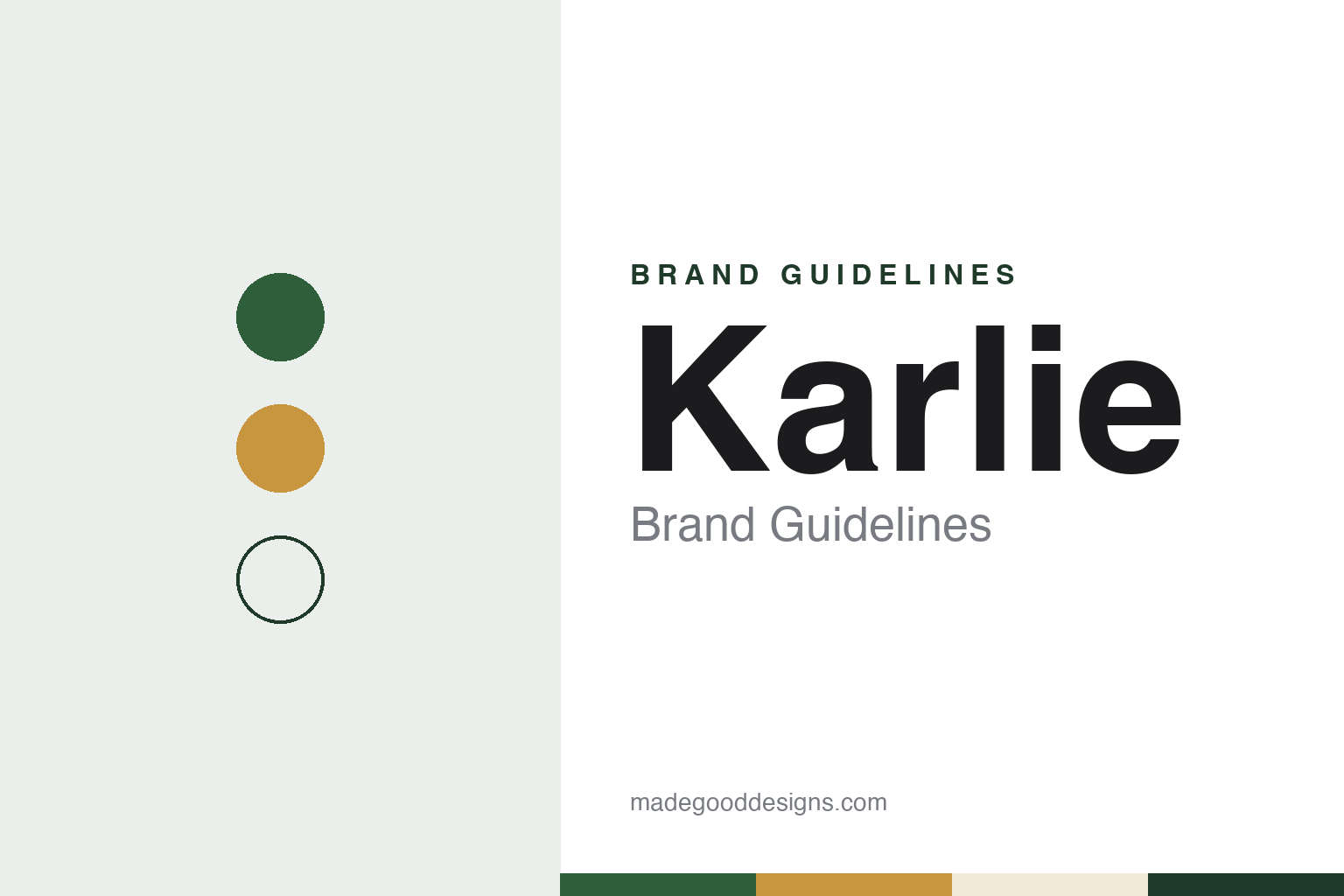
Karlie Brand Guidelines
The Westphalian pet supplies name that changed hands twice.
Aa
Two constants: a meadow green, saddle tan and linen palette and a warm soft serif register. Abstract homage — not a Karlie product or mark; no pack, product or logo is reproduced.
A wholesaler in Westphalia
From a 1976 wholesale company to its own factories.
Karlie is a German pet supplies brand based in Bad Wünnenberg-Haaren, in the Paderborn area of North Rhine-Westphalia. Its story begins as a wholesale business. The trade magazine PET worldwide, reporting on the company’s house fair in its March/April 2006 issue, said that Gerd Blaschke set up his wholesale company in 1976, and that the fair, held under the title “Carnival at Karlie” in Wünnenberg, also marked the firm’s 30th anniversary. The fair drew visitors from across Europe and was used to show new products.
The same report traced how the wholesaler had moved into making things itself. According to PET worldwide, Karlie began in-house production of leather goods in 1987. Around 1990 it opened a plant in Hungary for nylon and belt materials. In 2002 a plant in China began producing scratching trees, brushes and toys, and in 2003 the company completed a second logistics centre in Germany. By then its range covered dogs, cats, ferrets, rodents, birds and fish.
Those milestones describe the company as it stood in 2006. Today’s Karlie, writing on its own “Über uns” page, describes itself as a reliable partner to the specialist pet trade worldwide, offering a broad range for dogs, cats, rodents and birds built around “innovative concepts, interesting brands and series.” It says it has carried a wide-ranging assortment of pet products for more than four decades, and the site’s home page carries the line Unser Wissen für Ihr Tier, “our knowledge for your animal.”
Colour
An investor, a Belgian partner and the Karlie Flamingo years.
The first change of ownership came in April 2009, when the German private equity firm Perusa bought Karlie Heimtierbedarf. PET worldwide reported this on 30 March 2011, in a story about Perusa’s second purchase in the sector: the Belgian accessories supplier Flamingo. At the time, the magazine said, media reports suggested the two companies would continue to operate separately in the market, with Perusa looking for synergies in buying, marketing and product development. It described the pair as similar in structure, comparable in size and focused on central Europe.
Within a year the plan had become a merger. In its issue 1/2012, PET worldwide reported that the merger of Karlie Heimtierbedarf with Flamingo was going ahead as planned, inside a newly established holding called the Pet Products Group, led by managing director Dr Angelika Westerwelle and held by the Perusa Partners Fund. Both names were to continue as family brands, the magazine said, with Karlie strong in dog leashes and Flamingo strong in treats. The two exhibited together on a joint stand at the Dibevo trade fair in the Netherlands, and the former Flamingo subsidiary in France became a joint sales company for both brands. For Germany and Austria a combined sales team was formed under Boris Kley, taking in staff from Flamingo’s former German distribution arm, and the management said it had no plans to cut jobs.
The combined business did not last in that form. Looking back in its issue 1/2020, PET worldwide wrote that “Karlie Flamingo became insolvent” and referred to the “turbulent Karlie-Flamingo years.” The same article reported that at the end of 2016 Erwin van Tendeloo, son of Flamingo’s founder, and the Belgian Laroy Group had decided to acquire Flamingo, which now runs as an independent entity within that group from Geel. The Karlie name went a different way.
Typography
Design and documentation.
The brands in this group are pet accessory names, five of them European and one American: Trixie, Karlie, Kerbl, Ferplast, Beeztees and Tuffy. Pet accessory brands in general sit at many different points in the trade, from family firms that still carry a founder’s name to wholesalers that supply shops under several labels, and a single name can be sold everywhere from a village pet shop to a garden centre or a farm store.
A pet accessory brand’s identity is usually carried less by a single collar or toy than by a catalogue, a name and the packaging that hangs on a shop wall, because the company behind the name may have changed hands, moved its warehouses or grown far beyond the town where it started. That makes the questions behind each name worth asking plainly: who started it, who owns it now, and where its products are actually designed and made.
Each guide separates what independent sources record from what the company says about itself — its founding story, its owners over time, where its products are made and how its labels have changed — and marks plainly what rests only on the company’s own word.
Aa
A warm soft serif for a name tied to leather goods. (Specimen set in Fraunces, a serif STAND-IN; NOT the Karlie logo.)
Karlie
A German name inside a Dutch family business.
The next chapter opened in Germany. In May 2017 Karlie was acquired by the parent company of Beeztees, the Dutch accessory and treat company. PET worldwide reported on 24 August 2017 that, following the purchase, Karlie would market Beeztees products in Germany from November, would take its own stand at the Zooevent trade show in Kassel in September, and was expected to bring further new products under the Karlie brand; the article’s subheading said things could be looking up again for Karlie in the autumn. On 2 October 2017 the magazine reported that Beeztees, “which also owns the Karlie brand,” had bought the Chinese producer Best Quality Pet Products, a maker of leashes, collars, harnesses, cat furniture, pet apparel and toys in Humen, near Dongguan, and pictured general manager Job van Riel with his sister Guusje.
The parent company of Beeztees has owned Karlie since 2017. The German company now trades as Karlie GmbH, and its website names Job van Riel as managing director. On its “Über uns” page the company says that its Bad Wünnenberg-Haaren site looks after sales and marketing, with key account managers, office staff and field sales representatives, while storage and logistics are organised by its parent company Beeztees in the Netherlands. The same page says the company keeps developing its range in line with new trends and supplies a wide variety of retail businesses.
For a design guide, Karlie shows how a German trade name can outlast changes of investor, a cross-border merger and a change of country of ownership, and still be kept as a brand in its own right. Compare Beeztees, the Dutch business that owns it, and Trixie, the Tarp pet supplies house founded two years before it. For this guide we use meadow green, saddle tan and linen with a soft serif, an unofficial interpretation; no product or logo is reproduced.
Explore & save
Keep Karlie’s identity on hand — save it to a board in the Made Good inspiration library.
Karlie identity set
Pin the Karlie meadow green, saddle tan and linen palette and the warm soft serif register to your own board.