Bulleit Brand Guidelines
Tom Bulleit’s 1987 revival in an embossed frontier bottle.
Aa
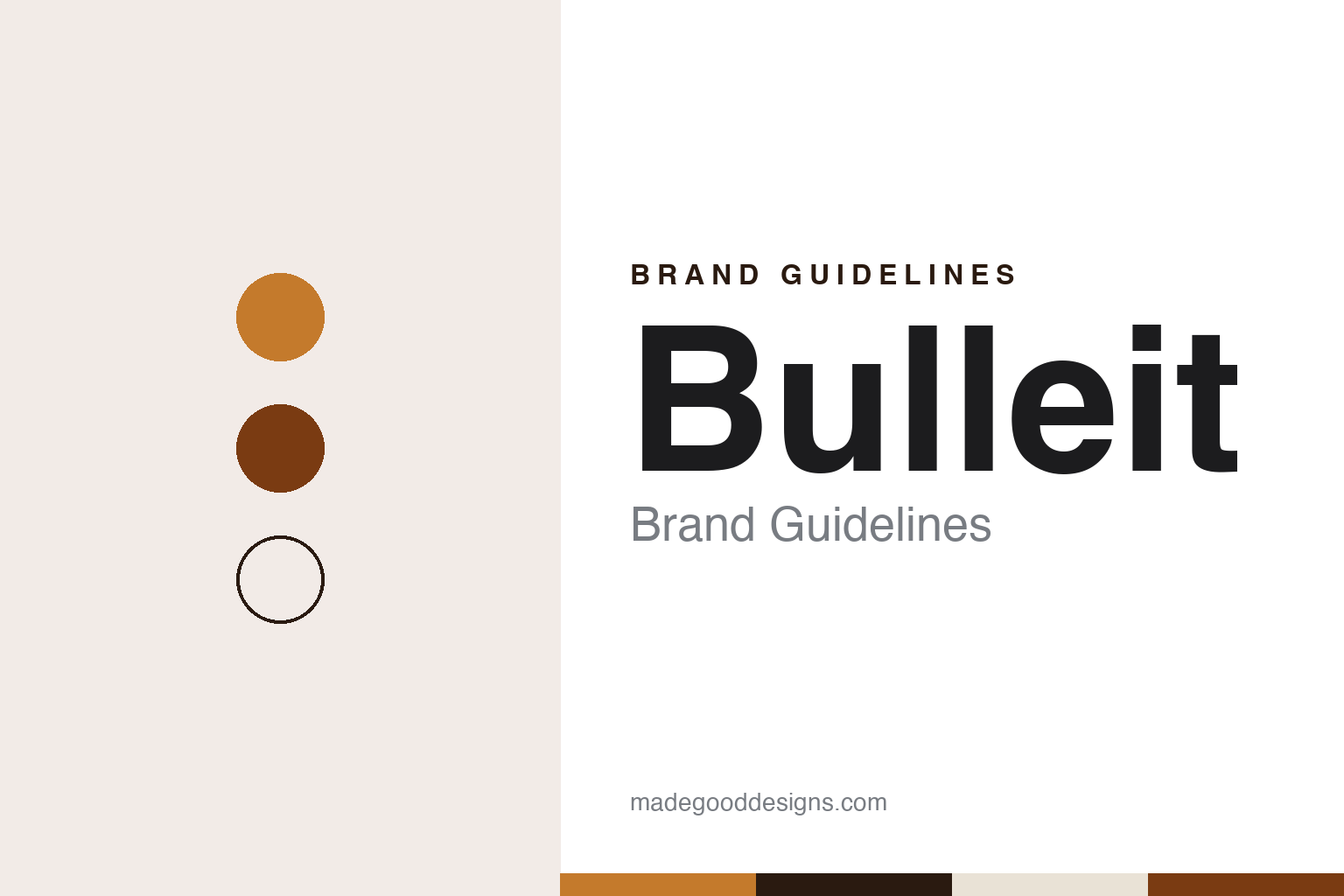
Two constants: a bourbon amber, russet and barrel char palette and a frontier display serif register. Abstract homage — not a Bulleit product or mark; no label, logo or bottle is reproduced.
A lawyer’s revival
A family recipe, a contract distillery and a slow start.
Bulleit Bourbon is a Kentucky straight bourbon owned by Diageo, the British drinks group. English Wikipedia says it is made at the Bulleit distillery in Shelbyville, Kentucky, and at a second Diageo distillery in Lebanon, Kentucky. The modern brand dates from 1987, when Tom Bulleit and his wife Betsy Bulleit founded the Bulleit Distilling Company, VinePair reported in 2017; it added that the venture was self-funded and that Tom Bulleit kept his law practice for about a decade.
The older part of the story is a family one. Tom Bulleit has said that his forebear Augustus Bulleit made the first batch of Bulleit bourbon around 1830 and kept making it until 1860, English Wikipedia reports, citing a 2010 tasting led by Tom Bulleit. English Wikipedia says today’s recipe follows Augustus’s original mash bill of two-thirds corn and one-third rye, and gives the current mash bill as 68 per cent corn, 28 per cent rye and 4 per cent malted barley, a high rye content for a bourbon.
The revived whiskey was not distilled by the family. According to English Wikipedia, citing the Lexington Herald-Leader of June 1995, the first commercial run was a 4,000-case contract distillation in 1989 at the Leestown Company Distillery in Frankfort, now the Buffalo Trace distillery, and the bourbon reached shops in the summer of 1995, after ageing.
Ownership changed quickly. Seagram bought the brand in 1997 and began distilling it in Lawrenceburg, Kentucky, English Wikipedia says, and Diageo’s archived brand pages date its wider introduction to Australia, the United Kingdom and Germany to 2000. Diageo later acquired Seagram assets including Bulleit, and for years the bourbon continued to be produced at the same Lawrenceburg plant, by then run by Kirin, according to English Wikipedia.
Colour
A medicine-bottle shape with its name in the glass.
The bottle is Bulleit’s best-known design asset, and the name is carried in the glass itself. When the glassmaker O-I reworked the American bottle for Diageo’s launch in Britain, Packaging magazine reported in June 2005, it kept the original’s “no nonsense” medicinal bottle shape — a short neck, curved shoulders and a cylindrical body — and described the period design as recalling America’s “Old West.” The front embossing, “Bulleit Bourbon – Frontier Whiskey,” had to be blown clean and crisp, the magazine said, and was the main technical challenge.
“Frontier Whiskey” has become the phrase the brand pairs with its name. English Wikipedia says that from 2008 the bourbon sold in the United Kingdom was bottled at 40 per cent alcohol by volume, and that a 45 per cent version arrived there in late 2014 under the label “Bulleit Frontier Whiskey.”
Diageo has defended the look in court. In June 2017 it sued the maker of Redemption whiskey in the US District Court for the Southern District of New York, saying the rival’s new packaging was “strikingly similar” to Bulleit’s and copied “the same vintage style and appearance,” The Spirits Business reported. In 2022 a jury found that Bulleit’s trade dress was valid and famous and that Redemption’s packaging diluted it, and on 7 September 2022 the court ordered the rival bottle redesigned, the drinks-law writer Brian Haara reported.
The frontier theme also runs through packaging extras. In November 2016 the design studio Butterfly Cannon made a canvas gift bag for Bulleit, the “Lewis Bag,” which doubles as a tool for crushing ice for a mint julep, Dexigner reported, quoting creative director Jon Davies on the brand’s “down-to-earth attitude.” And at the Shelbyville distillery, visitors aged 21 or over can design a personalised Bulleit label for their own bottle, the Associated Press reported when the visitor centre opened in June 2019. For the lettering on the label, see our separate guide to the Bulleit font.
Typography
Design and documentation.
The seven brands in this group are all North American whiskey names: Bulleit, Woodford Reserve, Buffalo Trace, Four Roses, Knob Creek, Evan Williams and Crown Royal. Whiskey brands in general sit at many different points in the trade, from names that still carry a founder or a distillery to labels that now belong to much larger drinks groups, and a single brand can be sold everywhere from a corner shop to a bar shelf.
A whiskey brand’s identity is usually carried less by a single bottle than by a label, a name and the place it promises, because the company behind the name may have changed hands, moved its production or grown far beyond the place where it started. That makes the questions behind each name worth asking plainly: who started it, who owns it now, and where its whiskey is actually distilled, aged and bottled.
Each guide separates what independent sources record from what the company says about itself — its founding story, its owners over time, where its whiskey is made and how its labels have changed — and marks plainly what rests only on the company’s own word.
Aa
A frontier display serif for an embossed, Old West register. (Specimen set in Rye, a display-serif STAND-IN; NOT the Bulleit logo.)
Bulleit
A rye, an age statement and two Kentucky distilleries.
The range has grown around the original bourbon. Bulleit Rye, introduced in March 2011 with a mash bill of 95 per cent rye and 5 per cent malted barley, is made in Lawrenceburg, Indiana, by MGP Ingredients, English Wikipedia says, citing a Diageo release and The Daily Beast in 2014. Bulleit Bourbon 10 Year is the brand’s only age-stated whiskey; it won a double gold medal at the 2013 San Francisco World Spirits Competition. A seven-year-old Bottled-in-Bond bourbon, distilled and aged entirely in Shelbyville, followed as a limited release in 2025, and in July 2026 the brand announced Bulleit ’87, its first blend of bourbon and rye, due nationwide from September 2026, BourbonBlog reported.
Diageo has also given the brand homes of its own. The Bulleit distillery just east of Shelbyville, in Shelby County, opened on 14 March 2017, and its visitor centre opened in June 2019. In 2021 Diageo announced the opening of a distillery in Lebanon, Kentucky, which it called its first carbon-neutral whiskey distillery in North America, with Bulleit as the first brand distilled there. Diageo paused distilling and barrel filling at Lebanon until June 2025, saying it was ahead of schedule on the volume it produces there, FoodBev reported in March 2025.
For a design guide, Bulleit shows how a single bottle shape, a name embossed in the glass and a two-word frontier tagline can carry a revived family name from a contract-distilled first run to one of Diageo’s best-known American whiskeys. Compare Buffalo Trace, the Frankfort distillery where the first commercial Bulleit was made, and Four Roses, the Lawrenceburg, Kentucky, bourbon. For this guide we use bourbon amber, russet and barrel char with a display serif, an unofficial interpretation; no product or logo is reproduced.
Explore & save
Keep Bulleit’s identity on hand — save it to a board in the Made Good inspiration library.
Bulleit identity set
Pin the Bulleit bourbon amber, russet and barrel char palette and the frontier display serif register to your own board.