Caffarel Brand Guidelines
Turin’s gianduiotto house, wrapped in gold foil.
Aa
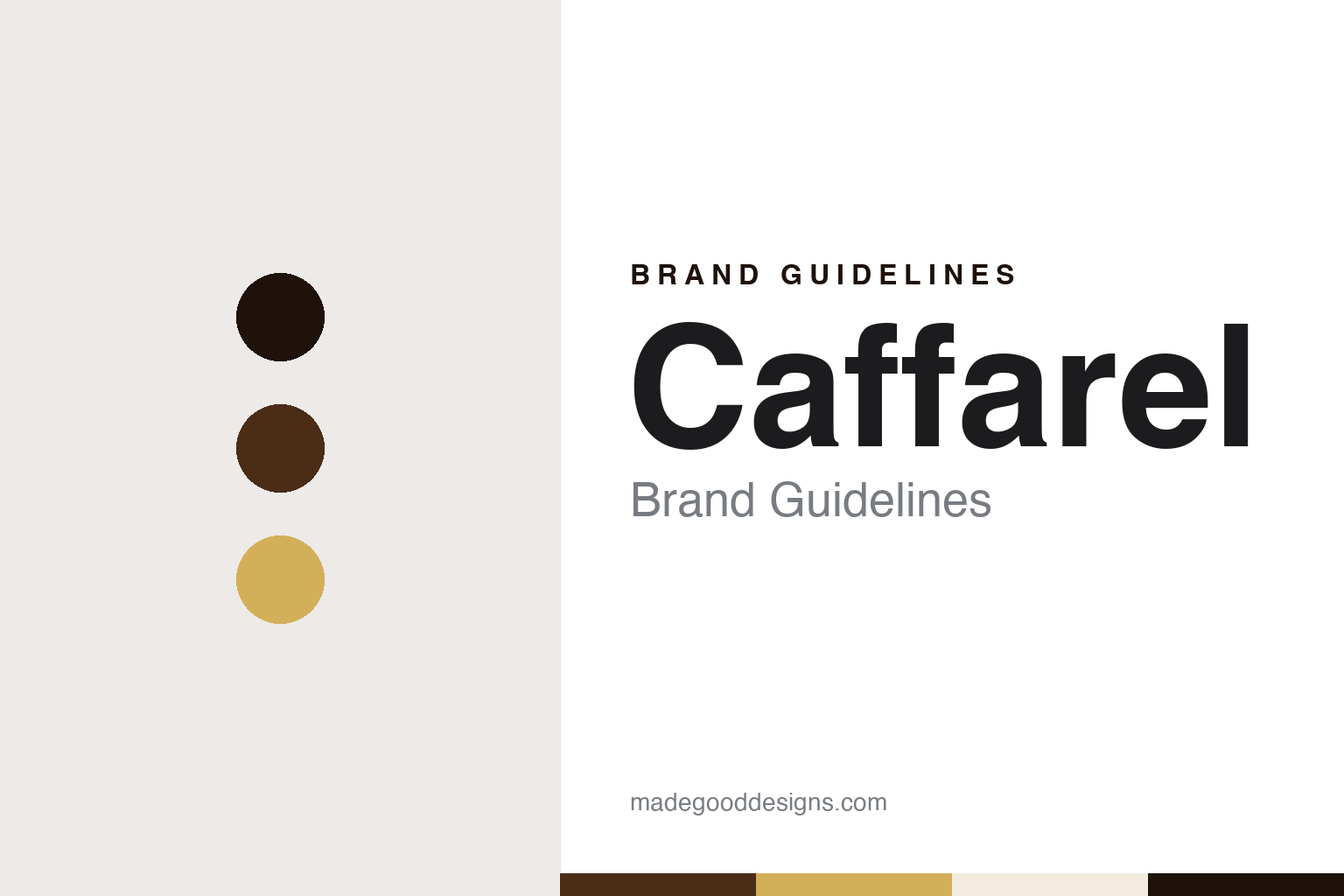
Two constants: a Caffarel gianduja and gold palette and a Display serif register. Abstract homage — not a Caffarel product or mark; no wrapper, logo or foil design is reproduced.
A Turin factory on a canal
Water power and Waldensian valleys.
Caffarel dates itself to 1826 and calls itself one of the first chocolate factories in Europe, a line quoted by the trade site Comunicaffè in December 2024. Its founder, Pierre Paul Caffarel — Pier Paul in Italian sources — came from the Waldensian valleys west of Turin, from the town now called Luserna San Giovanni. According to Italian Wikipedia, he took over a chocolate workshop run by Giovanni Martino Bianchini, from Lugano, in a former tannery on Via Balbis in Turin’s San Donato district, where a water wheel on the city canal drove the grinding machines. The same article credits Caffarel with buying a machine designed by Bozelli of Genoa that could produce more than 300 kilograms of chocolate a day, a large quantity for the time.
The dates are disputed. English Wikipedia, drawing on Mauro Silvio Ainardi’s 2008 history of Turin’s chocolate factories, gives an alternative account in which Bianchini started production on the site and Caffarel bought the factory on 1 May 1832. Both versions agree on the essentials: a mechanised chocolate works in Turin, powered by water, in the first half of the nineteenth century.
The business passed to Caffarel’s son Isidore and later joined with the chocolate firm of Michele Prochet to become Caffarel-Prochet. In 1869, Italian Wikipedia says, King Victor Emmanuel II named it a supplier to the royal household. English Wikipedia records that the Caffarel family’s ties ended by 1897 and that the company changed hands more than once in the early twentieth century, once after a bankruptcy. In 1967 it left Turin for a factory at Luserna San Giovanni, in the Val Pellice, where it still makes chocolate; the old Turin buildings were demolished.
Colour
The gianduiotto and its date.
Caffarel’s central product is the gianduiotto, a boat-shaped chocolate of cocoa, sugar and ground Piedmont hazelnuts, sold as Gianduia 1865 in a gold foil wrapper that carries the date. The company’s story, retold by Italian Wikipedia, is that the chocolates were handed out at Turin’s Carnival in 1865 by a performer dressed as Gianduja, the city’s traditional mask, and took his name. For the 160th anniversary in November 2025, Comunicaffè reported, Caffarel staged an installation in central Turin and said the shape came from piping the paste by hand; it also called the gianduiotto the first wrapped chocolate in the world, a claim we give as the company’s.
Who invented gianduja paste is not settled. A long-repeated story credits Michele Prochet with it in 1852; the food researcher behind DallasFood.org argued in 2011 that Prochet was born in 1839, that the earliest written source for the story is a trade-magazine article of 1932, and that the 1852 date “should be abandoned.” English Wikipedia concludes that there is not enough evidence to confirm any claim.
Ownership is clearer. In September 1997 the Audiberti and Bachstad families agreed to sell Caffarel to Lindt & Sprüngli, Italian Wikipedia says, citing la Repubblica; the Swiss group’s own statements date the company’s entry to 1998. From January 2022 Caffarel SpA was merged into Lindt & Sprüngli’s Italian company, Beverfood reported, with both brands kept. In late 2024 the group opened a hazelnut-roasting plant of nearly €12 million at Luserna San Giovanni, Comunicaffè reported; the article quoted the company as saying that about 80% of its suppliers are Italian and that more than 80% of the volume it produces in Italy is exported. In October 2023 it added a darker version, Gianduia 1865 Intenso, which it said contains 26% Piemonte IGP hazelnuts.
Typography
Piedmont and its chocolate.
The seven brands in this group all make chocolate, and they come from three countries: Cacao Barry from France, Callebaut from Belgium, and Venchi, Caffarel, Majani, Guido Gobino and Slitti from Italy. They stand on either side of one of the oldest divides in the chocolate trade: between the chocolate that other people work with and the chocolate that is sold finished.
On one side is industrial couverture, chocolate made with enough cocoa butter to melt, temper and coat well, and sold in blocks, callets and pistoles to pastry chefs, chocolatiers, bakers and food manufacturers. A couverture brand often reaches the public second-hand, through a dessert, a bonbon or a filled biscuit, and its identity has to work on a sack in a professional kitchen as much as on a shelf. On the other side are confectionery houses, the Italian ones especially, whose names are on the box itself: pralines, gianduja, hazelnut spreads and filled bars, sold in their own shops and in fine-food stores, where the wrapper, the shop and the family name carry the brand.
Each guide separates what independent sources record from what the company says about itself — who founded it, who owns it now, where its beans come from and where its chocolate is made — and marks plainly what rests only on the company’s own word.
Aa
A high-contrast display serif — the register of a gold-foil wrapper. (Specimen set in Bodoni Moda, a serif STAND-IN; NOT the Caffarel logo.)
Caffarel
A date on the wrapper.
Caffarel’s brand rests on a date printed on a wrapper. That makes its quarrel over the gianduiotto’s name a design matter as much as a legal one. A committee of more than forty Piedmont confectioners began seeking a protected designation, Giandujotto di Torino IGP, in 2017; Italy’s agriculture ministry approved the specification on 23 March 2026, and in June 2026 Lindt-Caffarel appealed to the regional administrative court, Comunicaffè, La Stampa and Il Sole 24 Ore reported. The company’s case, as reported, is that it registered the mark “Gianduia 1865 – L’autentico Gianduiotto di Torino” in 1972 and wants legal certainty that the two can coexist. In November 2023 Lindt had said that Caffarel was not opposed to the designation, Comunicaffè reported, and the committee called the June appeal unexpected.
We found no published brand guidelines and no named designer for the logo or the foil. Readers should note that the name is spelled both gianduiotto and giandujotto; the proposed designation uses the second. The 1865 on the foil is the date the company gives for the gianduiotto, not for the firm, which dates itself to 1826; both numbers do brand work on the pack, and the earlier one is disputed, as set out above.
For a design guide, Caffarel shows how a single wrapped product and a date can carry a nineteenth-century name inside a multinational group. Compare Venchi, another Turin name rebuilt around its shops, and Guido Gobino, a Turin chocolatier also known for gianduiotti. For this guide we use a gianduja brown and a foil gold with a serif, an unofficial interpretation; no product or logo is reproduced.
Explore & save
Keep Caffarel’s identity on hand — save it to a board in the Made Good inspiration library.
Caffarel identity set
Pin the Caffarel gianduja and gold palette and the Display serif register to your own board.