est Brand Guidelines
The Thai cola born the day after Pepsi left Sermsuk.
Aa
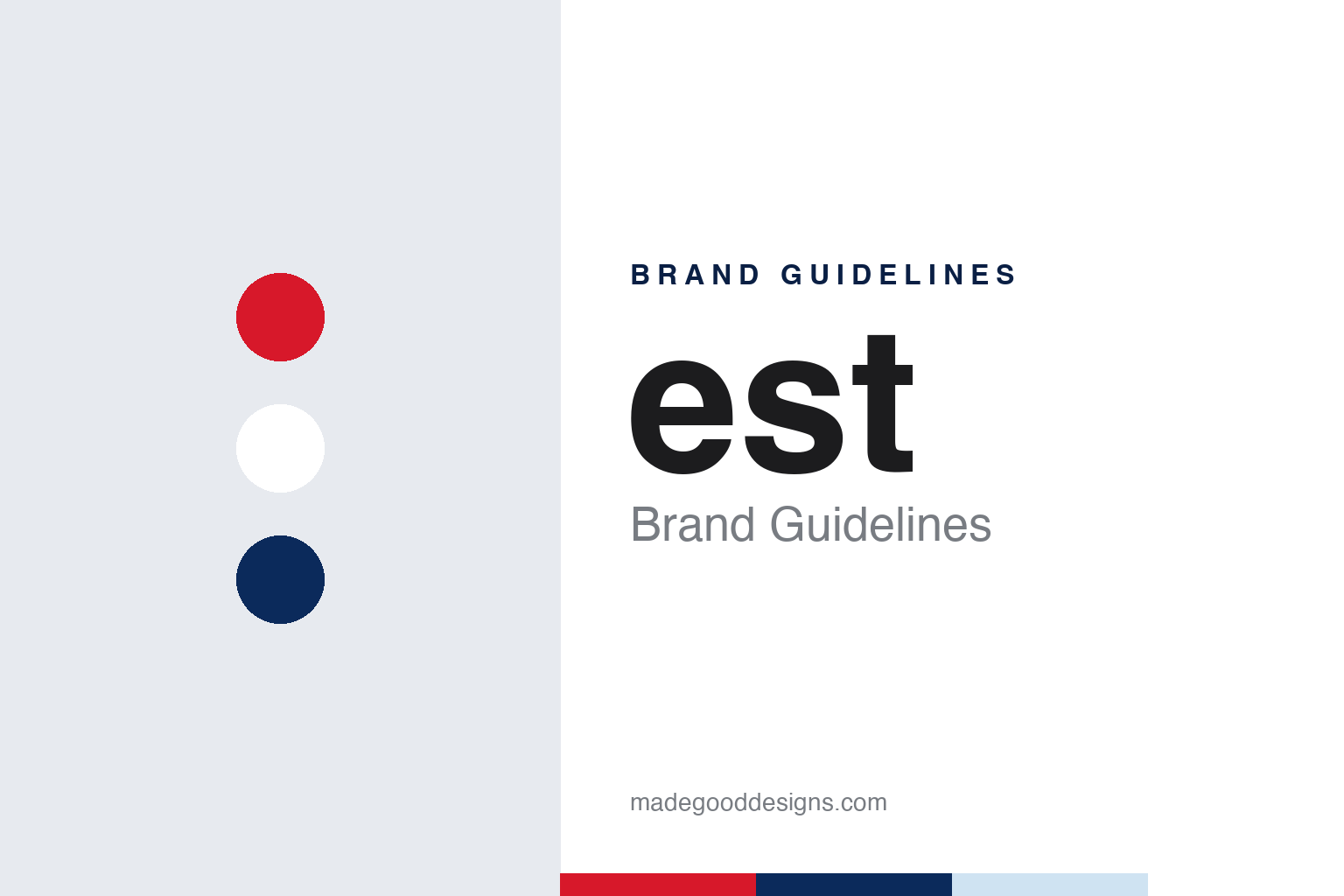
Two constants: a cola red, deep navy and ice blue palette and a bold geometric sans register. Abstract homage — not an est product or mark; no bottle, can, logo or label is reproduced.
After Pepsi
A 59-year bottling partnership ends.
est is the cola of Sermsuk Public Company Limited, the Bangkok bottler that for six decades made Pepsi for Thailand. Sermsuk says it was founded in 1952, building its first plant, the “Silom factory,” and putting its first soft drinks on the Thai market in 1953; Thai Wikipedia, citing the company’s website, puts the first sales on the morning of 18 March 1953, from a small plant beside Silom Road. A larger plant in Pathum Thani followed in 1978, Crystal drinking water in 1993, and in 2005 Sermsuk became the distributor of Oishi drinks, the company says.
The partnership with PepsiCo ended in 2012. Thai Wikipedia, citing Krungthep Turakij, says PepsiCo gave notice on 31 March 2012 that it would not renew its joint-venture and licensing arrangement with Sermsuk, and set up its own Thai company to make and sell Pepsi from 1 November 2012. Reuters reported in February 2013 that the two companies had a non-compete clause that expired with their contract at the start of November, and that Sermsuk was backed by Charoen Sirivadhanabhakdi, the billionaire owner of Thai Beverage. Business Insider reported in 2013 that the split followed a failed attempt by PepsiCo to take over Sermsuk.
Sermsuk launched est the next day, on 2 November 2012. The Nation reported that its president, Dhitivute Bulsook, aimed to make est Thailand’s leading cola within three years, and that the chief executive, Somchai Bulsook, said staff had created the brand from scratch in eight months. The paper reported that Sermsuk had five bottling plants, 48 branch offices and more than 200,000 shops and eateries ready to stock the drink, and that returnable glass bottles still made up 60 to 70 per cent of the Thai market — a point the company presented as its advantage, since it owned its bottles.
Colour
A borrowed silhouette, a new name.
The name was chosen for its sound. Reuters reported that “est” has no meaning in Thai and was intended as a play on English superlatives such as “biggest” or “tastiest”; the brand writes it in lower case. The same report said est reached the market at about the same price as Pepsi, in the same bottles, with a red, white and blue logo reminiscent of Pepsi’s; a Sermsuk advertising manager declined to comment on the similarities, and Pepsi declined to say whether it was pursuing a trademark claim. Thai Wikipedia, citing the news site MThai, says the launch came with a newly developed formula and an entirely new identity, in returnable glass bottles, plastic bottles, cans and post-mix fountains, fronted by three Thai entertainers as presenters.
The effect on the market was quick. Reuters, citing Euromonitor, reported that Pepsi’s share of the Thai cola market slipped to 36.1 per cent in 2012 against Coca-Cola’s 40.1 per cent, and that est debuted at 2.1 per cent after only two months on sale; Sermsuk itself claimed 19 per cent of the cola market over those two months. Business Insider described Pepsi as the former number one soda in Thailand whose share had been wiped out by a lookalike. In October 2014 Coconuts Bangkok, citing the Bangkok Post, reported that Sermsuk said est had grown to a 12 per cent market share.
The range soon went beyond cola. Thai Wikipedia lists a sugar-free est cola from 2013 and a line of flavoured sodas from the same year, starting with strawberry, orange, lemon-lime and cream soda, followed by a string of seasonal and limited flavours. Sermsuk’s current est page lists cola alongside flavours including grape berry and salty lychee.
Typography
Design and documentation.
The seven brands in this group are all drinks, and all of them come from Thailand: Singha, Chang, Leo, M-150, Krating Daeng, est and Carabao. Thai drink brands in general sit at many different points in the trade, from family firms that still carry a founder’s name to names that now belong to much larger listed groups, and a single brand can be sold everywhere from a roadside shop to a supermarket shelf.
A drink brand’s identity is usually carried less by a single product than by a bottle or can, a name and the moment it promises, because the company behind the name may have changed hands, moved its production or grown far beyond the place where it started. That makes the questions behind each name worth asking plainly: who started it, who owns it now, and where its drinks are actually made and packed.
Each guide separates what independent sources record from what the company says about itself — its founding story, its owners over time, where its drinks are made and how its packaging and advertising have changed — and marks plainly what rests only on the company’s own word.
Aa
A round, bold geometric sans for a short lower-case name. (Specimen set in Poppins, a sans STAND-IN; NOT the est logo or wordmark.)
est
Inside the ThaiBev group.
Sermsuk sits inside the drinks group of the Sirivadhanabhakdi family. The company’s timeline says that in 2011 it was merged into Thai Beverage Logistics within ThaiBev’s non-alcoholic drinks business, and that in 2012, alongside launching est, it bought the maker of Ranger drinks. In October 2014 a Thai Beverage subsidiary announced that it was buying the est brand itself, Coconuts Bangkok reported, with Sermsuk continuing to make and distribute it. Thai Beverage, founded in 2003 and listed in Singapore, also owns Chang beer, English Wikipedia says.
Sport has carried the brand. In July 2013 The Nation reported a two-year marketing agreement with Manchester City that let the maker of est use the club’s image in Thai advertising. English Wikipedia, citing the Bangkok Post, says est has sponsored Thailand’s men’s and women’s national volleyball teams since 2015, and a women’s club team named Est Cola plays in international tournaments. In 2023 Sermsuk rebranded est under the concept “Born to be Awesome,” aimed, the company says, at Generation Z.
For a design guide, est shows how a challenger can be built in eight months on familiar ground: a short invented name, a lower-case wordmark and a colour scheme that Reuters compared with the brand it replaced, all riding an existing fleet of returnable bottles and an established distribution network. Compare it with Krating Daeng, the Thai drink that went global as Red Bull, and ThaiBev’s Chang. For this guide we use cola red, deep navy and ice blue with a bold geometric sans, an unofficial interpretation; no product or logo is reproduced.
Explore & save
Keep est’s identity on hand — save it to a board in the Made Good inspiration library.
est identity set
Pin the est cola red, deep navy and ice blue palette and the bold geometric sans register to your own board.