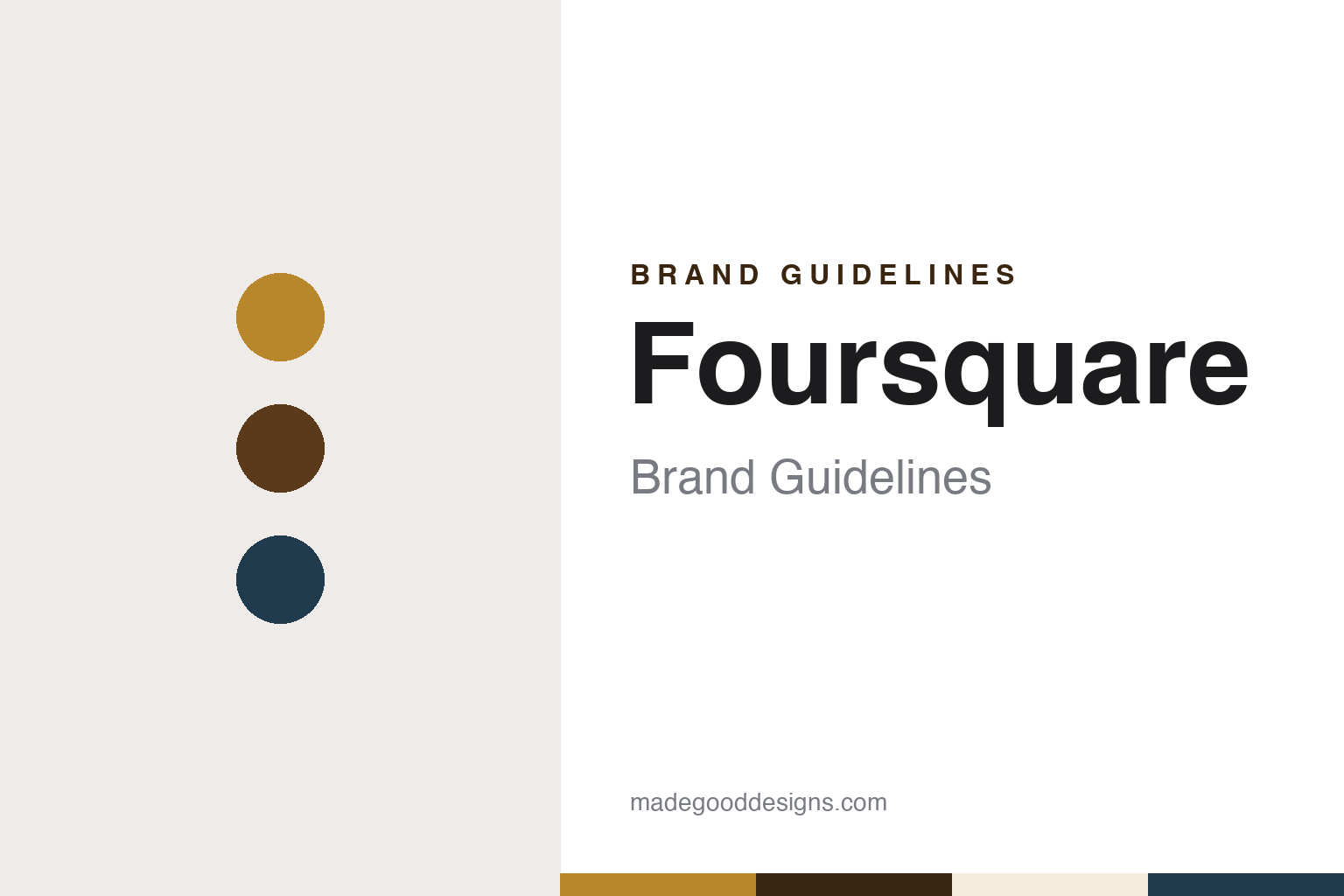
Foursquare Brand Guidelines
The Seale family’s St Philip rum distillery, opened 1996.
Aa
Two constants: a cane gold, cask brown and Atlantic slate palette and an old-style serif register. Abstract homage — not a Foursquare product or mark; no label, logo or bottle is reproduced.
A merchant family that learned to distil
From buying and blending other distillers’ rum to running a still of its own.
Foursquare is the rum distillery of R.L. Seale & Co, the Seale family’s company in Barbados. Drinks International described R.L. Seale & Co as the owner of Foursquare Rum Distillery in July 2018, and The Whiskey Wash reported in October 2026 that Richard Seale owns and distils at Foursquare. The distillery stands at Four Roads in the parish of St Philip, in the south-east of the island.
The family was in the rum trade long before it owned a still. The writer Matt Pietrek explained in PUNCH in March 2018 that from 1926 the Seales bought rum from Barbados distilleries, then blended it and sold it under the R.L. Seale name; English Wikipedia names the company’s founder as Reginald Leon Seale. Barbados Today wrote in October 2024 that the family’s rum-making heritage reaches back to 1820.
The rum reviewer behind The Fat Rum Pirate traces that merchant model to a Rum Duty Act of 1906, which limited licensed distillers to selling rum in bulk and left bottling and branding to trading houses. The Seales built a portfolio of such names, and English Wikipedia lists among the brands that came under R.L. Seale the names Doorly’s, Old Brigand and E.S.A. Field.
The change came in the 1990s. PUNCH reported that in the middle of that decade Richard Seale worked with his father to turn a shuttered sugar factory into a modern distillery, making him the first member of the family to distil rather than buy rum. Barbados Today gives 1996 as the year the Seale family established the Foursquare Distillery; English Wikipedia dates the founding by David Seale to 1995, with production starting the following year. English Wikipedia also says the site was a sugar plantation from the seventeenth century and worked as a sugar factory from 1867 until 1987.
Colour
Vintages on the label, and nothing added to the rum.
The Foursquare look is built around information rather than ornament. Its best-known line, the Exceptional Cask Selection, is identified by vintage year and by age, and releases are named accordingly. PUNCH reported that the first Foursquare-branded release in the series, a 1998 vintage, reached the market in 2009.
Pietrek wrote in 2018 that Foursquare’s rums are distilled in pot and traditional column stills and are made without added sugar or sweet wines. The Last Drop Distillers’ profile of Richard Seale describes a classic double-retort pot still adapted to run under vacuum, and the American importer Skurnik describes Foursquare rum from a Coffey column still alongside its pot-still rum.
That stance on additives also shapes Foursquare’s partnerships. Skurnik sells Probitas, a blended white rum that combines unaged Foursquare column rum and aged Foursquare pot rum with unaged pot-still rum from Hampden Estate in Trelawny, Jamaica. The importer says the blend contains no added sugar, flavouring or colour and is made to follow the proposed Barbados rum geographical indication.
Typography
Design and documentation.
The seven brands in this group are all rum names: Foursquare, Doorly’s, Chairman’s Reserve, Ron Matusalem, Pusser’s, Don Papa and Barbancourt. Their stories run through Barbados, Saint Lucia, Cuba, the Dominican Republic, Haiti and the Philippines, as well as the Royal Navy’s old rum ration, and at least one of them began in one country and is now made in another. Rum brands in general sit at many different points in the trade, from family distilleries that still carry a founder’s name to labels that now belong to much larger drinks groups.
A rum’s identity is usually carried less by a single bottle than by a label, a name and the place it promises, because the company behind the name may have changed hands, moved its distilling or grown far beyond the place where it started. Rum is made from sugar cane, either from molasses or from fresh cane juice, and the rules on what may be called rum, how long it is aged and what may be added differ from one country to the next. That makes the questions behind each name worth asking plainly: who started it, who owns it now, and where its rum is actually distilled, aged and bottled.
Each guide separates what independent sources record from what the company says about itself — its founding story, its owners over time, where its rum is made and how its labels have changed — and marks plainly what rests only on the company’s own word.
Aa
An old-style serif for a distillery that labels its rum by vintage. (Specimen set in Cormorant Garamond, a serif STAND-IN; NOT the Foursquare logo.)
Foursquare
A family distillery that bottles for other names too.
Foursquare also makes rum that appears under other labels. The Seale family’s own heritage brands, led by Doorly’s, are produced at the St Philip distillery, and the distillery bottles for partners. In October 2026 The Whiskey Wash reported that The Last Drop Distillers had released a 22 Year Old Barbados Rum from a 2004 blend, hand-bottled at Foursquare in April 2026, as the firm’s first rum Signature Creation, with distribution through Sazerac’s networks starting that month. The magazine said the rum was aged in ex-bourbon casks and spent its final three years in very old port pipes, and quoted Seale describing the blend as one chosen as “a rum we believed would reward time.”
The distillery’s partnerships reach across the Caribbean as well as into collectors’ releases. Probitas pairs Foursquare with Hampden Estate in Jamaica, and the Last Drop bottling places a Foursquare rum in a series of very old spirits from a single named source.
The name needs care online. Foursquare is also the name of an unrelated American location-technology company and its app; the rum distillery has no connection with it.
For a design guide, Foursquare shows how a distillery can make the vintage year, the age and the still the main messages of a label. Compare Mount Gay, the Barbados rum with a 1703 deed, and Hampden Estate, Foursquare’s Jamaican partner in Probitas. For this guide we use cane gold, cask brown and Atlantic slate with a serif, an unofficial interpretation; no product or logo is reproduced.
Explore & save
Keep Foursquare’s identity on hand — save it to a board in the Made Good inspiration library.
Foursquare identity set
Pin the Foursquare cane gold, cask brown and Atlantic slate palette and the old-style serif register to your own board.


