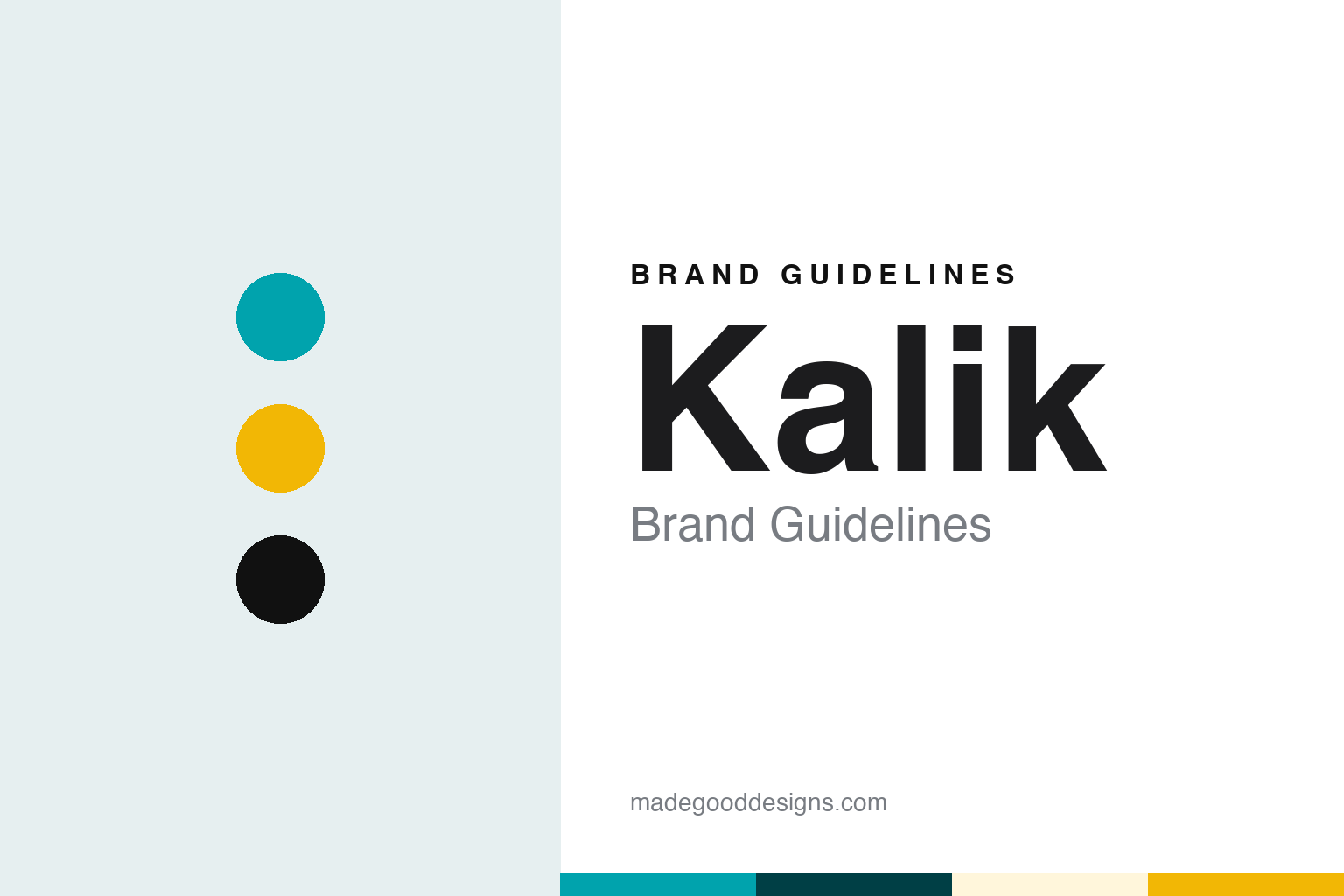
Kalik Brand Guidelines
The Bahamian lager named for the Junkanoo cowbell, from 1988.
Aa
Two constants: an aquamarine, Junkanoo gold and black palette and a rounded bold sans register. Abstract homage — not a Kalik product or mark; no label, bottle or logo is reproduced.
A brewery at Clifton Pier
A Nassau brewery, a Dutch partner and a beer of its own.
Kalik is brewed by Commonwealth Brewery Limited (CBL) in Nassau, on the island of New Providence. The company’s 2011 financial statements, filed with The Bahamas International Securities Exchange (BISX), say it was incorporated in The Bahamas on 17 November 1983, began trading in March 1987, and has its principal place of business at Clifton Pier, on the western side of the island. The Bahamas Investor reported in June 2007 that the brewery began brewing Guinness in March 1987, and that Kalik, “the Bahamian beer,” was first introduced in 1988. Alongside Kalik, the brewery has made Heineken, Guinness and the malt drink Vitamalt for the local market. When the magazine profiled the brewery that year, its managing director was LeRoy Archer.
The brewery was a partnership from the start. The 2011 statements say that until May 2010 Heineken owned 53% of CBL and Associated Bahamian Distillers and Brewers (ABDAB), a Bahamian drinks group, owned 47%, and that a 1995 agreement gave Heineken the right to elect four of the seven directors, including the chairman. In November 2009 Heineken agreed to buy ABDAB’s shares in CBL and in the drinks distributor Burns House. The Bahamian government approved the deal on condition that a quarter of CBL be offered to the Bahamian public, and it took effect on 17 May 2010; Burns House became a wholly owned subsidiary of CBL in July 2010.
The public offering followed. CBL was listed on BISX from 24 May 2011, the statements say, and they describe the company as a subsidiary of Heineken International, with Heineken N.V. in Amsterdam as its ultimate parent. The Bahamas Investor and The Tribune both reported in 2016 that Heineken held about 75% of the company and Bahamian investors about 25%.
Colour
A name taken from the sound of the parade.
The name is the identity. English Wikipedia, citing the bottle label, says “Kalik” comes from the sound of the cowbells heard during Junkanoo, the Bahamian street parade held on Boxing Day and New Year’s Day. In November 2025 CBL brand manager Carlos Sands put it more simply to The Tribune: Kalik is “the sound of the cowbell.” The same report said the brand’s story was shaped in its early years by the Bahamian musician and songwriter Tyrone Fitzgerald, who helped create it.
That link with the parade became formal in 2025. The Tribune reported on 27 November 2025 that Kalik had signed with the Ministry of Youth, Sports and Culture and the National Junkanoo Committee to become the official alcoholic beverage sponsor of Junkanoo in New Providence from 2025 to 2029, covering the Boxing Day and New Year’s Day parades and related festivals.
The look has been refreshed more than once. Insider Latam reported in March 2021 that the independent agency Founders, founded by Tanya De Poli and Checha Agost Carreño, had begun work on Kalik and was launching a new image for the whole Kalik product family under the line “Keep Kalikin,” with a relaunch campaign planned for outdoor, digital and social media across the islands. In January 2025 the same publication reported that Ogilvy Miami had launched “In Our Hands,” a creative platform for Kalik built around Bahamian pride and the protection of cultural traditions, and quoted Queswell Ferguson, CBL’s senior portfolio manager for beers, calling Kalik “a symbol of unity, celebration and identity.”
Typography
Design and documentation.
The seven beers in this group come from Latin America and the Caribbean: Polar, Cusqueña, Pilsen Callao, Brahma, Medalla, Kalik and Banks. Several have long histories. Pilsen Callao was first brewed in 1863 at a brewery that Federico Bindels founded in the Peruvian port of Callao, Spanish Wikipedia says, and Brahma was first made by a Rio de Janeiro brewery founded in 1888, according to English Wikipedia. Cusqueña goes back to a branch of the Arequipa brewer Günther & Tidow opened in Cusco on 1 October 1908, Spanish Wikipedia says. Cervecería Polar began brewing at Antímano, west of Caracas, on 14 March 1941; Cervecería India, now the Compañía Cervecera de Puerto Rico, was founded in Mayagüez in 1937 by the Valdés Cobián brothers; and Banks (Barbados) Breweries opened at Wildey in September 1961, all according to English Wikipedia. Kalik is the newcomer: English Wikipedia dates the Bahamian lager to 1988.
Their ownership has gone in very different directions. Two are still made by companies based in their home markets: Polar belongs to Empresas Polar, the privately held Venezuelan group whose president is Lorenzo Mendoza, and Medalla Light, which English Wikipedia dates to 1980, is made by the Compañía Cervecera de Puerto Rico, run since 2017 by Grace Marie Valdés. Brahma has been part of Ambev since the company was created in 1999 from the merger of Brahma and Antarctica, and Ambev is now a subsidiary of Anheuser-Busch InBev, English Wikipedia says. In Peru, Backus and Johnston bought 62 per cent of the Compañía Nacional de Cerveza, the maker of Pilsen Callao, in 1994, and Cervesur, the maker of Cusqueña, joined the Backus group in 2000, Spanish Wikipedia says; Backus was part of SABMiller from 2005 and has belonged to AB InBev since AB InBev’s takeover of SABMiller in 2016, according to English Wikipedia. Kalik is brewed in Nassau by Commonwealth Brewery, which its 2011 financial statements describe as a subsidiary of Heineken; they record that Heineken’s purchase of the shares held by its Bahamian partner took effect on 17 May 2010, and that the company was listed on the Bahamas International Securities Exchange on 24 May 2011. Banks passed from Barbadian ownership to an Ambev subsidiary in December 2015, according to Ambev’s filing with the US Securities and Exchange Commission, and since 31 July 2025 KOSCAB Holdings, a Coca-Cola bottler, has held the majority of SLU Beverages, which controls Banks Holdings, Nation News reported.
A beer brand’s identity is usually carried less by a single bottle than by a label, a name and the place it promises, because the company behind the name may have changed hands or moved its brewing. Each guide separates what independent sources record from what the brewer says about itself — its founding story, its owners over time, where its beer is brewed and how its labels, cans and advertising have changed — and marks plainly what rests only on the company’s own word.
Aa
A rounded bold sans for a short name with a beat in it. (Specimen set in Rubik, a sans-serif STAND-IN; NOT the Kalik logo.)
Kalik
One lager, a family of variants and an island brewery.
The original Kalik is a lager, and the name has since stretched across a family. English Wikipedia lists Kalik Gold, first brewed in 1992 as a limited edition for the 500th anniversary of Columbus’s landing in the Americas, Kalik Light from 1997, a lime-flavoured Kalik from 2010 and a radler from May 2014. CBL’s report on its 2024 results, filed with BISX, named the launch of a new radler, Kalik Lychee, among the year’s successes.
The beer travelled early. The Bahamas Investor reported in 2007 that Kalik’s first exports went to England and Florida, and that it was then sold in Florida and along the eastern seaboard of the United States.
Brewing on a small island has its exposures. The Tribune reported in October 2016 that Hurricane Matthew had damaged the roof of CBL’s Clifton plant and halted production of some of its bigger lines, Kalik among them. Competition has come from inside The Bahamas as well: BRAUWELT International reported in November 2012 on a rivalry between Commonwealth Brewery, in which it put Heineken’s stake at 75%, and the privately owned Bahamian Brewery and Beverage Company of Freeport, on Grand Bahama, more than 200 kilometres by sea from Nassau.
For a design guide, Kalik shows how a beer can take its name from a sound, tie that sound to a national parade and keep it as the brand’s centre through new owners, new variants and new agencies. Compare Red Stripe, the Jamaican lager in the stubby bottle, and Amstel, another Heineken lager. For this guide we use aquamarine, Junkanoo gold and black with a rounded sans, an unofficial interpretation; no product or logo is reproduced.
Explore & save
Keep Kalik’s identity on hand — save it to a board in the Made Good inspiration library.
Kalik identity set
Pin the Kalik aquamarine, Junkanoo gold and black palette and the rounded bold sans register to your own board.