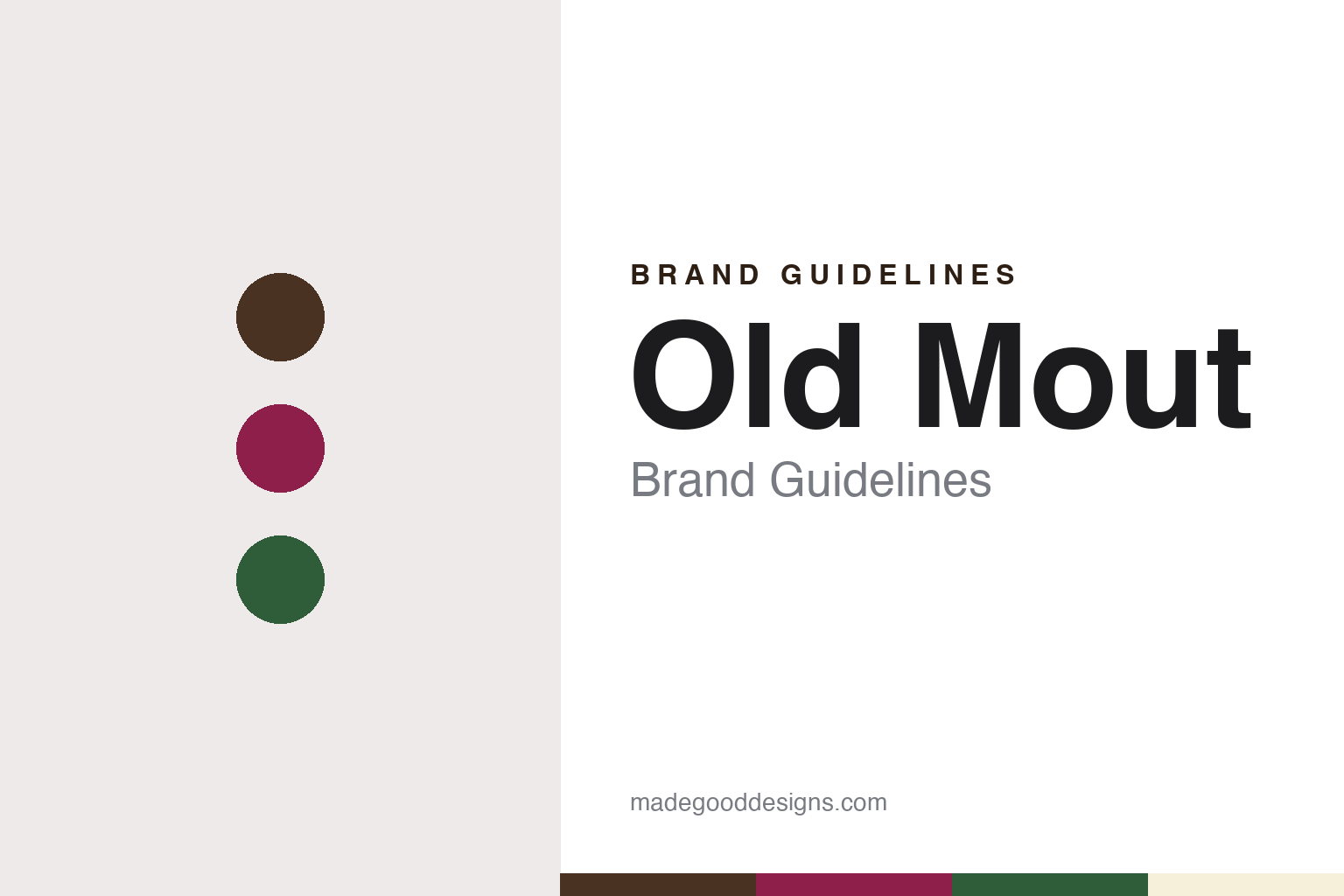
Old Mout Brand Guidelines
The kiwi-bird cider from Nelson’s Redwood Valley.
Aa
Two constants: a kiwi brown, berry and fern green palette and a warm display serif register. Abstract homage — not an Old Mout product or mark; no label, logo, bottle or can is reproduced.
A cider named after a valley
From the Moutere hills near Nelson to Heineken’s portfolio.
Old Mout is a New Zealand cider, and its name is a piece of local geography. Radio New Zealand explained in March 2014 that the “Mout” in the name is short for Moutere, the area between Nelson and Motueka. The cider comes from the Redwood Valley, where, RNZ reported, the Redwood Cider Company had made cider since 1947. The British pub trade paper The Morning Advertiser gave the same year for the brand’s founding when it covered Old Mout’s arrival in Britain that month.
The cidery itself sits on the Moutere Highway between Nelson and Motueka. The property site OneRoof reported in May 2020, when the land and buildings were offered for sale, that the premises had been operating since 1947 and were leased by the Redwood Cider Company, which made cider there for Old Mout alongside Monteith’s Crushed Cider, Rekorderlig and Orchard Thieves.
The modern company dates from 2012. OneRoof described Redwood Cider Company as a joint venture set up about eight years earlier between the established Nelson cider maker Redwood Cellars and DB Breweries, the majority shareholder, to produce and distribute cider in New Zealand and overseas. RNZ reported in 2014 that DB Breweries had been part of Heineken since 2012, which is how the Dutch brewer came to stand behind the brand; The Morning Advertiser already called it “the Heineken-owned Old Mout brand” in March 2014. DB still lists Old Mout among its brands, and a DB release of November 2022 described Old Mout, Rekorderlig and Orchard Thieves as made at “DB’s Nelson-based cidery, Redwood Cider Co.”
Colour
Fruit flavours, a flightless bird and a panda.
The brand’s shape changed in 2008. The Morning Advertiser reported in 2014 that Old Mout had “hit the jackpot” that year with an experimental range of fruit flavours. At home in New Zealand the range came to include a cider made with feijoa and Boysencider, a blend of cider and boysenberry wine, the paper said.
Fruit became the brand’s calling card abroad. Heineken launched Old Mout in Britain in March 2014 with three flavours, Summer Berries, Passionfruit & Apple and Kiwi & Lime, backed by posters, digital marketing and sampling in pubs and bars under the line “tasty ways to make fruit more useful,” The Morning Advertiser reported. RNZ added that the British cider would at first be produced under licence by Heineken in Belgium, with a royalty paid to Redwood, and quoted Redwood’s managing director Justin Hall saying it would reach pubs and supermarket shelves that week.
The visual constant is a bird. In May 2019 The Morning Advertiser described the kiwi, New Zealand’s national icon, as the figure that “sits proudly on all of its packaging,” and reported that Old Mout had begun a partnership with the conservation charity WWF to help protect animals’ habitats around the world, building on the brand’s earlier work for the kiwi in New Zealand. That campaign included the brand’s first television advertisement, which put the kiwi alongside WWF’s panda symbol.
The kiwi has since become a character in its own right. In July 2022 Creative Salon reported Old Mout’s campaign marking four years of the WWF partnership: a television and social campaign by the London agency St Luke’s, with an out-of-home takeover of London’s Waterloo Station, built around what the agency’s creative partner Julian Vizard called a kiwi that “has got a lot to say.” The campaign introduced a Strawberry & Apple flavour and came with limited-edition WWF packs.
Typography
Design and documentation.
The seven brands in this group are cider and alcohol-free drinks names: Old Mout, Dunkertons, Sheppy’s, Henney’s, Ceder’s, Big Drop and Lucky Saint. Four are ciders, and three were built around drinks without alcohol: an alcohol-free alternative to gin and two alcohol-free beers. Brands like these sit at many different points in the trade, from family cider makers that still carry a founder’s name to labels that now belong to much larger drinks groups, and to young companies started to fill a gap on the shelf.
A cider or an alcohol-free drink is usually recognised less by what is in the glass than by a label, a name and the place or story it promises, because the company behind the name may have changed hands, moved its production or had its drinks made by someone else from the start. That makes the questions behind each name worth asking plainly: who started it, who owns it now, and where its drinks are actually made.
Each guide separates what independent sources record from what the company says about itself — its founding story, its owners over time, where its drinks are made and how its labels and cans have changed — and marks plainly what rests only on the company’s own word.
Aa
A warm display serif for a fruit cider with a bird on every pack. (Specimen set in Fraunces, a serif STAND-IN; NOT the Old Mout logo.)
Old Mout
A New Zealand name, made in two hemispheres.
For the British market the cider no longer travels from Belgium. In October 2016 The Morning Advertiser reported on Heineken’s investment in its Bulmers cider operation in Herefordshire, where fruit is pressed at the cider mill in Ledbury and production and packaging take place in Hereford. Heineken’s Jo Dring told the paper that the upgraded packaging hall meant “we are now able to make Old Mout and Blind Pig in Hereford.” English Wikipedia records that Bulmers itself became part of Heineken in 2008, when the Dutch group bought Scottish & Newcastle. So the brand now has two homes: the Redwood Valley cidery for New Zealand, and Hereford for Britain.
Old Mout added an alcohol-free cider in Britain in 2018. The Morning Advertiser reported in April 2018 that the brand had unveiled an alcohol-free cider for the first time, a berries and cherries flavour sold in 500ml bottles in pubs and bars; Drinks International reported that it was shown at a Heineken trade event in London on 10 April that year. Heineken’s cider director Emma Sherwood-Smith presented it as a choice for people cutting back on alcohol. The alcohol-free range grew in 2022 with a Pineapple & Raspberry flavour, launched in the same St Luke’s campaign, Creative Salon reported.
For a design guide, Old Mout shows how a place name, a native bird and a run of bright fruit flavours can carry a small Nelson cider into a global brewer’s portfolio on both sides of the world. Compare Bulmers, the Hereford cider maker whose site now makes Old Mout for Britain, and Monteith’s, the DB-owned New Zealand beer whose Crushed Cider comes from the same Redwood Valley cidery. For this guide we use kiwi brown, berry and fern green with a serif, an unofficial interpretation; no product or logo is reproduced.
Explore & save
Keep Old Mout’s identity on hand — save it to a board in the Made Good inspiration library.
Old Mout identity set
Pin the Old Mout kiwi brown, berry and fern green palette and the warm display serif register to your own board.