Ketel One Brand Guidelines
The Nolet family’s copper-pot-still vodka from Schiedam.
Aa
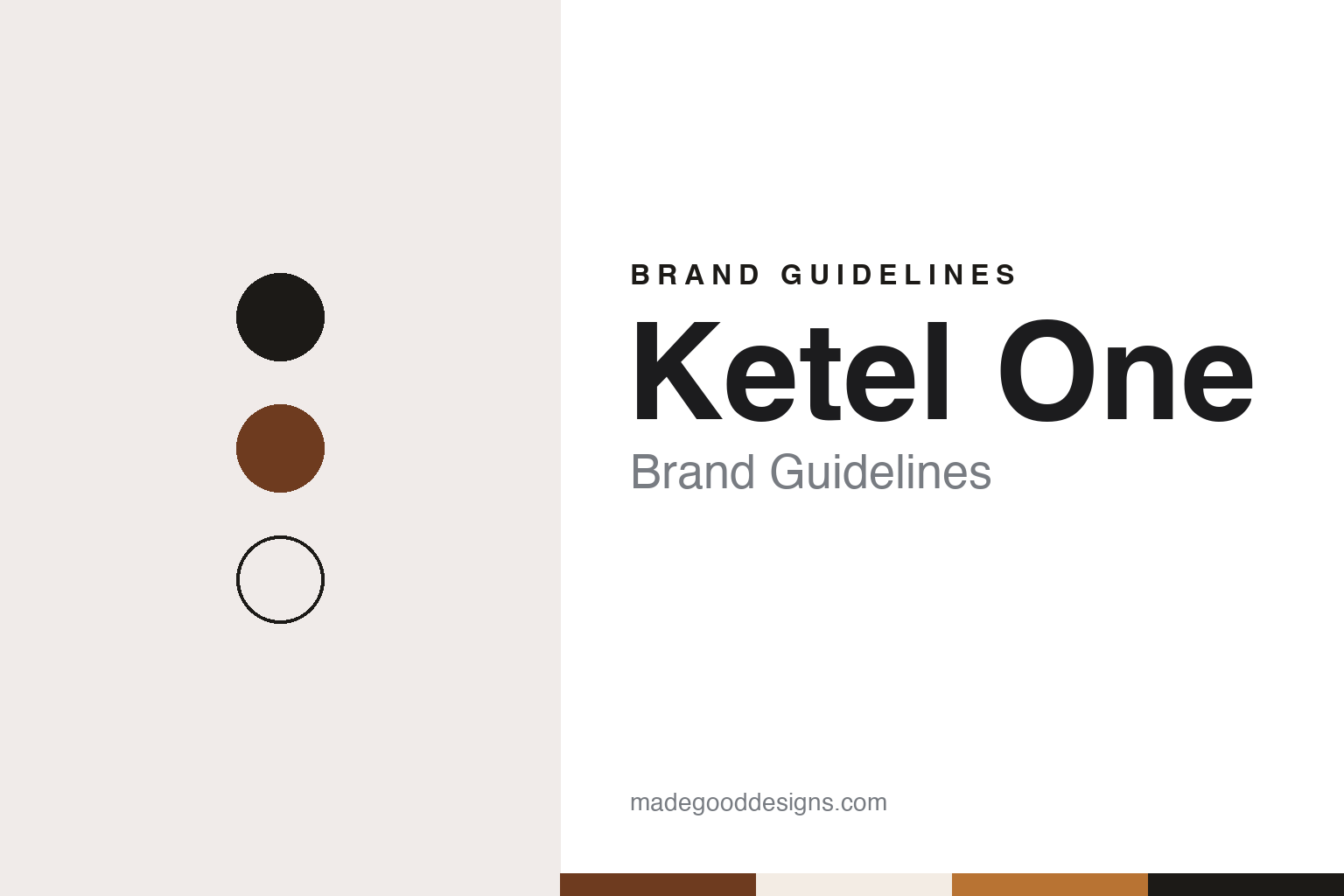
Two constants: a Ketel One copper and stoneware cream palette and a Dutch serif register. Abstract homage — not a Ketel One product or mark; no bottle, logo or label is reproduced.
A distillery town
Eleven generations in Schiedam.
Ketel One comes from a family distillery in Schiedam, the town beside Rotterdam that English Wikipedia says has long been known for its alcohol industry. The Nolet company says its distillery has been family-owned “right from its establishment in 1691,” making it one of the oldest family businesses in the Netherlands, and that the business “already goes back eleven generations.” The Ketel One website says the same: eleven generations of the Nolet family have run the distillery.
Schiedam was once crowded with competitors. In his 2014 book Vodka: How a Colorless, Odorless, Flavorless Spirit Conquered America, Victorino Matus writes that the town had more than 400 distilleries by the end of the nineteenth century, that only around 40 were left after the Second World War, and that technology, consolidation and mergers later left Nolet as the only distillery still operating there, as English Wikipedia summarises him.
The vodka’s name comes from the equipment. Ketel is the Dutch word for a pot still, and the brand says it named its distillery after “our original copper pot still, Distilleerketel No. 1.” English Wikipedia describes Ketel One as distilled from wheat in copper pot stills and filtered over loose charcoal; the company speaks of combining modern techniques with “traditional copper pot stills.”
The Nolet family also makes jenever under the Ketel 1 name — the house’s original Dutch spirit — and English Wikipedia uses that spelling, with a numeral, for the jenever and “Ketel One” for the vodka, a split the company’s own brand list still keeps.
Colour
A vodka made for America.
The vodka is a late addition to a very old company. According to Forbes, cited by English Wikipedia, Carolus Nolet, the tenth generation, took over from his father in 1979. Matus writes that he narrowed a wide product list, concentrating on jenever, and that the company then looked again at the United States. The Ketel One website says the vodka “was created in 1983 by the 10th generation of the Nolet family.”
Matus describes the launch as quiet and local: the vodka was introduced in San Francisco, at the BIX restaurant and supper club, and rather than advertise to consumers the company worked through bartenders and distributors. The Nolet company says Nolet Spirits U.S.A. was “founded by Carolus Nolet Snr in 1991,” and that his son Carel Nolet Jnr has been in charge of the American company; English Wikipedia instead credits the son with founding it that year.
Growth followed that bar-led route. The trade publication just-drinks reported in 2009 that sales rose from 7,000 cases in 1992–93 to 250,000 cases worldwide in 1997, and to one million cases in 2002; its first advertising campaign, in 2003, thanked existing drinkers. BusinessWeek reported in April 2008 that, although the vodka was sold in 25 countries, the United States was the only one in which it had advertised. Its first television commercials, in 2009, drew a review in Slate’s “Ad Report Card” column that November.
In 2008 the brand gained a large partner. The New York Times’ DealBook reported on 6 February 2008 that Diageo would invest in a joint venture with Ketel One’s owners, with the Nolet family keeping the distillery in Schiedam. The Nolet company describes the deal as Diageo acquiring “a 50% stake in the distribution and sale of Ketel One,” and says the vodka is still produced in Schiedam, a condition the family set.
Typography
Design and documentation.
The seven brands in this group are all vodka names: Belvedere, Ketel One, Stolichnaya, Russian Standard, Finlandia, Tito’s and Żubrówka. Vodka brands in general sit at many different points in the trade, from family firms that still carry a founder’s name to names that now belong to much larger drinks groups, and a single brand can be sold everywhere from a corner shop to a duty-free shelf.
A vodka brand’s identity is usually carried less by the spirit itself than by a bottle, a label and the place it names, because the company behind the name may have changed hands, moved its distilling or grown far beyond the town where it started. That makes the questions behind each name worth asking plainly: who started it, who owns it now, and where its vodka is actually distilled and bottled.
Each guide separates what independent sources record from what the company says about itself — its founding story, its owners over time, where its vodka is made and how its bottles and labels have changed — and marks plainly what rests only on the company’s own word.
Aa
A Dutch serif — an old distillery’s register. (Specimen set in Libre Caslon Text, a serif STAND-IN; NOT the Ketel One logo.)
Ketel One
A still on the label, a signature on the glass.
Ketel One’s packaging leans on the distillery rather than on a story of nation or palace. The company says the bottle “was designed in the style of stone spirits bottles common in The Netherlands” and that the label shows the original copper pot still. The bottle also carries a family name in handwriting: it “displays the signature of Carl Senior, a 10th generation Nolet,” the brand says.
Its manufacturing claim is direct: “Every bottle of Ketel One Vodka is made in Schiedam, Holland,” the Ketel One website says, and the Nolet company describes Schiedam production as a condition of the Diageo partnership. We give both as the companies’ statements.
The range has widened. English Wikipedia says two flavoured vodkas, Ketel One Citroen and Ketel One Oranje, were released between 2000 and 2010, and the Nolet company now lists Ketel One Botanical beside the vodka, along with KETEL 1 jenever, NOLET’S Gin and Proosje van Schiedam. The company says the brand is sold in more than ninety countries. For the typeface question on its own, see our note on the Ketel One font.
For a design guide, Ketel One shows how a piece of equipment and a family signature can stand for three centuries of distilling. Compare Zacapa, another spirit marketed by Diageo, and Belvedere, a European vodka built for the American market in the same decade. For this guide we use copper and a stoneware cream with a serif, an unofficial interpretation; no product or logo is reproduced.
Explore & save
Keep Ketel One’s identity on hand — save it to a board in the Made Good inspiration library.
Ketel One identity set
Pin the Ketel One copper and stoneware cream palette and the Dutch serif register to your own board.