Kiyomi Brand Guidelines
An Okinawa white rum from a distillery that began with rum in 1961.
Aa
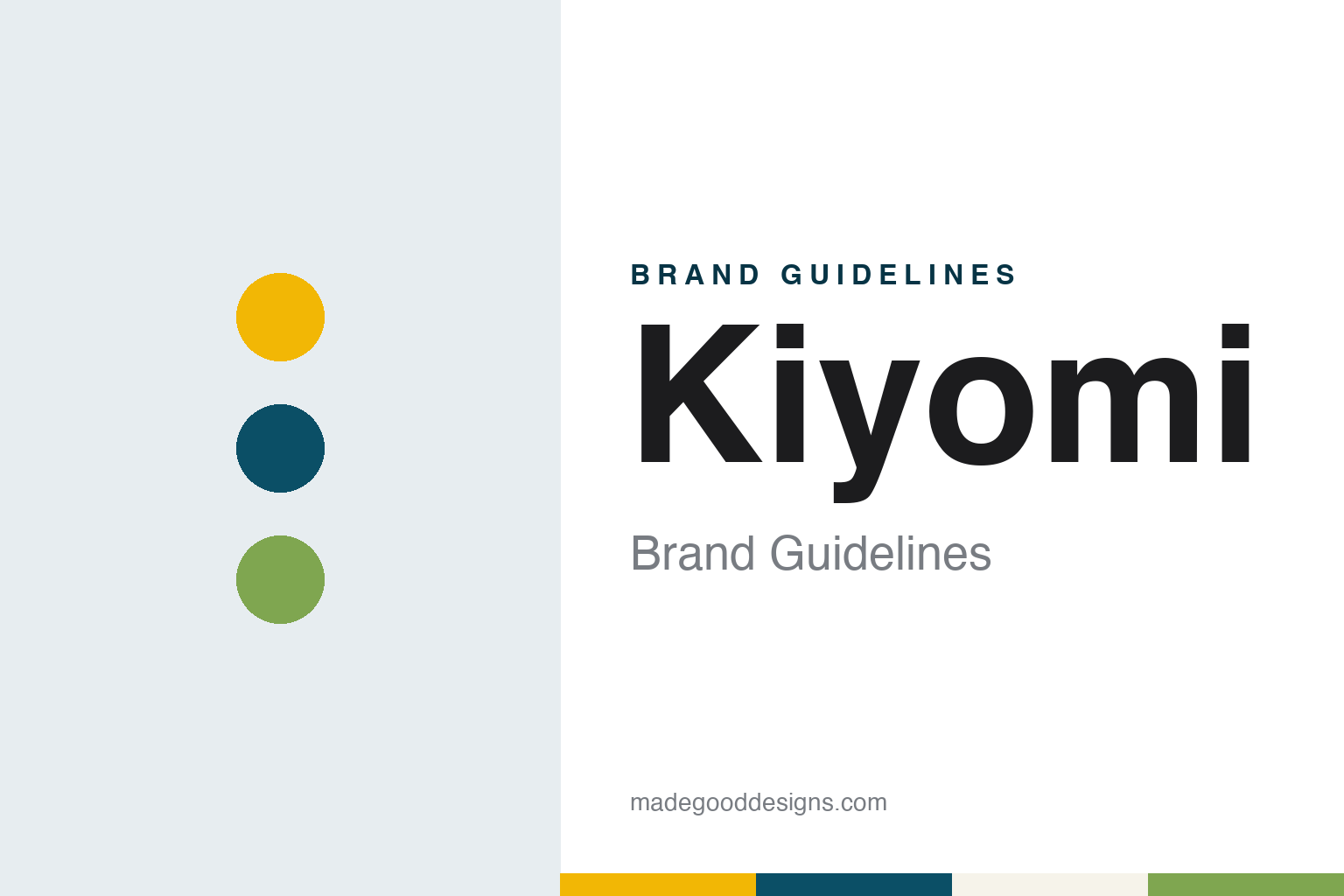
Two constants: a sun yellow, Okinawa sea and cane green palette and a clean Japanese gothic sans register. Abstract homage — not a Kiyomi or Helios product or mark; no label, logo or bottle is reproduced.
A rum company in post-war Okinawa
Sugar cane, scarce rice and an American market on the island.
Kiyomi is a white rum made by Helios Distillery (ヘリオス酒造, Helios Shuzō), a family-owned drinks company in Nago, in the north of Okinawa’s main island. The company dates itself to 1961: its own profile opens with the words “創業1961年,” founded 1961. Japanese Wikipedia records that in that year Tadashi Matsuda (松田正) set up a limited partnership called Taiyō Jōzō (太陽醸造) in Naha, the prefectural capital, and that it began by making rum.
Why rum, on an island better known for awamori? The Scottish trade paper SLTN reported in February 2024 that Helios first produced spirits mainly to meet strong demand from American military personnel stationed on Okinawa at the time. The rum blog The Lone Caner gave a fuller account in June 2019: rum could be sold to the soldiers, local sugar was readily available, and rice was needed as food and could not be spared for making alcohol. Okinawa was then still under United States administration, which ended with its return to Japan in 1972.
The business took its present name in 1969, when, according to Japanese Wikipedia, the partnership became Helios Shuzō Co., Ltd. In 1972 it moved to its current site in the Kyoda district of Nago, which the company describes as a “city of water.” The Japanese word taiyō means sun, as Helios does in Greek myth.
Colour
A clear spirit, and a family that still makes it.
When the independent British importer Love Drinks launched it in the United Kingdom, SLTN reported in February 2024, the importer described it as a 40 per cent white rum made only from sugar cane molasses, fermented for 30 days and then distilled in a copper pot still. Love Drinks’ managing director, Samantha Burke, told the paper that the brand was “steeped in heritage” and offered “real provenance.”
Accounts of the still differ. The German rum blog Galumbi wrote in October 2019 that Kiyomi is distilled once on copper pot stills and then rested in steel tanks, while The Lone Caner described a double column still and a rest of about six months in steel before the spirit is reduced to bottling strength. The Lone Caner also reported the 30-day fermentation, and both blogs describe an unaged, clear spirit.
Kiyomi travels with a sibling. Galumbi reported that the French house of Ferrand had announced it would distribute two Helios rums in Germany: Kiyomi and Teeda, a rum aged five years in American white oak. Both, the blog noted, are based on molasses.
The people behind the bottle have not changed. SLTN reported that the Matsuda family still produces Kiyomi, and Galumbi wrote in 2019 that the company was in its third generation, led by Tadashi Matsuda’s son and daughters. The company’s 2023 profile named Ryo Matsuda (松田亮) as its representative, and the Okinawan daily Ryukyu Shimpo identified him as president in October 2022.
Typography
Design and documentation.
The six brands in this group are all spirits from Asia: Omar, Godawan, Kamet, Solan Gold, Three Societies and Kiyomi. Five are whisky names, from Taiwan, India and South Korea, and one is a rum from Okinawa. Spirits brands in general sit at many different points in the trade, from small independent distilleries to labels that belong to much larger drinks groups or state-linked companies, and a single name can be sold everywhere from a duty-free shelf to a bar list abroad.
A spirits brand’s identity is usually carried less by the liquid than by a label, a name and the place it promises, because the company behind the name may have changed hands or names, sourced its grain or cane from elsewhere, or grown far beyond the place where it started. That makes the questions behind each name worth asking plainly: who started it, who owns it now, and where its spirit is actually distilled, matured and bottled.
Each guide separates what independent sources record from what the company says about itself — its founding story, its owners over time, where its spirit is made and how its labels have changed — and marks plainly what rests only on the company’s own word.
Aa
A clean Japanese gothic sans for a clear Okinawa spirit. (Specimen set in Zen Kaku Gothic New, a sans-serif STAND-IN; NOT the Kiyomi or Helios logo.)
Kiyomi
A rum label inside a full Okinawan drinks house.
Rum is where Helios began, not where it stopped. Its company profile lists six production licences — awamori, spirits, whisky, liqueur, beer and happoshu — and calls Helios a general liquor maker. Japanese Wikipedia records that Helios took a craft beer licence in 1996 and opened a brewery and restaurant, and that it released a 15-year-old whisky in a limited run of 200 bottles in 2016, a release the Okinawa Times reported in November that year. In 2020, the same article says, Helios bought the former Ginga Kogen Beer brewery at Sawauchi in Nishiwaga, Iwate Prefecture, which the company lists among its sites.
Wood matters to the house. The company says its second warehouse holds more than 2,000 custom 450-litre oak casks, in which the base spirit for its aged awamori Kura, its whisky and its rum mature, and that it distils in a copper pot still heated by indirect steam because copper spreads heat evenly. The business has also spread beyond Okinawa: Japanese Wikipedia records a Naha sales office from 1982, a Tokyo branch from 1985, and a new head office and second plant in 1995, and the company’s 2023 profile listed a branch in Taipei alongside Naha and Tokyo.
Its places are part of the brand. The company says it has stored awamori since January 2008 in a closed tunnel at Yona, in the village of Kunigami in northern Okinawa, with the support of the village, because its temperature and humidity stay steady. In December 2022 Helios opened a brewery with a restaurant inside Naha Airport, Ryukyu Shimpo reported ahead of the opening. Japanese Wikipedia also lists Grace Rum, a rum distiller on the island of Minami-Daito, as a company in which Helios holds a majority stake.
The name needs a little care. Helios is a common brand name, used by companies in several unrelated industries; the distillery’s own site is helios-syuzo.co.jp.
For a design guide, Kiyomi shows how a small export label can rest on a long local story: a rum company that started in post-war Naha, took the name of the sun, and still sits in the hands of the family that founded it. Compare Tanduay, the Philippine rum, and Nikka, the Japanese whisky house. For this guide we use sun yellow, Okinawa sea and cane green with a clean sans, an unofficial interpretation; no product or logo is reproduced.
Explore & save
Keep Kiyomi’s identity on hand — save it to a board in the Made Good inspiration library.
Kiyomi identity set
Pin the Kiyomi sun yellow, Okinawa sea and cane green palette and the clean gothic sans register to your own board.


