Matiz Brand Guidelines
The Seattle importer’s label for Spanish conservas.
Aa
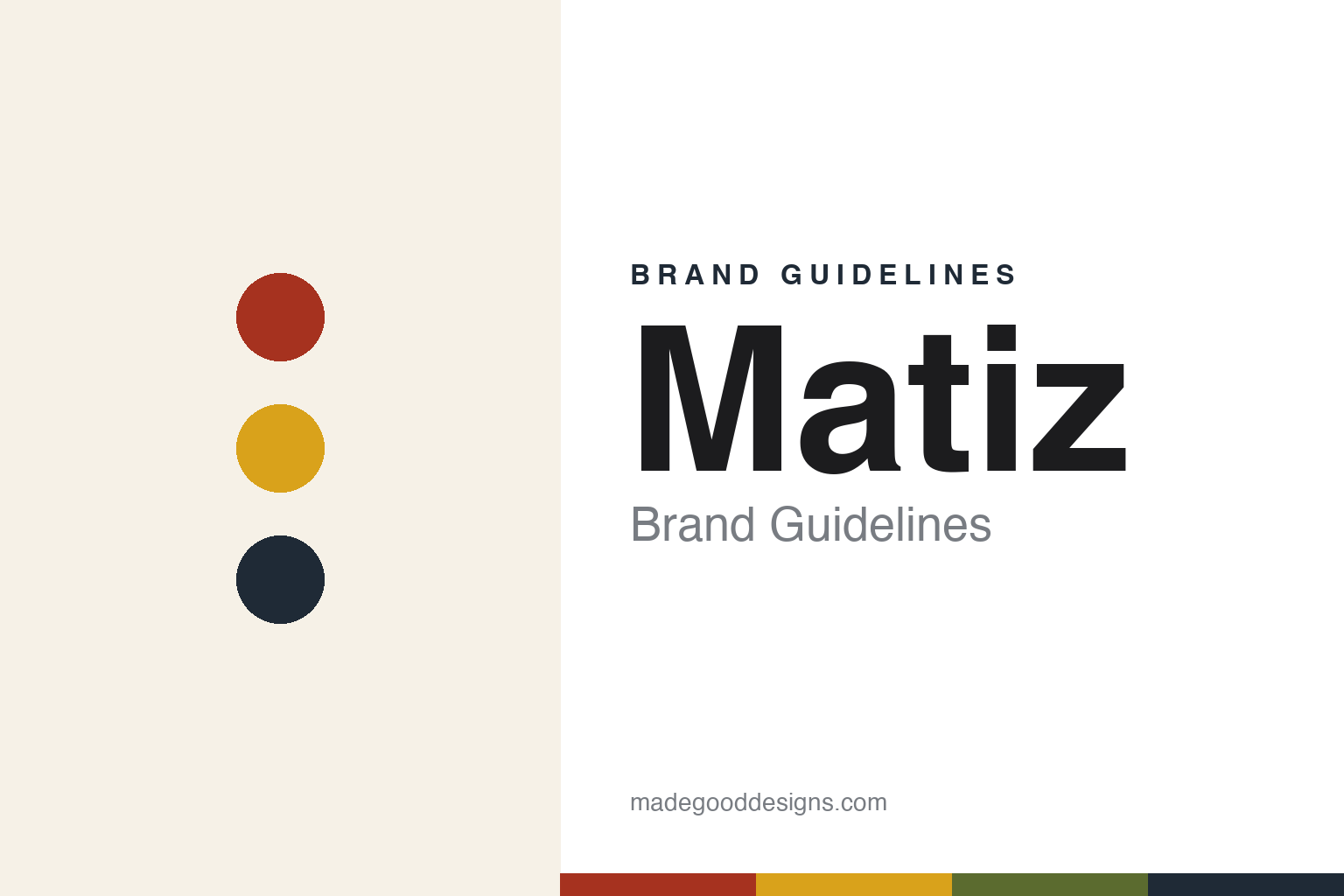
Two constants: a pimentón, saffron and Atlantic-ink palette and a Spanish-pantry serif register. Abstract homage — not a Matiz product or mark; no tin, label or logo is reproduced.
Power-Selles Imports
A Catalan and a New Englander in Seattle.
Matiz is not a cannery. It is the Spanish-foods label of Culinary Collective, an importer and distributor in Washington State, and the tins, jars and bags that carry the name are made for it by producers in Spain. The company’s own history begins in Seattle in September 1998. Its website in 2007 said that Culinary Collective, “formerly Power-Selles Imports,” was established that year by Pere Selles, from Catalonia, and Betsy Power, from Salem, Massachusetts, “when the two moved to Seattle and realized that the selection of quality foods from Spain was next to nil.”
The founders described their beginnings modestly. In a letter marking the company’s fifteenth year, posted on its website in 2013, Betsy Power, signing as president, wrote that what started as a hobby — “really just a quest to get some good Spanish olive oil onto our Seattle table” — became a way of life, with annual trips to Spain in search of traditional foods and “a steep learning curve on all things import.” By then, the anniversary page said, the team numbered nine, and the company was inviting customers and suppliers to help shape its next steps. The same 2007 page said Selles had started his food career in the Spanish restaurants of Chicago, and that Power’s background was in architecture and community-based development, which she put to work in sourcing and product development.
The business widened its map. In 2007 the website announced a turn toward Latin America, and by 2015 the company described itself as two divisions: Matiz España, for Spanish foods, and Zócalo Gourmet, for foods from Peru. It said it then worked with more than 30 vendors in the two countries and called itself “a founding Certified B Corporation.” Its address today is in Mukilteo, north of Seattle, and its May 2025 catalogue says it ships to distributors and wholesale accounts from warehouses in Washington and New Jersey.
Colour
One name, many Spanish regions.
The Matiz name was built as an umbrella over Spain’s regions rather than over a single factory. On the company’s website in 2015, the Matiz España range was divided into regional lines — Matiz Gallego, Matiz Vasco, Matiz Navarro, Matiz Valenciano, Matiz Catalan, Matiz Andaluz and Matiz Extremeño — each covering foods from that part of the country, from Basque bonito and piparra peppers to Valencian paella rice, Navarrese piquillo peppers and Catalan sauces. The page said the company worked “exclusively with traditional family manufacturers.”
The seafood sat under Matiz Gallego. In 2015 the company named the Galician producer behind that line as Connorsa, which, the importer said, had been supplying fish and shellfish from Galicia since 1985; the Matiz Gallego products listed then were sardines, octopus (pulpo), organic mussels and cockles (berberechos).
The seafood range has since grown. Culinary Collective’s May 2025 catalogue groups Matiz tins into fin fish, cephalopods and shellfish: sardines in several preparations, including lemon, harissa, piri-piri and lightly smoked, as well as mackerel, MSC-certified cod, bonito, octopus, giant calamari with white beans and pimentón, mussels and cockles. Marinated boquerones, white anchovies, are sold chilled, and the catalogue marks them, like the cod, as MSC-certified. The company’s product pages describe the sardines as wild-caught off the coast of Spain and hand-packed in Spanish olive oil, and the mackerel as coming from Galicia.
On sourcing, the company says it follows guidelines from the Monterey Bay Aquarium’s Seafood Watch programme and works with fisheries certified by the Marine Stewardship Council “whenever possible.”
Typography
The Atlantic cannery tradition.
The seven brands in this group are all tinned-fish names, from brands based in Spain, Italy and the United States: Matiz, Palacio de Oriente, Albo, Rio Mare, Mare Aperto, AsdoMAR and Wild Planet. Tinned-fish brands sit at many different points in the trade, from family canneries that still carry a founder’s name to labels that belong to much larger food groups, and the same name can appear on a delicatessen shelf and in a supermarket aisle. Two of the seven share an owner: Italy’s Bolton Group, based in Milan, lists both Rio Mare and Wild Planet among its food brands, having announced its acquisition of Wild Planet in August 2021.
A tinned-fish brand’s identity is carried less by the fish than by the tin: its label, its colours, its name and the place it promises. The company behind a name may have changed hands, moved its canning or bought its fish from far away, which makes the plain questions worth asking: who started the brand, who owns it now, and where its fish is caught, packed and canned.
Each guide separates what independent sources record from what the company says about itself — its founding story, its owners over time, where its fish is processed and how its tins and labels have changed — and marks plainly what rests only on the company’s own word.
Aa
A warm, bookish serif for a Spanish pantry label. (Specimen set in DM Serif Display, a serif STAND-IN; NOT the Matiz logo.)
Matiz
An importer’s label, not a factory’s.
Matiz’s position differs from that of a canner’s own brand. Palacio de Oriente, for example, is the brand of a Galician canning company with its own plant at Bueu; Matiz is the name an American importer gives to foods it buys from a number of Spanish producers. The company says those producers are small and traditional, and its 2015 website organised them by region.
Tinned fish is now only one part of the label. The Matiz collection on the company’s website runs to about thirty items, including paella rice, saffron, Marcona almonds, organic quince paste, sofrito and peppers, and the 2025 catalogue adds a garum — a fermented fish sauce — under the Matiz name. Piquillo peppers and piparras are listed there under the heading “Matiz Conservas,” the Spanish word for preserved foods in jars and tins.
The same catalogue sets Matiz alongside other producers’ own brands that Culinary Collective imports, among them the Basque tuna and anchovy canner Arroyabe, the Galician seafood brand La Brújula, the Jaén olive-oil estate Castillo de Canena and the Barcelona chocolate maker Blanxart. Matiz is the company’s own label in that list, the name of the division it set up for Spanish foods.
For a design guide, Matiz shows how an importer can build a single brand across many regional producers and still make it read as Spanish. Compare Castillo de Canena, one of the estates Culinary Collective imports under its own name, and Blanxart. For this guide we use pimentón red, saffron and a deep Atlantic ink with a serif, an unofficial interpretation; no product or logo is reproduced.
Explore & save
Keep Matiz’s identity on hand — save it to a board in the Made Good inspiration library.
Matiz identity set
Pin the Matiz pimentón, saffron and Atlantic-ink palette and the Spanish-pantry serif register to your own board.


