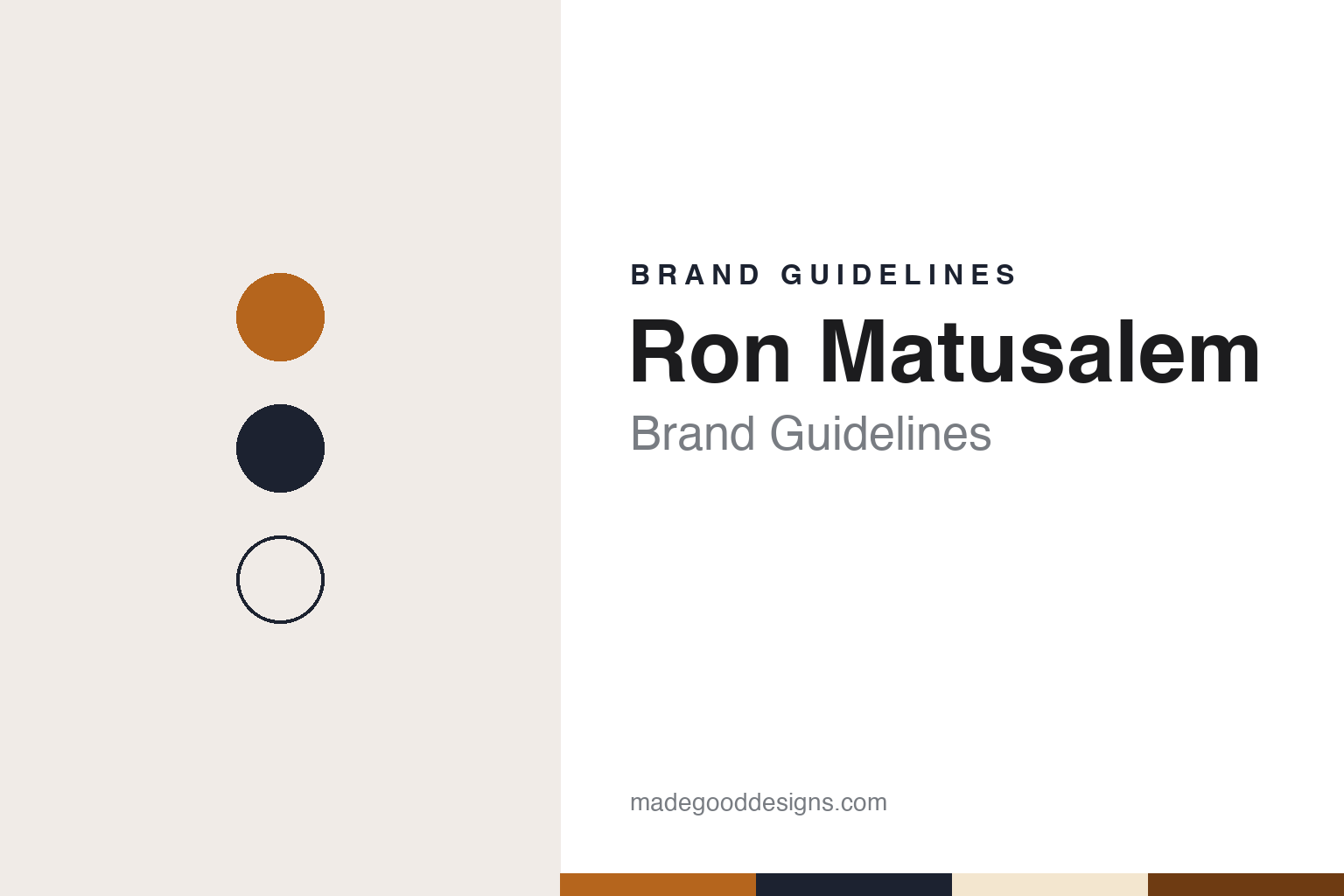
Ron Matusalem Brand Guidelines
The Santiago de Cuba solera rum of the swallow.
Aa
Two constants: a solera amber, swallow navy and old paper palette and a classical old-style serif register. Abstract homage — not a Ron Matusalem product or mark; no label, logo or bottle is reproduced.
A distillery in Santiago de Cuba
A solera, a swallow and two families.
Ron Matusalem traces itself to Santiago de Cuba, in the east of the island, and to the year 1872. The company’s history page credits a Spanish immigrant from Lloret de Mar, Pablo Nonell, who it says had taken up distilling in Santiago and by 1872 owned his first distillery, where he introduced the solera system, a method of fractional blending and ageing first used for sherry and brandy. A retailer account published by Rhum Attitude tells the founding differently, crediting the brothers Benjamín and Eduardo Camp, who it says came from Spain with Evaristo Álvarez; both versions agree on the city and the year.
In the company’s telling, the business passed in 1888 to Nonell’s nephews Enrique and Benjamín Camp, who set up E. Camp & Co., and in 1912 Eduardo Camp married Justina Álvarez Lefebre, joining the Camp and Álvarez families. The company says Evaristo Álvarez Prieto and his son Claudio Álvarez Lefebre took charge in 1925, and that leadership passed in 1942 to Claudio Álvarez Soriano. Forbes Italia, interviewing the present owner in November 2022, reported that between 1930 and 1950 the rum’s reputation spread widely as Cuba became a destination for celebrities.
The name is a promise about age. Forbes Italia explained that Matusalem refers to the biblical patriarch Methuselah, said to have lived 969 years, a fitting name for a rum built on long, layered ageing.
Colour
A bird registered in 1888 that is still on the bottle.
The brand’s most durable visual element is a bird. The company says that in 1888 it registered what would become, and remains, the brand’s logo: the swallow.
The other constant is the solera, which the company treats as part of the brand’s identity rather than only a production detail. Forbes Italia reported that the house adapted the Spanish method to rum, and the range is organised around it: the company’s site leads with Gran Reserva 15, which it calls “The Original,” alongside Gran Reserva 23, the Enigma expressions finished in American and French oak, and Insólito, with limited editions named Sublime and Lefebre.
The product pages carry the family story into the names. The company says Gran Reserva 15 was born in Cuba, where it became an icon of the island’s Golden Age, and that it is still made with the solera technique. Lefebre, the company says, is the first release of a Tributes Collection honouring members of the founding family; Claudio Álvarez Renaud is quoted on its page calling it a tribute to his great-grandfather Claudio Álvarez Lefebre, who led the company during Cuba’s Golden Age. It is aged in former Bordeaux casks through a French-oak solera, and each bottle is numbered and comes with a certificate of authenticity. Insólito, whose name the company translates as “unusual,” takes its cue from the rosé wines of Provence: the company says it is filtered, aged in a solera of former Tempranillo wine barrels and then married with Gran Reserva 15.
The packaging has been used for anniversaries. For the brand’s 150th anniversary in 2022, Forbes Italia reported, the oldest casks were selected for a blend called Sublime, presented in a hand-designed, numbered decanter made by the Portuguese glassmaker Vista Alegre, which the magazine noted has been making glass since 1824.
Typography
Design and documentation.
The seven brands in this group are all rum names: Foursquare, Doorly’s, Chairman’s Reserve, Ron Matusalem, Pusser’s, Don Papa and Barbancourt. Their stories run through Barbados, Saint Lucia, Cuba, the Dominican Republic, Haiti and the Philippines, as well as the Royal Navy’s old rum ration, and at least one of them began in one country and is now made in another. Rum brands in general sit at many different points in the trade, from family distilleries that still carry a founder’s name to labels that now belong to much larger drinks groups.
A rum’s identity is usually carried less by a single bottle than by a label, a name and the place it promises, because the company behind the name may have changed hands, moved its distilling or grown far beyond the place where it started. Rum is made from sugar cane, either from molasses or from fresh cane juice, and the rules on what may be called rum, how long it is aged and what may be added differ from one country to the next. That makes the questions behind each name worth asking plainly: who started it, who owns it now, and where its rum is actually distilled, aged and bottled.
Each guide separates what independent sources record from what the company says about itself — its founding story, its owners over time, where its rum is made and how its labels have changed — and marks plainly what rests only on the company’s own word.
Aa
A classical old-style serif for a rum that measures itself in generations. (Specimen set in Cormorant Garamond, a serif STAND-IN; NOT the Ron Matusalem logo.)
Ron Matusalem
From Cuba to Miami to the Dominican Republic.
The Cuban chapter ended with the revolution. The company says the nationalisation of private enterprises in 1960 and 1961 forced the different branches of the family out of the business in Cuba, and that the widow of Claudio Álvarez Soriano, Carmen Delfina Salazar Sánchez, left the island with her four children. Forbes Italia reported that the family settled in Miami.
The rebuilding took decades and, the company acknowledges, several legal disputes among the brand’s heirs. It says that in the 1990s Claudio Álvarez Salazar, the son of Álvarez Soriano and Carmen Salazar, took up the task of reviving Ron Matusalem. Forbes Italia described the present owner, Claudio Álvarez, buying back the pieces of the business step by step and relaunching it in the Dominican Republic, chosen, he said, because its climate and soil resemble Cuba’s. The company says production was firmly established in the Dominican Republic in 2016, and that Claudio Álvarez Renaud, son of Álvarez Salazar, now carries the family legacy forward. The Dominican Republic is also home to Barceló and Brugal, while the Cuban side of the story continues at Havana Club.
For a design guide, Ron Matusalem shows how a heritage brand can rest its identity on one small emblem and one ageing method, carrying a swallow and a solera from Santiago de Cuba to the Caribbean coast of Hispaniola. Compare Havana Club, the Cuban rum of Cárdenas, and Barceló, the Dominican rum founded by a Mallorcan. For this guide we use solera amber, swallow navy and old paper with a serif, an unofficial interpretation; no product or logo is reproduced.
Explore & save
Keep Ron Matusalem’s identity on hand — save it to a board in the Made Good inspiration library.
Ron Matusalem identity set
Pin the Ron Matusalem solera amber, swallow navy and old paper palette and the classical old-style serif register to your own board.