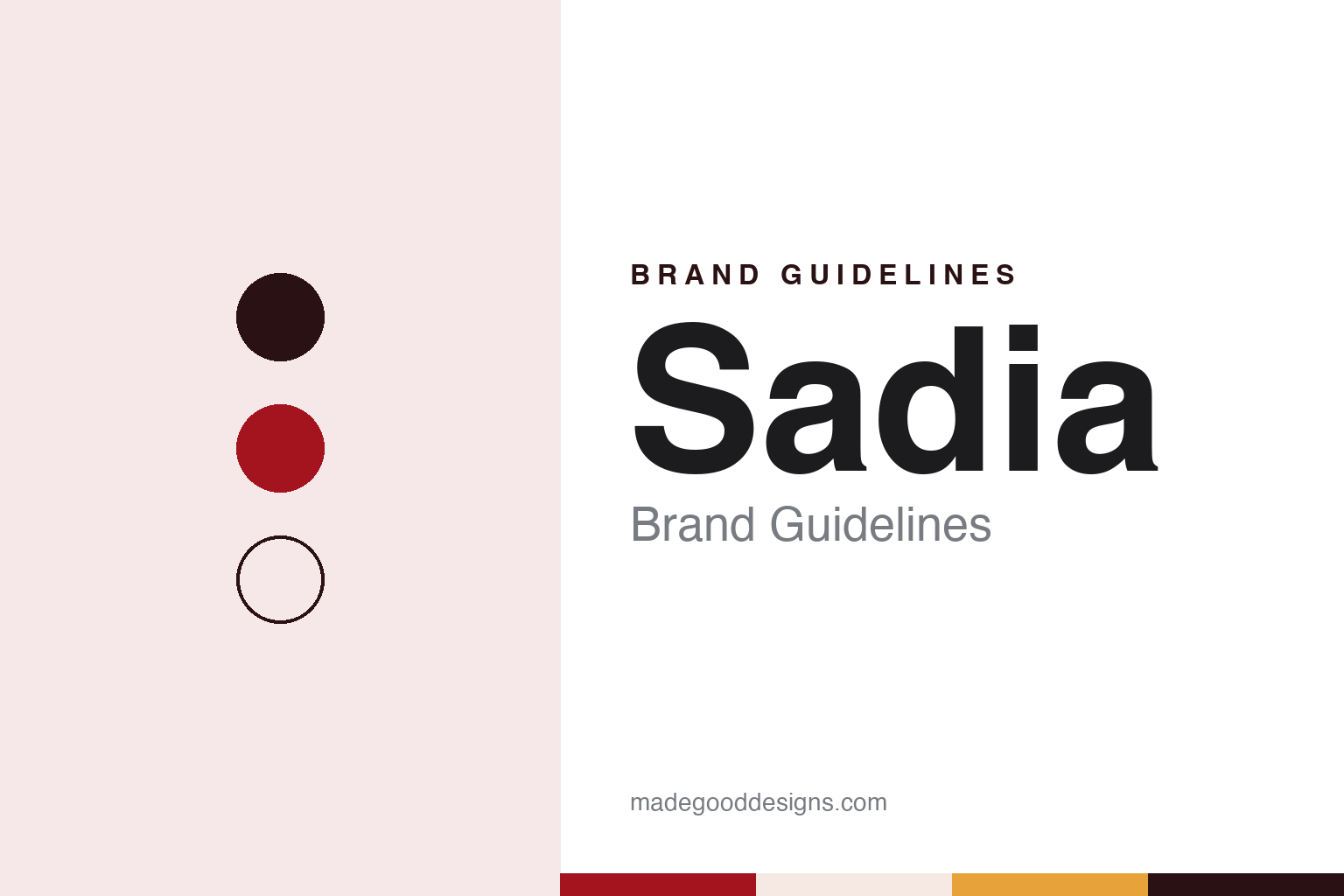
Sadia Brand Guidelines
The Concórdia meatpacker whose initials became a brand.
Aa
Two constants: a Sadia red, blush and gold palette and a rounded sans register. Abstract homage — not a Sadia product or mark; no pack, logo or mascot is reproduced.
Concórdia, 1944
A slaughterhouse and a flour mill in western Santa Catarina.
Sadia began in Concórdia, a small town in the west of Santa Catarina, in southern Brazil, in 1944. Portuguese Wikipedia, drawing on the journalist Consuelo Dieguez’s 2016 book Bilhões e Lágrimas, says the business grew out of S.A. Indústria e Comércio Concórdia, a company set up two years earlier by a group of local businessmen, which included a slaughterhouse and a flour mill, the Moinho Concórdia. It was not making money, and Attilio Fontana, a trader from neighbouring Rio Grande do Sul, was invited in to put it right. He agreed to stay only if the partners sold him enough of their shares to give him control; they accepted, and six months later he renamed the slaughterhouse Sadia. The same article also lists Dário Bordin among the founders. The two Wikipedias differ by a day on the date: English Wikipedia gives 6 June 1944, Portuguese Wikipedia 7 June.
The name is a compression. English Wikipedia says it joins the “SA” of Sociedade Anônima to the last letters of Concórdia, and notes that sadia also means “healthy” in Portuguese; Portuguese Wikipedia describes it the same way, as the initials SA plus the word Concórdia.
Early growth, Portuguese Wikipedia says, depended on second-hand machinery and on family. With imports blocked by the Second World War, Fontana bought equipment from a bankrupt slaughterhouse in Guaporé, in Rio Grande do Sul, and his nephew Victor Fontana, a chemical engineer, brought in hygiene and preservation methods that cut losses. The company’s own timeline adds that in 1947 Sadia opened its first distributor in São Paulo and became a registered trademark, and that in 1953 it opened its first base outside Concórdia, the Moinho da Lapa mill in São Paulo.
Colour
Pelo ar, para seu lar.
Distance shaped the brand. Sadia’s products were perishable, Concórdia was far from the markets of Rio de Janeiro and São Paulo, and refrigerated lorries did not yet exist. The company says it bought its first aircraft in 1952 to reach the Rio–São Paulo axis. Portuguese Wikipedia, citing the magazine piauí (2009), says Sadia first chartered planes and in 1955 created Sadia Transportes Aéreos, which also carried passengers, under the slogan “Pelo ar, para seu lar” — “by air, to your home.” That airline became Transbrasil in 1972. Once refrigerated trucks arrived, the products went back on the road.
The company’s timeline marks the milestones it is proudest of. It says the Frigobrás business took Sadia into ready meals and frozen foods in 1964; that it listed on the stock exchange in 1971; that its seasoned turkey, the Peru Temperado Sadia, arrived in 1974 and became the biggest success in its history; that in 1982 it set up a consumer information service, which it calls the first direct channel between consumers and a food company; that in 2000 it added Braille to its packaging; and that its Hot Pocket sandwich was an instant hit in 2007. Sadia also describes itself as the first to make convenience frozen foods such as lasagne, nuggets and pizza — a claim that is the company’s own.
For more than twenty years, Portuguese Wikipedia says, Sadia’s advertising used Lequetreque, a cartoon chicken in a helmet, linked to its quick-to-prepare lines and to the red pop-up pin in its Christmas turkeys that springs up when the bird is cooked. The same article says the logo now in use dates from 2017.
Typography
Brazilian food, documented.
The seven brands in this group all make food, and all of them come from Brazil: Sadia, Perdigão, Seara, Aurora, Bauducco, Marilan and Itambé. Brazilian food brands in general sit at many different points in the trade, from family firms that still carry a founder’s surname to cooperatives and names that now belong to much larger food groups, and a single brand can be sold everywhere from a neighbourhood market to a national supermarket chain.
A food brand’s identity is usually carried less by a single product than by a pack, a name and the meal or snack it promises, because the company behind the name may have changed hands, moved its factories or grown far beyond the town where it started. That makes the questions behind each name worth asking plainly: who started it, who owns it now, and where its food is actually made and packed.
Each guide separates what independent sources record from what the company says about itself — its founding story, its owners over time, where its products are made and how its packaging and advertising have changed — and marks plainly what rests only on the company’s own word.
Aa
A rounded sans — warm, plain and legible on a pack. (Specimen set in Nunito, a sans STAND-IN; NOT the Sadia logo.)
Sadia
From family firm to a brand of MBRF.
Sadia stayed a family company for decades. Portuguese Wikipedia records that by 1994 it was run by the third generation of the founding families, and that in 1999 it bought the Miss Daisy and Granja Rezende brands. In 2008, English Wikipedia says, it made heavy losses on the derivatives market during the financial crisis. In May 2009 it agreed to merge with its main rival, Perdigão, as Folha de S.Paulo reported on 19 May 2009; English Wikipedia describes the deal as technically a takeover of Sadia by Perdigão, which renamed itself BRF – Brasil Foods and, from 2013, BRF S.A. Sadia stopped being a company and became a brand, and Portuguese Wikipedia says the head office moved from Concórdia to Itajaí, on the Santa Catarina coast.
Ownership changed again in 2025. On 15 May 2025 Marfrig, which already held a majority of BRF’s shares, announced that it would absorb BRF, G1 and Globo Rural reported; Brazil’s competition authority, CADE, approved the deal without restrictions in September 2025, CNN Brasil and Exame reported. The combined company, MBRF Global Foods Company, is based in São Paulo, and Sadia’s website now links to MBRF.
On where Sadia is made, English Wikipedia says that in 2008 the company had about 20 industrial plants producing chicken, turkey, pork and beef, pasta, margarine and desserts, and Portuguese Wikipedia notes ISO 9001 and ISO 14001 certification for its plant in Chapecó. BRF, English Wikipedia says, runs about 50 production facilities in eight countries. The company says Sadia is sold in more than 150,000 shops in Brazil and offers more than 300 products. English Wikipedia also records that Sadia announced its support for the Rio 2016 Olympic and Paralympic Games in May 2013 and sponsored Brazil’s national football team from June 2013 to January 2016.
For a design guide, Sadia shows how a company’s initials can outlive the company, carried by aeroplanes, a cartoon chicken and a Christmas turkey. Compare Perdigão, its old rival and now its stablemate, and Seara, another Brazilian meat brand. For this guide we use a deep red, blush and a warm gold with a rounded sans, an unofficial interpretation; no product or logo is reproduced.
Explore & save
Keep Sadia’s identity on hand — save it to a board in the Made Good inspiration library.
Sadia identity set
Pin the Sadia red, blush and gold palette and the rounded sans register to your own board.