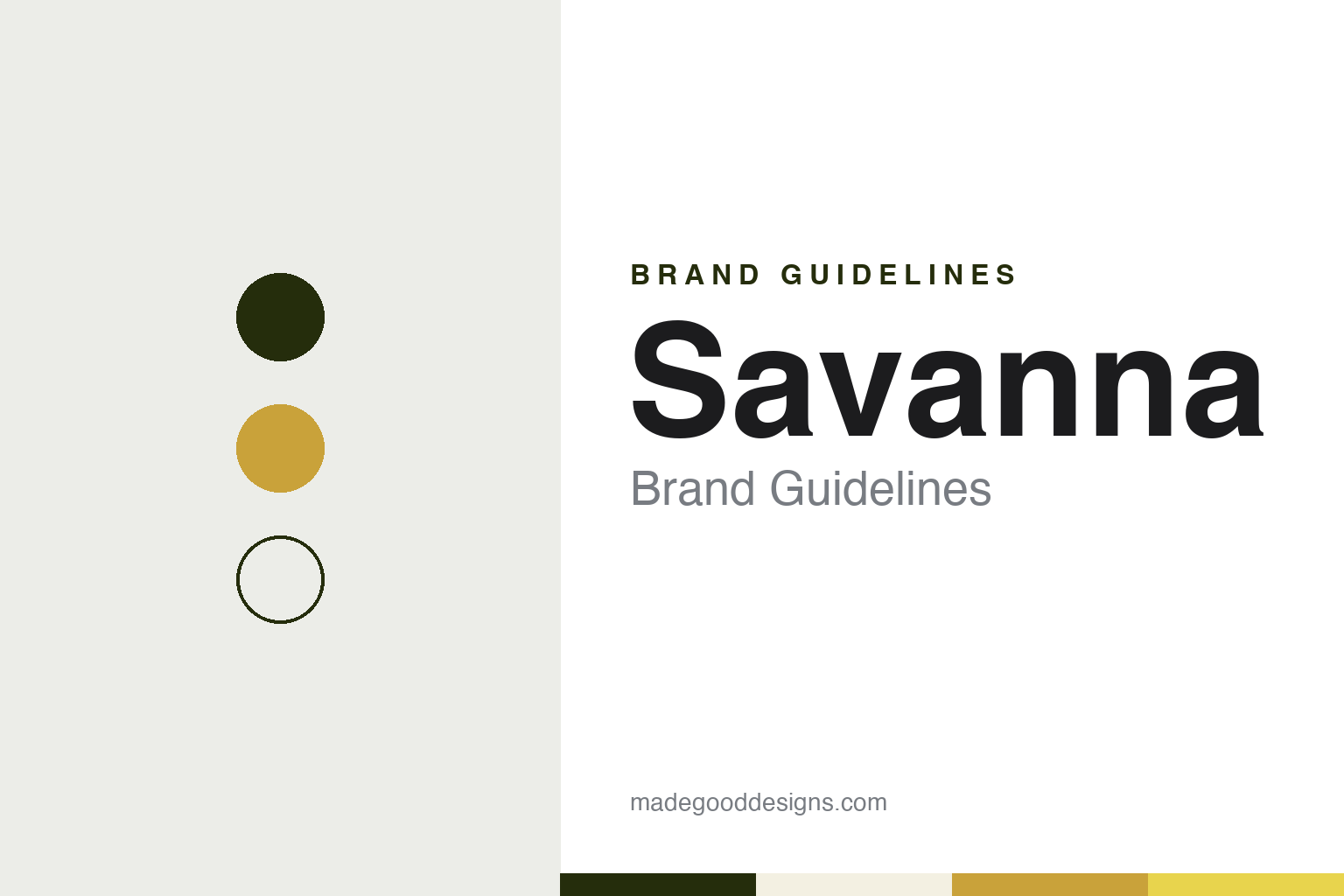
Savanna Brand Guidelines
The South African dry cider that says you can drink it.
Aa
Two constants: a dry olive, savannah grass and lemon wedge palette and a deadpan grotesque sans register. Abstract homage — not a Savanna product or mark; no bottle, label or logo is reproduced.
Dry, in 1996
A dry cider, a short bottle and a one-liner.
Savanna arrived in South Africa in 1996; English Wikipedia gives the month as May. The brand has always presented itself through one idea, dryness. In its own history, archived from savanna.co.za in 2011, it says it appeared “when cans were all the rage and the ciders sweet,” and that its distinctively dry taste became its trademark from the start. The name, the same page says, comes from the African savannah.
Its line has barely changed. “It’s dry, but you can drink it” has been the brand’s tagline since launch, English Wikipedia says; the 2011 site called it the pay-off line that “says it all,” and the slogan still headed the brand’s website in 2016. The company describes the whole brand in the same register: “a witty one-liner, a quirky little bottle and a superbly satisfying taste.” When Heineken Beverages marked a sales milestone in 2024 it again credited Savanna’s “intelligent, dry, and witty sense of humour.”
The bottle is the other part of the identity. Savanna says it was the first cider in South Africa to be packaged in glass, and that its bottle is clear and has a distinctly short, “dumpy” shape compared with other ciders, which it says makes up for its size with presence. The company’s serving ritual is just as fixed: Savanna recommends drinking it cold with a lemon wedge pushed into the neck of the bottle, and says it is never served on ice.
Colour
From Distell in Stellenbosch to Heineken Beverages.
For most of its life Savanna was a Distell brand. Distell was formed on 4 December 2000 by the merger of two older South African drinks companies, English Wikipedia says: Stellenbosch Farmers’ Winery, founded in 1925 by the American doctor William Charles Winshaw, and Distillers Corporation, set up by Anton Rupert in 1945 and known for creating Amarula. The merged company was based in Stellenbosch, began trading on the Johannesburg Stock Exchange in March 2001, and sold wines, spirits, ciders and ready-to-drink products; its cider shelf put Savanna alongside Hunters.
The brand then changed hands with its parent. Heineken announced a plan to buy Distell on 15 November 2021, and the deal was completed in 2023; English Wikipedia gives the date as 26 April 2023. Distell’s business was combined with Heineken South Africa and Namibia Breweries to form Heineken Beverages, which describes itself as formed in 2023 from that merger. English Wikipedia lists Heineken N.V. as holding 65% of Heineken Beverages Holdings at the end of 2024.
On where it is made, the record is unusually specific. Savanna is produced from crushed apples grown in the Elgin Valley in the Western Cape, with imports added as required, English Wikipedia says; the brand’s own 2011 page called Savanna Dry a clear 100% apple cider made from the juice of crushed Elgin apples. A case study supplied by the German machinery maker KHS and published by Food Technology & Manufacturing in June 2024 said a third of Distell’s 36 production lines in South Africa were reserved for Savanna, most of them at the plant in Springs, east of Johannesburg, and that further projects included a ninth line for Springs and a canning line for Stellenbosch. The same case study quoted Sharief Gallie, Distell’s head of manufacturing in South Africa, as saying the company had needed to expand its capacity by 30% within a very short time to keep up with summer demand.
Typography
South Africa’s drinks makers.
The seven brands in this group are all drink names from South Africa: Castle Lager, Savanna, Hunter’s, Amarula, Appletiser, Liqui-Fruit and Oros. South African drink brands in general sit at many different points in the trade, from names that still carry a founder’s story to names that now belong to much larger food and drink groups, and a single brand can be sold everywhere from a corner shop to a supermarket shelf.
A drink brand’s identity is usually carried less by a single product than by a bottle, a label, a name and the occasion it promises, because the company behind the name may have changed hands, moved its production or grown far beyond the place where it started. That makes the questions behind each name worth asking plainly: who started it, who owns it now, and where its drinks are actually made and bottled.
Each guide separates what independent sources record from what the company says about itself — its founding story, its owners over time, where its drinks are made and how its packaging has changed — and marks plainly what rests only on the company’s own word.
Aa
A deadpan grotesque sans — the register of a one-liner. (Specimen set in Archivo, a sans STAND-IN; NOT the Savanna logo.)
Savanna
A growing range and a global ranking.
Savanna has grown from one cider into a small family. Savanna Dry was the first; Savanna Light followed in May 2000, English Wikipedia says. In April 2019 Distell added a non-alcoholic lemon cider without a formal media announcement, the trade site Drinkstuff SA reported on 10 April that year, describing it from the brand’s website as below 0.3% alcohol and sold only in 330 ml bottles. English Wikipedia now lists the range as Dry, Light, Angry Lemon, Alc Free and Neat.
The brand has also travelled. Savanna Dry is sold in more than 60 countries, according to a 2016 report in Packaging Strategies cited by English Wikipedia, and the brand’s 2011 website already offered a country selector running from Angola and Australia to Taiwan and the United Kingdom. In June 2024 Heineken Beverages announced that Savanna had been ranked the largest cider brand in the world by volume in the IWSR Global Cider Report, based on 2023 data, and said it was the first time a South African brand had taken the top spot; the company added that Savanna’s volume had more than doubled over five years.
That ranking sits in a crowded portfolio. Under Heineken Beverages, Savanna shares a stable with Hunters, the other South African cider built up by Distell, and with the wines, spirits and liqueurs Distell brought into the merger, among them Amarula.
For a design guide, Savanna shows how a deadpan line, a short clear bottle and a lemon wedge can stand in for a whole brand. Compare Hunters, the other South African cider from the same stable, and Amarula, the cream liqueur created by Distillers Corporation. For this guide we use a dry olive, a savannah grass and a lemon wedge with a sans, an unofficial interpretation; no product or logo is reproduced.
Explore & save
Keep Savanna’s identity on hand — save it to a board in the Made Good inspiration library.
Savanna identity set
Pin the Savanna dry olive, savannah grass and lemon wedge palette and the deadpan grotesque sans register to your own board.