Snow Brand Guidelines
The Shenyang lager that became the world’s best-selling beer.
Aa
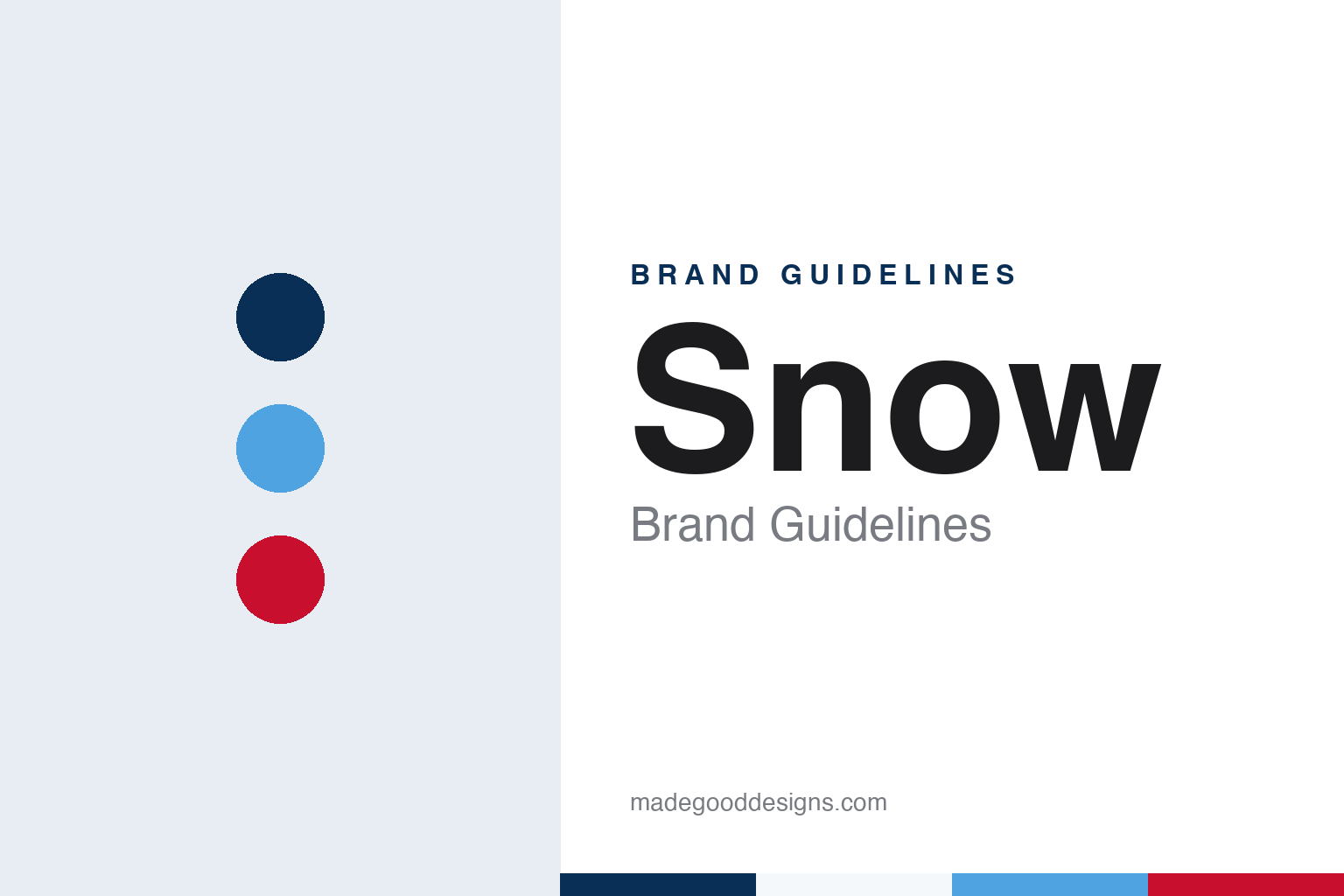
Two constants: a Shenyang blue, snowflake blue and signal red palette and a clean geometric sans register. Abstract homage — not a Snow product or mark; no bottle, can, label or logo is reproduced.
A Shenyang beer
A colonial brewery, a state factory and a new name in 1957.
Snow began as a local beer in Shenyang, in China’s northeast. Its brewery is older than its name. English Wikipedia, citing the corporate history of the Japanese brewer Kirin, says that Manchuria Beer was set up in 1934 by Dai Nippon Beer and Kirin together, and that in 1936 it completed a second brewery in Shenyang’s Tiexi district, then part of the Japanese-run state of Manchukuo. The China Project, the US-based news site, described Shenyang’s Snow in 2021 as a beer with “colonial roots,” founded by the Japanese in the Manchukuo era.
After the Japanese defeat the brewery passed into Chinese hands. English Wikipedia says it became the Liaoning Province Brewing Company in 1945 and the Shenyang Beer Company in 1949; Chinese Wikipedia dates its renaming as the Shenyang Brewery to after 1948. In 1957, both say, the Shenyang Brewery launched a beer called Xuehua, Chinese for “snowflake,” and in English simply Snow. In 1964 the brewery added a stronger version, which later became known as Old Snow and which, Chinese Wikipedia says, is still made in Shenyang in brown bottles.
For three decades Snow was one of China’s regional state beers. In their 2018 study of beer marketing under Mao in the journal Revista de Administração de Empresas, the historians Jeffrey Pilcher, Yu Wang and Yuebin Jackson Guo list Shenyang Snow among the “locally famous” beers of the period, alongside Shanghai’s Seagull and Beijing Special, sold through provincial distribution networks rather than as national brands.
Colour
China Resources, SABMiller and a national brand.
Snow’s path to a national brand began in Hong Kong. Chinese Wikipedia says that on 16 December 1993 the Shenyang Brewery signed a joint-venture agreement with China Resources, the Hong Kong-based state conglomerate, creating a Shenyang China Resources Snow brewery; English Wikipedia dates the purchase of the Shenyang factory by China Resources Enterprise, the group’s listed arm, to 1997. The brewing business, China Resources Snow Breweries, or CR Snow, became a joint venture between China Resources Enterprise and the British-South African brewer SABMiller, which by 2016 held 49%, English Wikipedia says.
CR Snow grew mostly by buying regional breweries and putting them under one brand. In July 2011, Reuters reported, it bought Heineken’s Shanghai brewery and a 49% stake in a Jiangsu brewer, and in 2010 it had sold about 9.28 billion litres of beer in China, around a fifth of the market. In 2013, Chinese Wikipedia says, it bought the brewing assets of Kingway Brewery. At home the old Shenyang plant moved from Tiexi to a new brewery in the Sujiatun district, which began production on 19 September 2008.
Volume made Snow a curiosity abroad. In March 2009 Reuters reported that Snow had overtaken Bud Light as the world’s biggest-selling beer brand by volume, and Time in 2011, CNN Money in 2014 and Bloomberg in 2015 all named it the world’s best-selling beer, while noting that almost all of it is drunk in China. English Wikipedia notes that the Budweiser family of beers, counted together, sells more.
Typography
Design and documentation.
The seven brands in this group are all drink names from the Philippines and China: Zest-O, Tanduay, Ginebra San Miguel, Red Horse, Harbin, Snow and Yanjing. Philippine and Chinese drink brands in general sit at many different points in the trade, from family firms that still carry a founder’s name to names that now belong to much larger drinks groups, and a single brand can be sold everywhere from a corner shop to a supermarket shelf.
A drink brand’s identity is usually carried less by a single product than by a bottle, a can, a name and the occasion it promises, because the company behind the name may have changed hands, moved its production or grown far beyond the place where it started. That makes the questions behind each name worth asking plainly: who started it, who owns it now, and where its drinks are actually made and bottled.
Each guide separates what independent sources record from what the company says about itself — its founding story, its owners over time, where its drinks are made and how its packaging has changed — and marks plainly what rests only on the company’s own word.
Aa
A clean geometric sans for a beer named after a snowflake. (Specimen set in Manrope, a sans STAND-IN; NOT the Snow logo.)
Snow
A takeover, a partner and a push upmarket.
The joint venture ended because of a deal elsewhere. When AB InBev agreed to buy SABMiller, it had to give up SABMiller’s 49% of CR Snow to win regulatory approval; on 2 March 2016, Chinese Wikipedia says, China Resources Beer agreed to buy that stake, and English Wikipedia says the joint venture ended in October 2016, leaving CR Snow wholly owned by the Chinese group. The listed parent had already changed its name: China Resources Enterprise sold its other businesses and became China Resources Beer (Holdings) in 2015, the South China Morning Post reported in 2016. It is listed in Hong Kong, while CR Snow’s head office is in Beijing.
A new partner arrived two years later. In August 2018 China Resources and Heineken agreed a long-term partnership, which Dutch news site NU.nl reported at the time. Chinese Wikipedia says CR Snow bought Heineken’s companies in mainland China and Hong Kong in November 2018 and signed a trademark licence for the Heineken brand in China, while Heineken took a minority shareholding in the China Resources beer group; English Wikipedia’s Heineken article lists its interest in CR Beer at 20.67%.
Since then the company has tried to sell more expensive beer. Chinese Wikipedia says that in November 2020 CR Beer’s chief executive Hou Xiaohai announced a strategy whose aim was “winning the premium segment,” and that by 2025 premium brands made up nearly a quarter of its volume, according to the group’s annual results. Its range under the Snow name runs from Old Snow in Shenyang to Snow Draft and the widely sold Yongchuang Tianya line. In 2022 the group also moved into Chinese spirits, buying a majority of the baijiu distiller Guizhou Jinsha.
For a design guide, Snow shows how a provincial name from 1957 can become a national brand through acquisitions, without leaving its home country. Compare Harbin, the 1900 brewery farther north in Heilongjiang, and Tsingtao, China’s best-known beer abroad. For this guide we use a Shenyang blue, a snowflake blue and a signal red with a geometric sans, an unofficial interpretation; no product or logo is reproduced.
Explore & save
Keep Snow’s identity on hand — save it to a board in the Made Good inspiration library.
Snow identity set
Pin the Snow Shenyang blue, snowflake blue and signal red palette and the clean geometric sans register to your own board.