Tiny Rebel Brand Guidelines
The Newport brewery behind Cwtch, founded 2012.
Aa
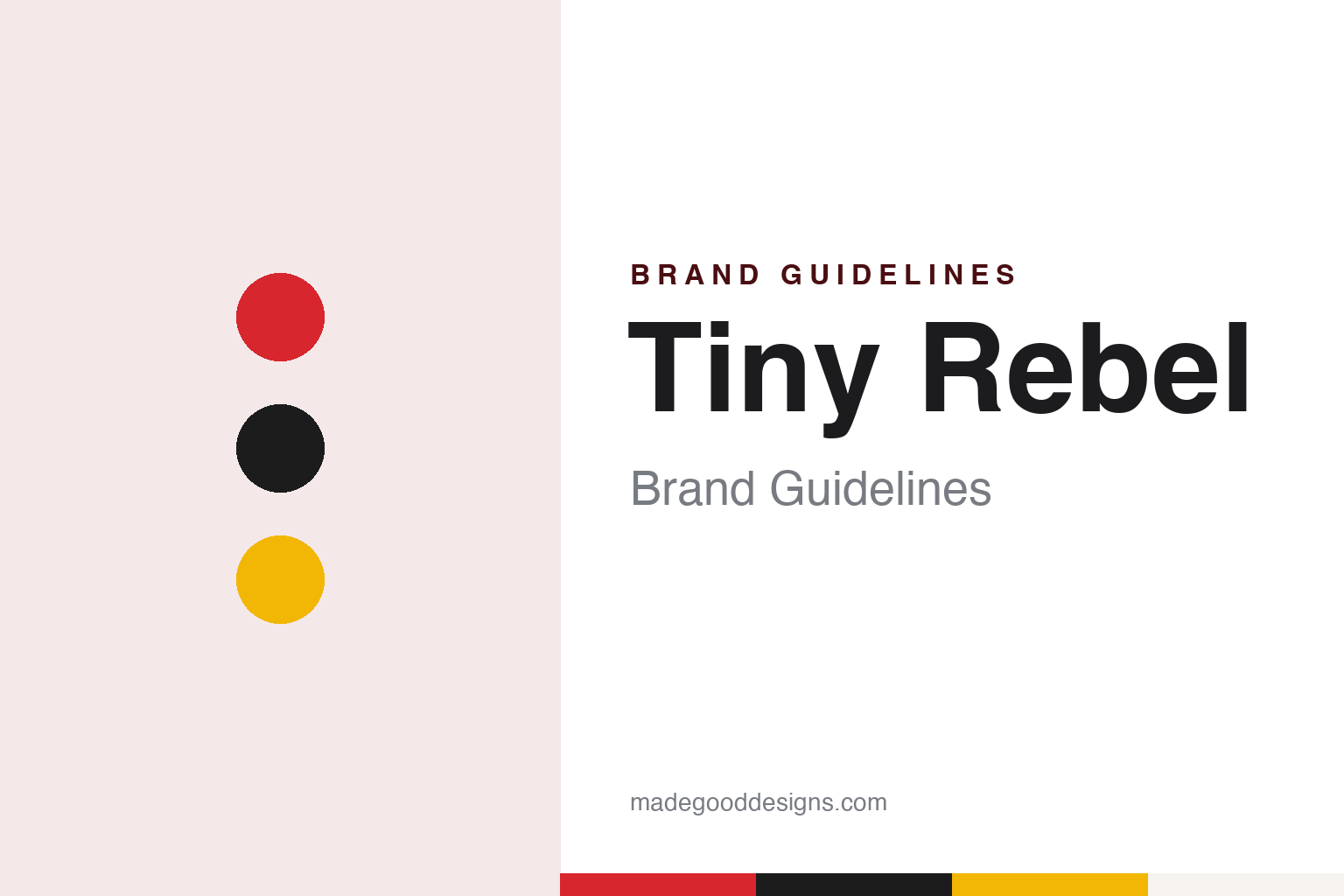
Two constants: a rebel red, crimson and spray yellow palette and a heavy display sans register. Abstract homage — not a Tiny Rebel product or mark; no can, bear or logo is reproduced.
Brad and Gazz
From a garage to an industrial unit in Maesglas.
Tiny Rebel was founded in Newport, South Wales, in 2012 by Bradley Cummings and Gareth Williams, brothers-in-law who are better known in the brewery’s own telling as “best mates Brad and Gazz.” English Wikipedia says Williams learned to home-brew with his grandfather and introduced Cummings to the hobby, and that the pair brewed in Cummings’s father’s garage before renting an industrial unit in the Maesglas area of the city, adding a neighbouring unit about a year after opening. The company says that in the first brewery “we had to pull everything out every day just to be able to get in and brew.” Companies House shows the limited company behind it was registered in March 2011, as Tiny Rebel Brewing Company Ltd, and has traded as Tiny Rebel Limited since January 2019.
The brewery grew quickly. English Wikipedia says it opened its first bar, in Cardiff, in late 2013 under the name Urban Tap House, added a Newport bar in 2015 and renamed both Tiny Rebel in 2016. In mid-2016 it announced a purpose-built brewery at Rogerstone, on the edge of Newport; brewing moved there in January 2017 and the site, with its own bar, opened on 1 July 2017. The company describes itself as independent and lists the brewery bar, the Cardiff bar, tours and private hire among what it offers today.
Colour
A bear, graffiti and a red ale called “cuddle.”
The beer that made the name is Cwtch, a Welsh red ale whose name is Welsh for “cuddle.” On 11 August 2015, at the Great British Beer Festival at Olympia in London, the Campaign for Real Ale named it Champion Beer of Britain, after it had also taken gold in the Best Bitter category, the Morning Advertiser reported. Cummings called it “our modern version of a traditional bitter, with extra hopping for a more pronounced bitterness and aroma.” English Wikipedia, citing CAMRA, adds that Tiny Rebel was the youngest brewery to win the title and the first from Wales.
Tiny Rebel’s look — a cartoon bear, graffiti-style lettering and loud colour — has repeatedly run into rules. In 2013, English Wikipedia says, citing the BBC, Sweden blocked exports of the pale ale FUBAR because its label clashed with Swedish guidelines on war imagery. In December 2017 the Portman Group’s Independent Complaints Panel upheld a complaint from a member of the public that the Cwtch can looked like “a can of fizzy pop.” The panel found that the bear’s prominence above the Tiny Rebel wording, together with the graffiti and swirling primary colours, gave the can particular appeal to under-18s, while accepting that the brewery had not set out to appeal to young people, the Morning Advertiser reported. The brewery said the bear reflected the personalities of its co-founders and of Newport; on the revised can the bear gave way to the words “supreme champion beer of Britain 2015,” BeverageDaily reported, and the brewery said the case was “about the defence of fun and creativity.”
In 2019 the company redrew its whole can range in-house. Its blog says the work was done by its own creative designer with no agency, that each can now carries the Tiny Rebel logo and the beer description in the same place at the bottom, that every beer has a colour of its own — Cali, renamed Cali Pale, moved to “a much warmer Tiffany blue” — and that “our beloved bear has returned to the front!”
Typography
Design and documentation.
The seven brands in this group are all British craft brewers: Camden Town Brewery, Thornbridge, Magic Rock, Siren Craft Brew, Tiny Rebel, Harviestoun and Lost and Grounded. They began as small, founder-run businesses, but they have travelled very different roads since — some remain in their founders’ hands, while others have been sold, licensed or bought back.
Camden Town Brewery was founded in London in 2010 by Jasper Cuppaidge, in railway arches beneath Kentish Town West station, according to English Wikipedia; AB InBev has owned it since 2015, after a sale announced that December. Thornbridge brewed its first beers in 2005 in outbuildings at Thornbridge Hall in Derbyshire and opened a larger brewery in Bakewell in 2009, English Wikipedia says. Harviestoun was started by Ken Brooker in a farm barn near Dollar, in Clackmannanshire — in 1983, English Wikipedia says — and moved to Alva in 2004; Caledonian bought it in 2006, and in April 2008 long-standing shareholders bought it back to keep it independent, The Morning Advertiser reported.
Magic Rock was founded in Huddersfield in 2011 by Richard Burhouse. The Australian brewer Lion took full ownership in 2019, Lion’s UK business passed to Odyssey Inns in 2022, and in January 2025, after administrators were appointed and the Huddersfield brewery closed, Keystone Brewing Group took an exclusive licence to produce the brand, Just Drinks reported. Tiny Rebel was founded in Newport in 2012 by the brothers-in-law Brad Cummings and Gazz Williams and moved its brewing to Rogerstone, in Newport, in 2017. Siren Craft Brew was set up in 2013 by Darron Anley at Finchampstead in Berkshire, and in April 2026 Anley told Beer Today that it was “still independent.” Lost and Grounded was founded in Bristol by Alex Troncoso and Annie Clements and says it was established in 2016.
A brewery’s identity is carried by its pump clips, cans and labels as much as by its beer, and those can outlast changes of owner or even the brewery itself. Each guide separates what independent sources record from what the company says about itself — its founding story, its owners over time, where its beer is brewed and how its packaging has changed — and marks plainly what rests only on the company’s own word.
Aa
A heavy display sans for graffiti-loud cans. (Specimen set in Bungee, a display STAND-IN; NOT the Tiny Rebel logo.)
Tiny Rebel
Names and cans that keep meeting the rulebook.
The redesign did not end the argument. In December 2019 the Portman Group’s panel upheld a second complaint about Cwtch, citing the teddy bear, the bubble-writing font and the bright colours, even though it found the strength was clearly stated and the beer “unlikely to be confused with a soft drink,” the Morning Advertiser reported; the Portman Group called a second ruling against one product within two years highly unusual. A Tiny Rebel spokesperson said the decision was “based not on facts but based on the opinion of the 10 people on the Independent Complaints Panel.”
Names have been contested too. English Wikipedia, citing WalesOnline in November 2019, says the brewery renamed its beer Clwb Tropicana as Clwb Tropica after PepsiCo, owner of Tropicana, threatened legal action. The Welsh language runs through the range — Cwtch, Clwb — and the company frames its mission as bringing “great times and great beer,” with “brands that get people talking.”
Ownership has stayed close to home. Companies House lists Tiny Rebel Limited as an active company registered at Rogerstone, controlled since July 2020 by a Newport holding company, and the brewery continues to present itself as an independent Welsh business brewing at its Rogerstone site.
For a design guide, Tiny Rebel shows how a character and a colour system can carry a brewery — and how an industry watchdog can read the same choices. Compare Penderyn, another Welsh drinks maker, and BrewDog, a British craft brewer that built a loud identity. For this guide we use red, crimson and spray yellow with a heavy sans, an unofficial interpretation; no product or logo is reproduced.
Explore & save
Keep Tiny Rebel’s identity on hand — save it to a board in the Made Good inspiration library.
Tiny Rebel identity set
Pin the Tiny Rebel red, crimson and spray yellow palette and the heavy display sans register to your own board.