Guayakí Brand Guidelines
The yerba mate now called Yerba Madre.
Aa
Two constants: a mate-green palette and a regenerative-sans register. Abstract homage — not a Guayakí product or mark.
The yerba mate now called Yerba Madre
Guayakí is the regenerative yerba-mate pioneer — renamed Yerba Madre in 2025.
Guayakí brings the round a rename — the pioneering yerba-mate company, founded in California in 1996, that built a regenerative business around South American mate, and that in 2025 officially changed its name from Guayakí to Yerba Madre. Guayakí, now Yerba Madre, makes yerba mate drinks, and its answer to a round about the new drinks aisle is mission and change: a regenerative mate brand that renamed itself. A brand, in transition.
Its identity is the yerba mate now called Yerba Madre. Guayakí’s 1996 founding, its regenerative mission and its 2025 rename are the story here. A brand, renamed. The yerba mate now called Yerba Madre.
(Honest notes, so the story stays precise, and the rename is central. In 2025, the company officially changed its name from Guayakí to Yerba Madre, and guayaki.com now redirects to yerbamadre.com, so we frame Guayakí as the 1996-to-2025 name, now Yerba Madre. It makes yerba mate: ready-to-drink cans, bottles, loose-leaf and tea bags, and we treat specific old flavour names as historical. It was founded in 1996 in San Luis Obispo, California, as a Cal Poly senior project by Alex Pryor and David Karr, with more partners by 1999, later based in Sebastopol. Its mission is the story: it pioneered what it trademarks as Market Driven Regeneration, a regenerative-business model where purchases fund restoration of the South American Atlantic Forest and support Indigenous communities, and it is Fair for Life fair-trade certified since 2009, the first fair-trade yerba mate, USDA Organic, and California’s first B Corporation, certified 2007. Its mate is sourced from the Atlantic Rainforest of Paraguay, Brazil and Argentina, including a partnership with the Aché Kue Tuvy community since 2002. On ownership, it is privately held, with Ben Mand as chief executive since 2024, consistent with outside investment, though we do not name an investor or stake we could not verify. On culture — a theme here — the name Guayakí itself references the Aché people, historically called by that now-pejorative exonym, and the company has paid the Aché for the name and works with them, so the rename to Yerba Madre may relate to that, which we handle sensitively, respecting the Guaraní and Aché heritage of mate. Its names, its Market Driven Regeneration mark and cans are IP we describe but do not reproduce; there is no official brand hex; these tones are an unofficial interpretation. This is design commentary.)
Colour
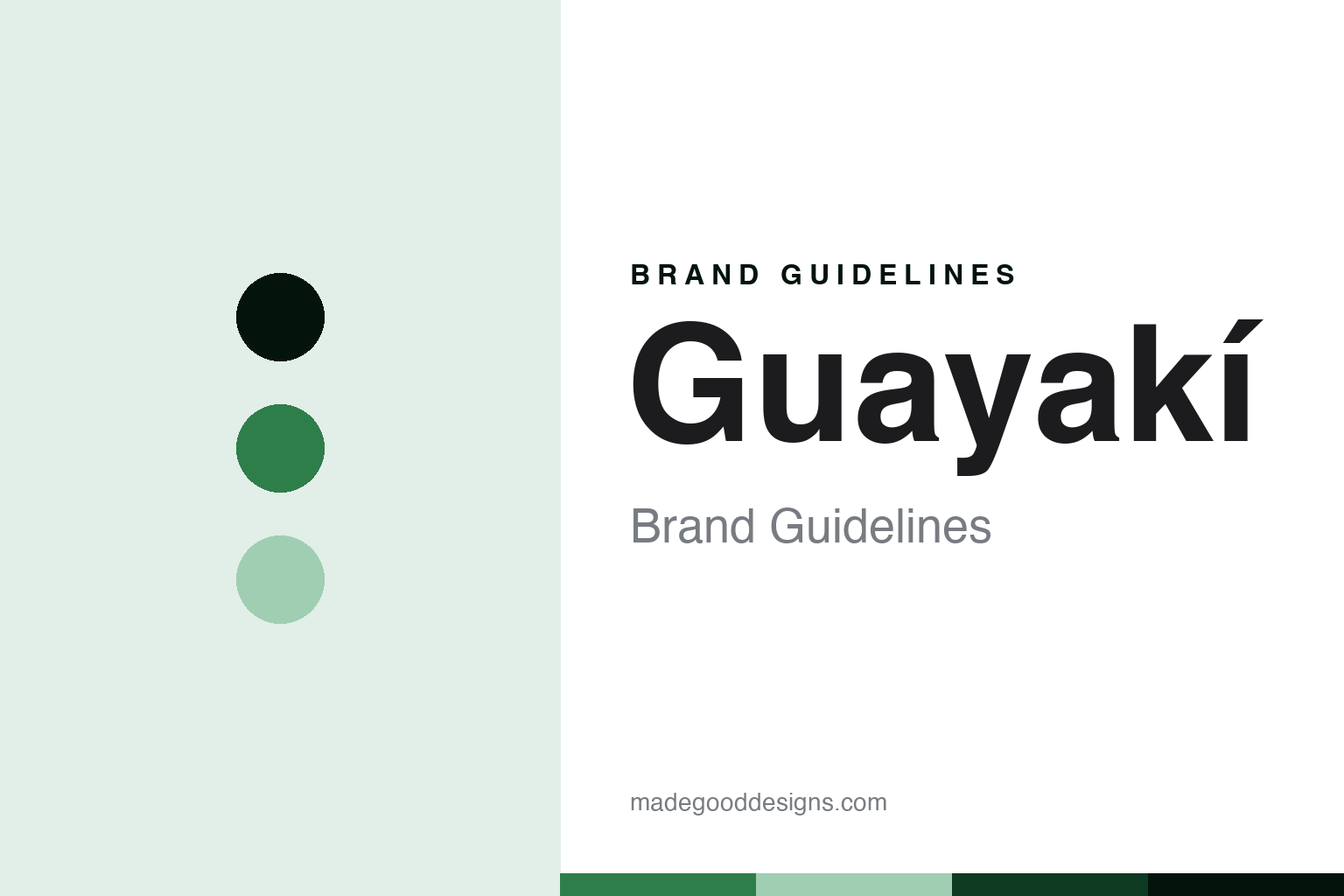
Guayakí lives in a mate green. Click a swatch to copy the hex.
Guayakí’s identity is regenerative, South-American-rooted and mate-green — a mate green, an ink, a sage, a deep green, and a paper. The palette leans mate green and sage: a natural, forest register that nods to a yerba-mate leaf and the Atlantic Forest rather than a loud palette. It signals a regenerative mate brand. The honest caveat: with no published brand hex, these values are an original, unofficial interpretation, not first-party colours.
The lesson is a mate green signals a regenerative, rooted identity. Guayakí’s world is a mission, made object. For designers, it is a reminder that a mate green and a soft sage can carry a drink brand — the tone of a forest leaf. Because these tones can fail as small text, keep type dark and let the colour live in the accents, palette and band. The takeaways: build a mission; source with respect; be honest about a rename; and treat any single hex as unofficial.
Typography
The register is a regenerative sans — mission-driven, rooted, plain.
Guayakí’s identity carries a mission-driven, rooted, plain spirit — a regenerative mate brand, not a fashion. A regenerative sans captures the mood: clean, natural and confident, the register of a mission company. Set in a mate-green palette, the regenerative sans feels mission-driven and rooted — exactly the personality Guayakí carries. It is a mission rather than a logo, mirroring leaf and can. (Guayakí’s real cans and marks are things we describe but do not reproduce, and the exact typeface is not ours to use.) Because it is not ours to use, the honest description is “a regenerative-sans spirit,” shown here in a stand-in. The type behaves like the brand: mission-driven, rooted and plain.
Aa
A regenerative-sans spirit — mission-driven and rooted. (Specimen set in Manrope, a regenerative-sans STAND-IN; NOT the Guayakí logo.)
The new drinks aisle
Guayakí stands for the yerba mate now called Yerba Madre.
Guayakí brings the round a rename. A mate-green palette, a regenerative sans and a mission make one thing — the yerba mate now called Yerba Madre — the whole identity: regenerative, South-American-rooted and mate-green. The regenerative mission is the story, and the 2025 rename is the change. The point is a pioneering yerba-mate company that funded rainforest restoration and then changed its own name.
Put to work, the identity is a mission and a rename told straight, as design. A maker in this spirit would build a mission, source with respect, and be honest about a rename. A reader in this spirit would keep the facts right: Guayakí was founded in 1996 in San Luis Obispo as a Cal Poly project by Alex Pryor and David Karr; it pioneered Market Driven Regeneration, funding Atlantic Forest restoration and Indigenous communities, Fair for Life since 2009, California’s first B Corp; its mate is sourced from Paraguay, Brazil and Argentina, with an Aché community partnership since 2002; it is privately held with a chief executive since 2024; and in 2025 it renamed from Guayakí to Yerba Madre. Guayakí sits in the round’s honest-status thread with United Sodas, and its mate joins Club-Mate. The honest editorial moves are to frame Guayakí as the 1996-to-2025 name now Yerba Madre, to credit the regenerative mission, to handle the Aché name sensitively, and to not name an unverified investor. The lesson Guayakí teaches is that a mission and a rename can be a whole identity, and handling the name sensitively keeps it credible.
For designers and brand-builders, Guayakí continues the new drinks aisle: build a mission — and be honest about a rename. The lessons: put a regenerative mission at the centre; source with Indigenous respect; frame a rename as history, not erasure; handle a sensitive name honestly; and never reproduce a can or mark. It is also a reminder to stay precise: Guayakí is the regenerative yerba-mate pioneer, renamed Yerba Madre in 2025 — with the palette here an unofficial interpretation. Read that way, Guayakí is less a can than a mission: a mate brand that renamed itself. The lesson for a brand is that a mission and an honest rename reinforce each other, and framing the change keeps the story earned. Guayakí made the-yerba-mate-now-called-Yerba-Madre the identity — proof that a mission can define a brand.
Explore & save
Keep Guayakí’s identity on hand — save it to a board in the Made Good inspiration library.
Guayakí identity set
Pin the mate-green palette and the regenerative-sans register to your own board.