Cholimex Brand Guidelines
The Chợ Lớn chilli sauce maker part-owned by Nichirei.
Aa
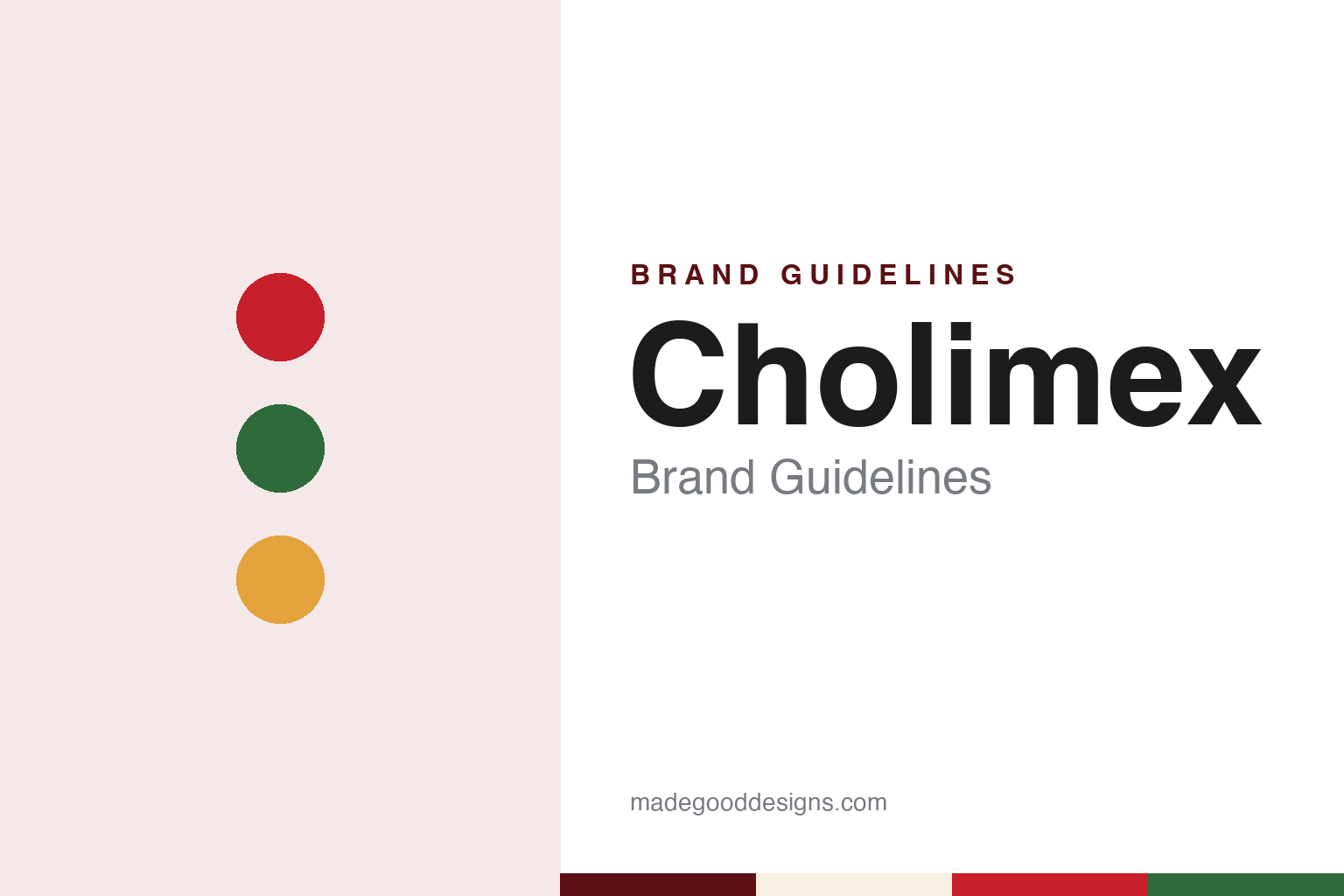
Two constants: a chilli red, leaf green and fish-sauce amber palette and a sturdy Vietnamese sans register. Abstract homage — not a Cholimex product or mark; no bottle, label or logo is reproduced.
Born in Chợ Lớn
An export company, a district and a bottle of chilli sauce.
Cholimex began not as a sauce brand but as part of a trading company in Chợ Lớn, the old commercial district of what is now Ho Chi Minh City. The company says its parent was set up under a decision of the city’s People’s Committee dated 15 April 1981 as an import-export business of District 5, known by the short name Cholimex; a 2014 statement signed by that parent gives its later name as the Chợ Lớn Import-Export and Investment Company, again shortened to Cholimex. The food business dates its own founding to 1983, and it marked its fortieth anniversary with a programme running from 2 June 1983 to 2 June 2023.
In its first years, the company says, the food arm — then called the Cholimex Seafood and Foodstuff Processing Company — worked mostly for export, shipping lightly processed foods, frozen seafood and farm produce, and accounted for around 70% of the group’s export sales. In 1985 its managers began developing chilli sauce, alongside frozen foods such as spring rolls, prawn on sugar cane and dried cuttlefish.
The company describes the sauce’s early years in some detail. By 1989, it says, its chilli sauce had won a following for a hot, mildly sweet taste with the aroma of garlic, but production was still old-fashioned: chillies were ground with millstones and the sauce was poured into bottles by hand. By 1992 a new grinding machine, paid for by the District 5 People’s Committee, had raised output from under 10,000 bottles a day to about 30,000. In the early 1990s, the company says, its chilli sauce also travelled to Eastern Europe — chiefly Russia, Poland and Ukraine — through networks of Vietnamese people who had studied and worked there.
Colour
A new factory, a new company and a second sauce line.
The business took its modern shape over the following decade. In January 1994, the company says, its parent established it as the Cholimex Export Seafood and Foodstuff Processing Company, a subsidiary based on An Điềm Street in District 5. Work on a new factory of about four hectares in the Vĩnh Lộc Industrial Park began in 1999, and in 2002 the whole operation moved there. The company says it gained ISO 9001 certification that year, then approval to export to the European Union, and set up halal and kosher procedures to widen its export markets.
In 2006 the state-owned business was equitised, and on 19 July 2006 it began trading as Cholimex Food Joint Stock Company, the company says; the newspaper Sài Gòn Giải Phóng also dated the change to 2006 in a 2021 report. Its shares now trade under the code CMF on UPCoM, Vietnam’s market for unlisted public companies, according to the company.
From chilli sauce the brand moved into dipping sauces. In 2009, the company says, it launched its Hương Việt soy sauce in Vietnam, and in 2012 it built a fish-sauce factory within the same site and added Hương Việt fish sauce. Its range today, as listed on its own website, runs from chilli and tomato sauces, sa tế chilli oil and seasonings to frozen spring rolls, dim sum, sugar-cane shrimp and sausages.
Cholimex Food has also been honoured by the state. On 14 April 2021, Sài Gòn Giải Phóng reported, the company received the title of Hero of Labour of the Renovation period.
Typography
Design and documentation.
The seven brands in this group all make food or drink, and all of them come from Vietnam: Kinh Đô, Bibica, TH true MILK, Saigon, Bia Hà Nội, Vissan and Cholimex. Vietnamese food and drink brands in general sit at many different points in the trade, from businesses that began as state enterprises to names that now belong to much larger groups, and a single brand can be sold everywhere from a street-side stall to a supermarket shelf.
A food or drink brand’s identity is usually carried less by a single product than by a pack, a name and the meal or moment it promises, because the company behind the name may have changed hands, moved its factory or grown far beyond the city where it started. That makes the questions behind each name worth asking plainly: who started it, who owns it now, and where its products are actually made and packed.
Each guide separates what independent sources record from what the company says about itself — its founding story, its owners over time, where its products are made and how its packaging has changed — and marks plainly what rests only on the company’s own word.
Aa
A sturdy sans with full Vietnamese diacritics, for a brand from Chợ Lớn. (Specimen set in Be Vietnam Pro, a sans STAND-IN; NOT the Cholimex logo.)
Cholimex
A district parent, a Japanese partner and a refused offer.
Cholimex Food is still controlled by the company it grew out of. Its own shareholder page lists the Chợ Lớn Import-Export and Investment Company with 40.72% of the shares, Japan’s Nichirei Foods with 19% and the British firm Tonkin Products with 5.21%, the rest being held by other shareholders.
Nichirei’s stake was already in place by 2014, when it was tested. On 7 November 2014 Masan Food, part of the Masan group behind Chin-su, registered a public offer to buy 49% of Cholimex Food. In a joint statement dated 21 November 2014, published by Cholimex Food, the Chợ Lớn parent and Nichirei Foods said that together they held the majority of the shares — 40.72% and 19% — and that neither would sell any part of its holding to Masan Food. The statement said the company’s market share and competitiveness, especially in seasonings and dipping sauces, were growing, and that keeping competing businesses alive was good for Cholimex Food, for consumers and for the economy.
The company’s factories are in southern Vietnam. Besides the Vĩnh Lộc site in Ho Chi Minh City, the company says it built a second factory of 40,000 square metres in the Vĩnh Lộc 2 Industrial Park, in what was Bến Lức in Long An province and is now part of Tây Ninh province; construction ran from March 2023 to March 2025, and the plant opened in April 2025 with lines for frozen food and for sauces and seasonings. The company says its products are sold in around 30 countries and territories, and names retailers including Marks & Spencer in Britain, Coop and Migros in Switzerland, Metro in Germany and Auchan, Cora and Carrefour in France.
For a design guide, Cholimex shows how a bottle of chilli sauce made in a district trading company can carry a brand through four decades of state ownership, equitisation and a Japanese partnership. Compare Chin-su, Masan’s Vietnamese sauce brand, and Huy Fong Foods, the Californian chilli-sauce maker. For this guide we use chilli red, a leaf green and a fish-sauce amber with a sturdy sans, an unofficial interpretation; no product or logo is reproduced.
Explore & save
Keep Cholimex’s identity on hand — save it to a board in the Made Good inspiration library.
Cholimex identity set
Pin the Cholimex chilli red, leaf green and fish-sauce amber palette and the sturdy Vietnamese sans register to your own board.