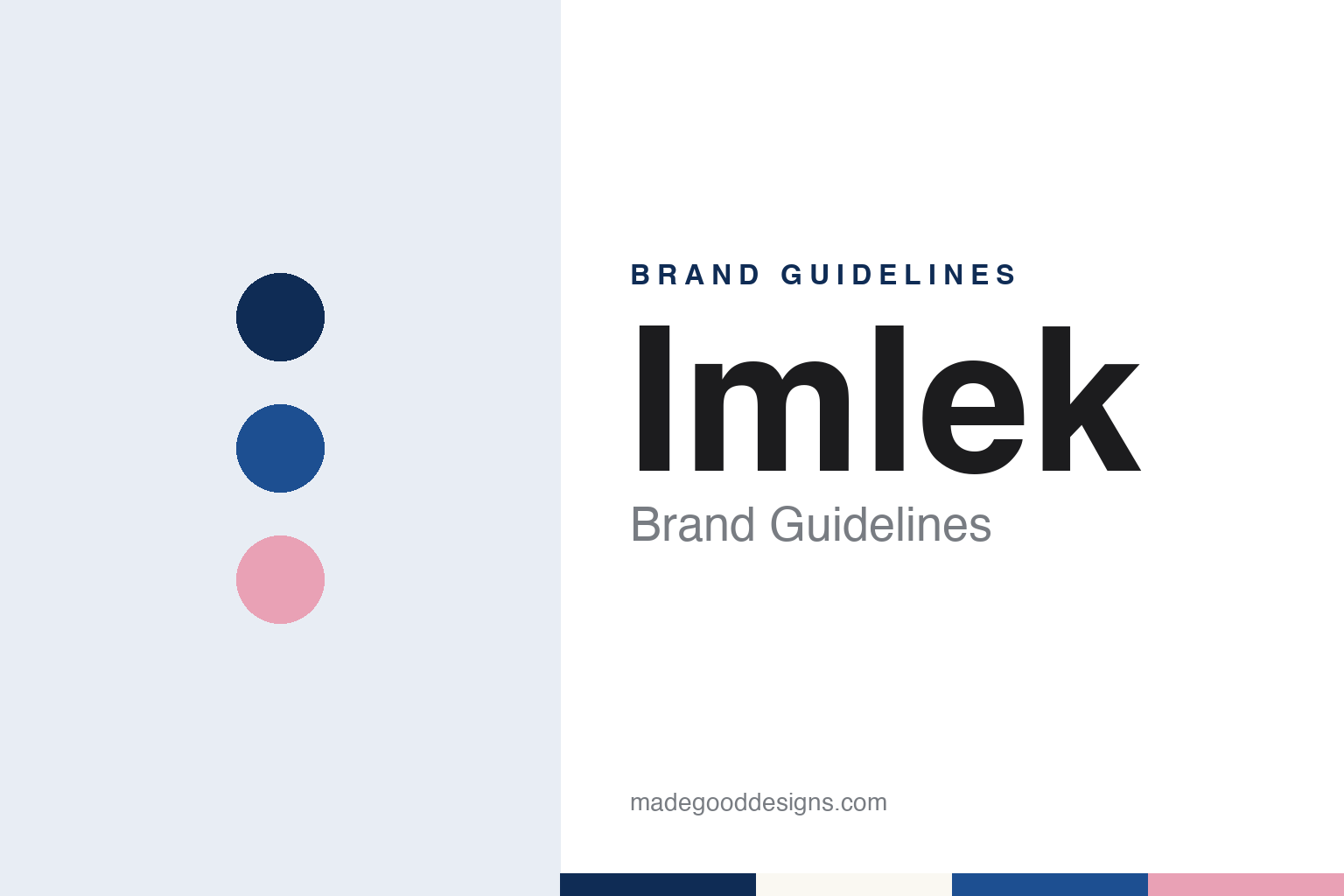
Imlek Brand Guidelines
The Belgrade dairy that began on a marsh farm in 1953.
Aa
Two constants: a dairy blue, milk white and yoghurt pink palette and a friendly lowercase sans register. Abstract homage — not an Imlek product or mark; no pack, logo or carton is reproduced.
Lepušnica
Eight hundred cows, metal cans and a UNICEF bottling line.
Imlek began in 1953 on a farm called Lepušnica, in Glogonjski Rit, between Belgrade and Pančevo; English Wikipedia notes that rit means a swampy area. The dairy was built within PKB, the Belgrade agricultural combine, and English Wikipedia, Serbian Wikipedia and the company all describe it as the practical beginning of the Imlek dairy industry. No individual founder is named in those accounts; Imlek grew out of a state farm.
The scale was small at first. The company says about 800 cows gave between three and five thousand litres of milk a day, which went to the Belgrade market in metal cans on horse-drawn carts and tractors. In 1957, according to the company and English Wikipedia, UNICEF granted the dairy a line for pasteurising and bottling 30,000 litres of milk a day. By 1963 output had passed 21 million litres a year.
The 1970s turned a farm dairy into a regional system. The company says that in 1972 the city dairy, Gradsko mlekarstvo Beograd, was integrated into Imlek, and that dairies in Kraljevo, Požarevac, Gornji Milanovac, Velika Plana, Šid and Belgrade joined the group. Between 1977 and 1982, Serbian Wikipedia says, Imlek processed between 140 and 160 million litres of milk a year. English Wikipedia gives 12 March 1991 as the date the company took its current legal form, a joint-stock company whose full name, Industrija mleka i mlečnih proizvoda Imlek, describes it as a milk and dairy products industry. Its head office is at Padinska Skela, in Belgrade.
A Superbrands Serbia profile from about 2007 adds detail on how the business worked then. It says Imlek collected milk from about 13,000 producers across half of Serbia, that the PKB farms remained its largest single supplier, and that the company had installed some 3,000 milk-cooling tanks on farms it bought from. The same profile says the company won repeated “champion of quality” awards for dairy products at the international agricultural fair in Novi Sad.
Colour
A little cow, a pink yoghurt and a UNICEF poster.
Imlek’s best-known brand is Moja Kravica, “my little cow,” which the company uses across milk, yoghurt, sour cream, cream cheese and puddings. On its English-language about page the company singles out the Moja Kravica pink yoghurt, “roze jogurt” in Serbian, as one of its clearly recognisable products. The Superbrands profile from about 2007 lists the brands of that period as Moja Kravica milk and yoghurt, the Jogood fruit yoghurts, the Flert dessert yoghurt and Fit yoghurt, and says the company credited part of its market lead to modern pack design for new products.
The range has since grown. The company now says it makes more than 200 dairy products. Its website lists the Balans+ line of yoghurts and kefir, the Zdravo! milk and yoghurt range, Jogood, and Impact, a sport-inspired brand, alongside Greek-style GREKOS products, Nera Caffe coffee drinks and Peštersko sveže mleko, a fresh milk the company ties to the Pešter region. English Wikipedia says the company also owns Bifruit, a juice brand sold in North Macedonia. In 2016, the company says, it signed a contract to buy the dairy in Niš, one of the largest in southern Serbia, to strengthen its Vedro brand.
UNICEF runs through the company’s story. Besides the 1957 bottling line, the Superbrands profile says that early in 2007 a UNICEF poster made for the organisation’s sixtieth anniversary, showing a boy drinking Imlek milk, was distributed in sixty countries as part of a non-commercial partnership. The company says it still keeps a partnership with UNICEF, supporting violence-prevention work in schools and education for parents.
The company’s name is set in lowercase. English Wikipedia notes that it is stylised as “imlek.” The footer of the company’s website credits the agency Avokado with building the site. Through its former subsidiary Mlekara Subotica, English Wikipedia says, Imlek became in 2010 the first Serbian maker of fresh dairy products allowed to export to the European Union; Mlekara Subotica was later merged into Imlek, which still uses its facilities in Subotica, and the Mlekara Subotica name survives as a product brand on the company’s website.
Typography
Design and documentation.
The seven brands in this group all make food or drink, and all of them come from Serbia: Jaffa, Takovo, Štark, Swisslion, Knjaz Miloš, Imlek and Zlatiborac. Serbian food and drink brands in general sit at many different points in the trade, from family firms that still carry a founder’s name to names that now belong to much larger food groups, and a single brand can be sold everywhere from a village shop to a supermarket shelf.
A food or drink brand’s identity is usually carried less by a single product than by a pack, a name and the taste or occasion it promises, because the company behind the name may have changed hands, moved its factory or grown far beyond the town where it started. That makes the questions behind each name worth asking plainly: who started it, who owns it now, and where its products are actually made and packed.
Each guide separates what independent sources record from what the company says about itself — its founding story, its owners over time, where its products are made and how its packaging has changed — and marks plainly what rests only on the company’s own word.
Aa
A friendly lowercase sans for a company that writes its own name in lowercase. (Specimen set in Figtree, a sans STAND-IN; NOT the Imlek logo.)
Imlek
A fund, a food group and a London owner.
Imlek passed into private hands in the 2000s. The company says that in 2003 it came under the ownership of the Salford investment fund; English Wikipedia, citing the Belgrade daily Politika, says Salford became its largest shareholder in 2004, and Serbian Wikipedia gives 2003–2004. Serbian Wikipedia says that in April 2010 the Danube Foods fund became the owner of 80 per cent of the shares. Under these owners Imlek expanded across the region: the company says it bought Bimilk in Bitola, North Macedonia, in 2007, and that Mlijekoprodukt of Kozarska Dubica, in Bosnia and Herzegovina, joined the group in 2008.
In February 2015 the London investment fund Mid Europa Partners bought the Danube Foods Group, which then owned Imlek and several other Serbian food companies, the news channel N1 reported at the time. The group also held the water bottler Knjaz Miloš and the biscuit maker Bambi, the newspaper Blic reported in April 2015. English Wikipedia, citing Večernje novosti in 2019, says Mid Europa’s Serbian businesses were managed from 2015 by a firm called Moji Brendovi. In 2019 Coca-Cola HBC announced it would buy Bambi, and Knjaz Miloš was sold to a Mattoni 1873 and PepsiCo joint venture; Imlek stayed with Mid Europa, which both English and Serbian Wikipedia list as its owner.
Imlek is a regional producer. English Wikipedia, citing the company in 2019, says it owned six production facilities, four in Serbia, one in Bosnia and Herzegovina and one in North Macedonia, and lists subsidiaries in Montenegro, Bosnia and Herzegovina, North Macedonia, Croatia and the Netherlands. The company says it buys milk from several thousand partner farmers and sells in Serbia, Montenegro, Bosnia and Herzegovina and North Macedonia. Its head office remains at Padinska Skela.
For a design guide, Imlek shows a state-farm dairy that turned itself into a family of consumer brands, with a lowercase company name and a little cow as its most familiar character. Compare it with Knjaz Miloš, which shared its owners from 2015 to 2019, and with the Indian dairy co-operative Amul. For this guide we use a dairy blue, milk white and yoghurt pink palette with a sans, an unofficial interpretation; no product or logo is reproduced.
Explore & save
Keep Imlek’s identity on hand — save it to a board in the Made Good inspiration library.
Imlek identity set
Pin the Imlek dairy blue, milk white and yoghurt pink palette and the friendly lowercase sans register to your own board.