Ksarak Brand Guidelines
Château Ksara’s Bekaa Valley arak, aged in clay.
Aa
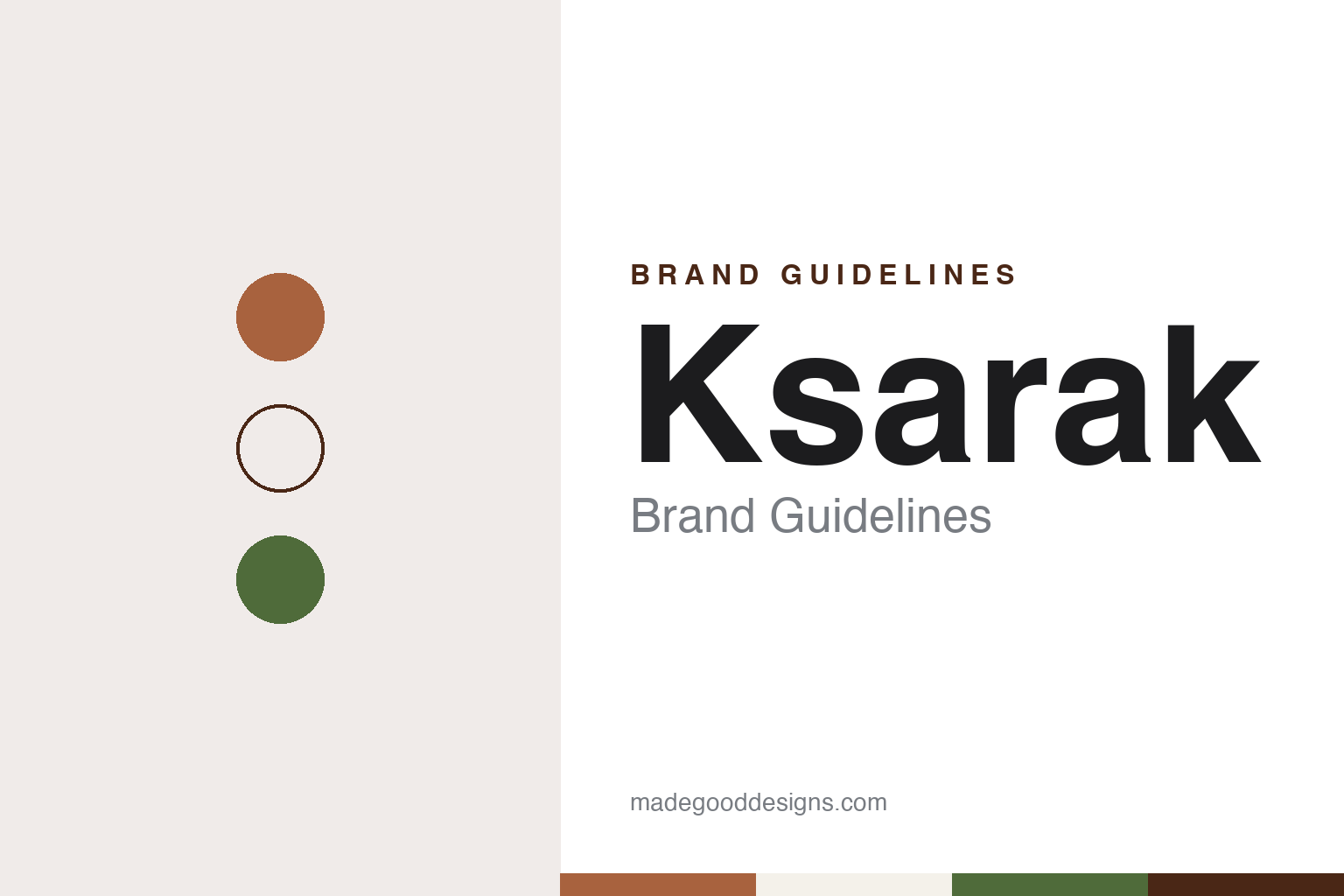
Two constants: a clay jar, anise white and Bekaa green palette and a classic book serif register. Abstract homage — not a Ksarak product or mark; no label, logo or bottle is reproduced.
A Jesuit winery in the Bekaa
The arak of Lebanon’s oldest winery.
Ksarak is the arak of Château Ksara, the winery at Ksara, near Zahlé, in Lebanon’s Bekaa Valley. English Wikipedia lists it in Ksara’s range, and a case study published by the World Intellectual Property Organization (WIPO) describes it as one of the winery’s own brands. This guide is about the arak; the winery is its maker, and the winery’s history is the brand’s background.
That history begins in 1857, when Jesuit priests founded the estate, according to English Wikipedia and the WIPO case study, which calls them French Jesuit monks. WIPO says the monks planted vines and sold wine under the name Clos St. Alphonse, which was used in religious services. In 1898, workers on the site found a grotto dating from the Roman era; the caves now run for about two kilometres and form part of the winery’s cellars, both sources say.
The Jesuits’ ownership ended in the early 1970s. English Wikipedia and WIPO say that in 1972 the Vatican encouraged its monasteries to sell their commercial assets and that Ksara was bought by a local consortium of businessmen. The winery kept producing through Lebanon’s civil war, WIPO says, and a new generation of managers took over in 1991. The Beirut business magazine Executive reported that Zafer Chaoui was appointed chairman of Château Ksara that year, and the trade title Hospitality News quoted him as Ksara’s president in July 2019.
Colour
Grapes, Mount Hermon aniseed and clay jars.
Arak is the anise spirit of the Levant, made from grapes and aniseed, and Lebanon is among the countries where it is traditional, English Wikipedia says; it names the Bekaa Valley and Zahlé as centres of its production. It is a different drink from arrack, a name used for spirits distilled in South and Southeast Asia, although the two words share an Arabic root. Arak is usually mixed with water and served over ice, which turns it milky white — the so-called ouzo effect, caused by an anise oil that dissolves in alcohol but not in water.
Ksarak began as a practical answer to difficult harvests. WIPO says Ksara launched it as a new brand to absorb batches that did not meet the winery’s standard for wine in poor years. The same case study says its aniseed comes only from the Al Heeneh area of Mount Hermon, in the Anti-Lebanon range, and that the spirit is aged for two years in clay jars made in the village of Beit Chebab.
Hospitality News gave a fuller account in July 2019. It described Ksarak as triple-distilled from Merwah and Obeideh, which it called two ancient Lebanese grapes, together with Ugni Blanc, the variety also used for Cognac and Armagnac; it said the aniseed comes only from the village of Heeneh, on the foothills of Mount Hermon, and gave the ageing as 28 months in locally made clay amphorae, with about 11 to 12 per cent of the spirit lost to evaporation along the way. WIPO and Hospitality News differ on the length of ageing, so both figures are given here. In the same article the writer Michael Karam, author of a book on arak and mezze, called Ksarak “an outstanding spirit and a wonderful example of a proud tradition.”
Retail listings give Ksarak’s strength as 53 per cent alcohol by volume, the figure English Wikipedia gives as typical for arak. WIPO also records that a television advertisement for Ksarak, filmed in the Bekaa, is regarded as a pioneering piece of Lebanese advertising.
Typography
Design and documentation.
The seven brands in this group are all pisco, cachaça and anise-spirit names: Pisco Capel, Pisco Portón, BarSol, Leblon, Novo Fogo, Yeni Rakı and Ksarak. Spirit brands in general sit at many different points in the trade, from family houses and cooperatives that still carry a founder’s or a place’s name to labels that now belong to much larger drinks groups, and a single brand can be sold everywhere from a corner shop to a cocktail bar.
A spirit brand’s identity is usually carried less by a single bottle than by a label, a name and the place it promises, because the company behind the name may have changed hands, moved its production or grown far beyond the place where it started. That makes the questions behind each name worth asking plainly: who started it, who owns it now, and where its spirit is actually distilled and bottled.
Each guide separates what independent sources record from what the company says about itself — its founding story, its owners over time, where its spirit is made and how its labels have changed — and marks plainly what rests only on the company’s own word.
Aa
A classic book serif for a Bekaa Valley arak. (Specimen set in Cormorant Garamond, a serif STAND-IN; NOT the Ksarak logo.)
Ksarak
A winery’s spirit, sold under the winery’s name.
Ksarak is not a separate company. It is sold as a product of Château Ksara, which WIPO names as Château Ksara SAL, a Lebanese joint-stock company, when it records that the firm filed a Community Trademark in class 33, the class for alcoholic drinks, with the European Union’s trademark office, then called OHIM, in 2003, as part of a push into European markets. WIPO says the company uses intellectual-property systems to protect its name as it enters new markets.
English Wikipedia describes Château Ksara, the winery behind the arak, as Lebanon’s oldest, largest and most visited winery, producing about 2.7 million bottles a year as of 2010 from more than 2,800 tonnes of grapes grown on 340 hectares, and exporting to more than 40 countries. WIPO lists vineyards and wineries at Ksara, Mansoura and Khorbet Kanafar, and further vineyards planted at Tel Dnoub and Itani in 1994; the winery marked its 150th anniversary in 2007.
Other Lebanese drinks names in this library include the pilsner Almaza and Kassatly Chtaura, a Bekaa Valley syrup maker that grew into a drinks group.
For a design guide, Ksarak shows how a spirit can borrow its authority from the winery behind it and the valley it comes from. Compare Almaza, Lebanon’s pilsner, and Yeni Rakı, another anise spirit. For this guide we use clay, anise white and a Bekaa green with a serif, an unofficial interpretation; no product or logo is reproduced.
Explore & save
Keep Ksarak’s identity on hand — save it to a board in the Made Good inspiration library.
Ksarak identity set
Pin the Ksarak clay jar, anise white and Bekaa green palette and the classic book serif register to your own board.