Mezcal Vago Brand Guidelines
A family mezcal from Candelaria Yegolé, launched 2013.
Aa
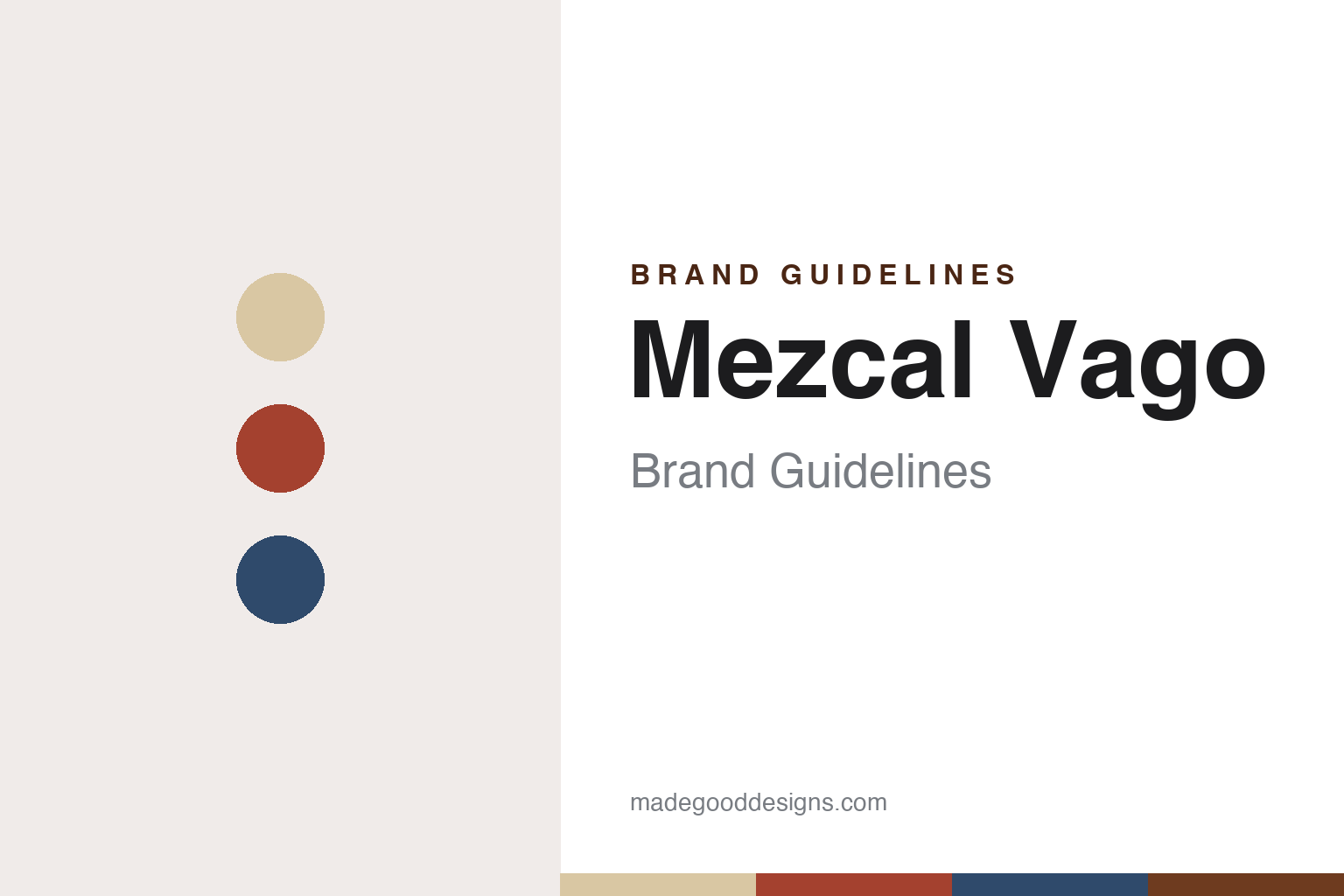
Two constants: an agave tan, clay red and sierra blue palette and a textured slab serif register. Abstract homage — not a Mezcal Vago product or mark; no label, logo or bottle is reproduced.
A surfer, a nurse and a mezcalero
From a clinic on the Oaxacan coast to a palenque in the hills.
Mezcal Vago began with a family rather than a distillery. The restaurant critic Craig LaBan told the story in the Philadelphia Inquirer in February 2014: the surfer and beach-bar owner Judah Kuper, he wrote, was treated for an ear infection at a rural clinic in Oaxaca, fell in love with his nurse and future wife, Valentina, and found that her father, Aquilino García López, was a master mezcalero. Kuper and his friend Dylan Sloan, LaBan reported, had launched Vago the year before, in 2013, to showcase the young mezcals of his father-in-law and friends, and at the time it was poured only in restaurants.
The company tells the same story in its own words. On its website the founder recalls first tasting mezcal in Oaxaca in 1994 with Dylan, opening a bar with him in a beach town, meeting Valentina and asking her father for her hand, and then forming Vago with Dylan and his father-in-law. The review site Mezcal Reviews says the first exported bottles arrived in Texas in 2013.
Home is Candelaria Yegolé, the hill village in Oaxaca where the García family runs its palenque. The company says Aquilino’s sons, Temo and Mateo García, represent the next generation, and their bottlings carry the name Hijos de Aquilino. The company now names four mezcaleros: the García family in Candelaria Yegolé; Tío Rey, Salomón Rey Rodríguez, in Gulerá in the Sola de Vega district, who the company says mashes cooked agave by hand with wooden mallets and distils in clay pots; Joel Barriga Arragón at Tapanalá; and Emigdio Jarquín Ramírez, near El Nanche in the Miahuatlán valley. Each bottle is sold under its maker’s name. One bottling stands apart: Elote, which the company calls its celebration mezcal: toasted heirloom corn is put into the still with Espadín for the second distillation. The company says all its mezcals are joven, bottled clear and unaged, and made in traditional palenques without additives.
The family also reached a wider audience on screen. Mezcalistas notes that Aquilino García appeared alongside Carlos Camarena, the tequila maker behind Tequila Ocho, in the documentary Agave: Spirit of a Nation.
Colour
One label system, four makers, a colour for each.
Vago’s labels are built around the people who make the mezcal. According to Mezcal Reviews, the brand began in 2017 to give each mezcalero a label colour of his own: tan for Aquilino, gold for Joel Barriga, blue for Emigdio Jarquín and red for Tío Rey. The company describes the system on its website: its “unique colors and medallions,” it says, distinguish each mezcalero and his process.
The label also works as a record. The company says its front label tells the drinker who made the mezcal, the region it comes from, the agave used, details of the process and the size of the batch, while the back label tells the story of the mezcalero, his land and his methods. The mezcal trade site Mezcalistas says the labels are printed on paper made from agave fibre.
In 2021, Mezcal Reviews says, Vago went through its first major redesign since the 2013 launch. The Dieline published a case study of the new packaging crediting the graphic designer Abraham Lule, who, the magazine wrote, travelled from village to village to understand what goes into each bottling. It described the result in terms of texture: the textured typeface of the logo set against the organic texture of the label.
Typography
Design and documentation.
The seven brands in this group are all mezcal names: Bozal, Alipús, Real Minero, Rey Campero, Mezcal Vago, Madre and Dos Hombres. Mezcal is distilled from cooked agave, and much of it is made in small production houses that Wikipedia notes are called fábricas or palenques, often in villages in the hills of Oaxaca. The traditional method roasts the agave hearts in pit ovens and crushes them with a stone wheel turned by a horse, and Wikipedia says mezcal has been recognised internationally as an appellation of origin since 1994.
A mezcal brand’s identity is usually carried less by a single bottle than by a label, a name and the village it points to, because the company that sells the mezcal is not always the family that makes it, and one brand can draw on several producers. That makes the questions behind each name worth asking plainly: who started it, who owns it now, and which families and palenques actually make the mezcal.
Each guide separates what independent sources record from what the company says about itself — its founding story, its owners over time, where its mezcal is made and how its labels have changed — and marks plainly what rests only on the company’s own word.
Aa
A textured slab serif for a range named after its makers. (Specimen set in Zilla Slab, a serif STAND-IN; NOT the Mezcal Vago logo.)
Mezcal Vago
From a family partnership to a Kentucky distiller’s portfolio.
In July 2018 Mezcalistas reported that Vago had formed an investment partnership with Samson & Surrey, a spirits company that works with founder-led craft brands. Kuper told the site that when he started Mezcal Vago his first goal was to improve the lives of his family; the partnership, it reported, left production with the same mezcaleros and Kuper and Sloan in charge, and gave both sides stakes in each other’s businesses. Mezcal Reviews says each Vago mezcalero gained a stake in Samson & Surrey.
Four years later the partner itself was sold. The Spirits Business reported on 2 February 2022 that the Kentucky distiller Heaven Hill Brands had acquired Samson & Surrey, founded in 2016 by the former Bacardi executives Robert Furniss-Roe and Juan Rovira, with its six brands: Tequila Ocho, Few Spirits, Widow Jane, Brenne, Bluecoat Gin and Mezcal Vago. The terms were not disclosed, and Samson & Surrey was to carry on as an independent division. Heaven Hill has owned Mezcal Vago through it since 2022, alongside bourbons such as Elijah Craig.
One practical note: vago is an ordinary Spanish word, and the name turns up in many unrelated places online, including the travel site trivago. The brand’s own site is mezcalvago.com.
For a design guide, Mezcal Vago shows how a label can put the maker before the brand: one name on top, a colour for each mezcalero and a front label that reads like a production record. Compare Tequila Ocho, its stablemate in the Samson & Surrey portfolio, and Del Maguey, which names each bottle after a village. For this guide we use agave tan, clay red and sierra blue with a serif, an unofficial interpretation; no product or logo is reproduced.
Explore & save
Keep Mezcal Vago’s identity on hand — save it to a board in the Made Good inspiration library.
Mezcal Vago identity set
Pin the Mezcal Vago agave tan, clay red and sierra blue palette and the textured slab serif register to your own board.


