Banrock Station Brand Guidelines
A Riverland wine built around a Ramsar wetland.
Aa
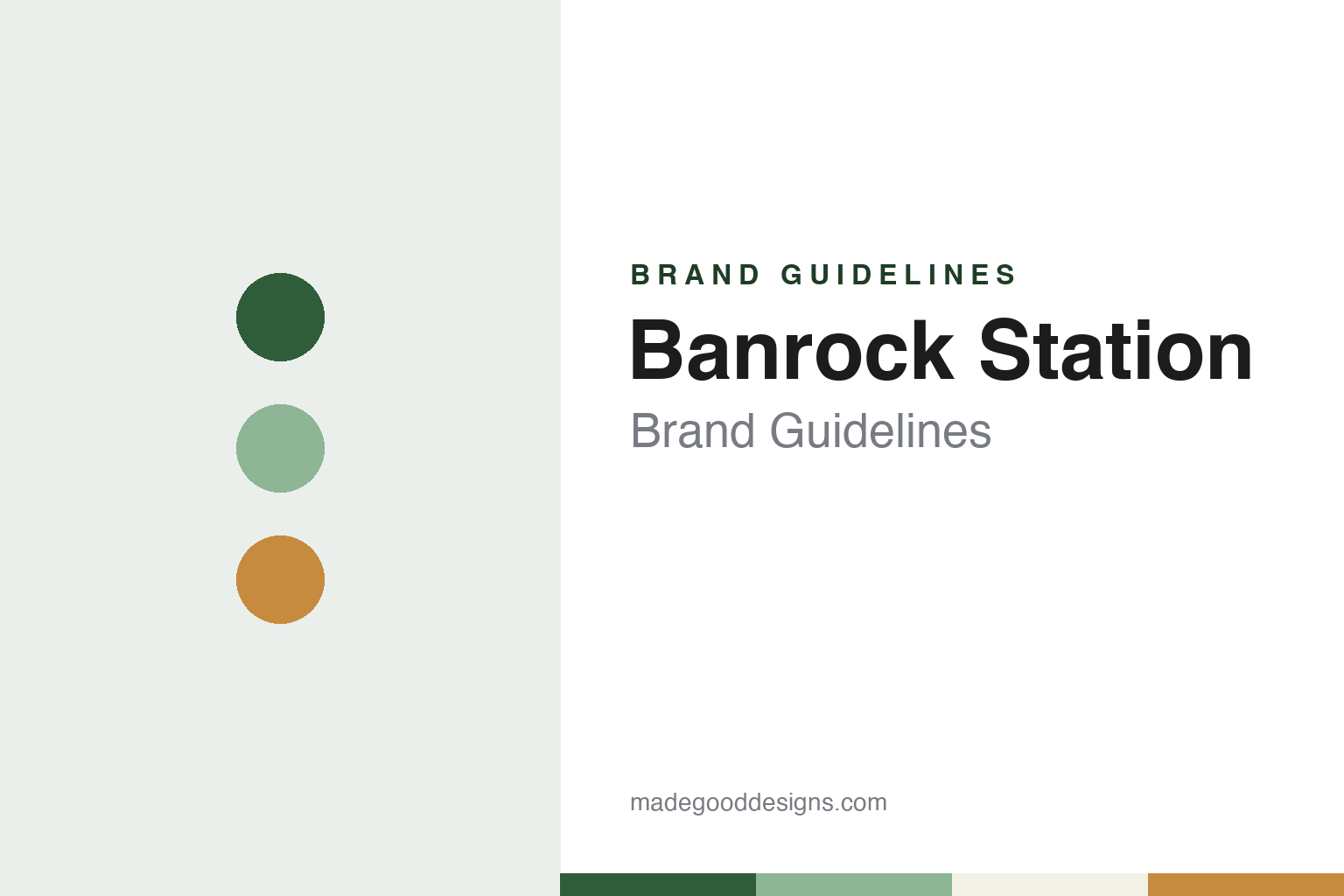
Two constants: a wetland green and riverbank ochre palette and a soft natural serif register. Abstract homage — not a Banrock Station product or mark; no label, logo or bottle is reproduced.
A farm on the Murray
A degraded floodplain, a vineyard and a wine named after the place.
Banrock Station takes its name from a property on the Murray River near Kingston-on-Murray in South Australia’s Riverland, the irrigated wine region upstream of Adelaide. English Wikipedia says the Jackson family bought Banrock in 1952 and were among the first in the Riverland to plant wine grapes there in the late 1950s, before selling the land in 1973; it was later used as a potato farm. The river frontage had been changed by a downstream lock installed in 1923, which left the wetlands permanently flooded and much of the shoreline degraded.
BRL Hardy, the wine group formed in 1992 from the merger of Hardys and Berri Renmano, bought the property in the mid-1990s. The State Library of South Australia’s SA Memory site says BRL Hardy established the Banrock Station winery and wetlands at Kingston-on-Murray in that period; the exact year of purchase is given differently in different accounts, between 1993 and 1995. Australian Geographic reported in November 2020 that the wine brand was launched in 1995.
The idea that set the brand apart was to tie a wine to the land it came from. Alongside planting a vineyard, the company began restoring the surrounding floodplain. English Wikipedia, citing the Ramsar Convention’s 2002 site description, says a programme begun in 1992 aimed to bring back the natural cycle of wetting and drying that the wetlands had known before locks and weirs were built on the Murray, with the first major drying out taking place in 2007. Tony Sharley, who was involved in founding Banrock Station and managing its wetlands, told the ABC in 2025 that the former owner’s decision to pair a cellar door overlooking a wetland with an environmentally focused wine brand was “very courageous back in the day.”
Recognition came in 2002. On 21 October that year the Banrock Station Wetland Complex, about 1,375 hectares of lagoon and swamp on the Murray floodplain, was listed as a Wetland of International Importance under the Ramsar Convention, as site 1221, and Banrock Station Wines received the Ramsar Wetland Conservation Award the same year. The wetland supports threatened species including the southern bell frog and the regent parrot.
Colour
A conservation story told on the label and in the glass.
The brand has put part of its proceeds back into the environment. Australian Geographic reported in November 2020 that Banrock Station had supported more than 130 environmental projects in 13 countries since its launch, according to the brand.
The wetland itself became part of the brand experience. The Banrock Station cellar door and restaurant on the property overlooked the wetland, so the place named on the label was also a place people could visit, and the Ramsar listing itself came at the request of BRL Hardy, Tony Sharley wrote in the National Wetlands Newsletter of the Environmental Law Institute in Washington. The Australian government made the designation, and the Ramsar Convention later recognised the ten-year restoration programme behind it.
The partnerships continued under later owners. Australian Geographic reported that Banrock Station and Landcare Australia had agreed to plant 100,000 native trees and shrubs a year from January 2021, after the two had already planted more than 80,000 trees on the property under the Australian Government’s 20 Million Trees Programme. Nicola Paroissien, then head of global marketing for core brands at Accolade Wines, was quoted on the project.
The brand also travels. English Wikipedia lists it among the parent company’s best-known brands in the United Kingdom and Ireland, alongside Hardys and Echo Falls.
Typography
Design and documentation.
The seven brands in this group are all Australian and New Zealand wine names: Wolf Blass, Lindeman’s, Hardys, Banrock Station, Oyster Bay, Cloudy Bay and Kim Crawford. Wine brands in general sit at many different points in the trade, from family houses that still carry a founder’s name to labels that now belong to much larger drinks groups, and a single brand can be sold everywhere from a corner shop to a restaurant list.
A wine brand’s identity is usually carried less by a single bottle than by a label, a name and the place it promises, because the company behind the name may have changed hands, moved its production or grown far beyond the place where it started. That makes the questions behind each name worth asking plainly: who started it, who owns it now, and where its wine is actually made and bottled.
Each guide separates what independent sources record from what the company says about itself — its founding story, its owners over time, where its wine is made and how its labels have changed — and marks plainly what rests only on the company’s own word.
Aa
A soft natural serif for a wine named after a riverside property. (Specimen set in Fraunces, a serif STAND-IN; NOT the Banrock Station logo.)
Banrock Station
A brand that outlived its owners and, in 2025, its cellar door.
Banrock Station has followed the same ownership path as Hardys. It passed from BRL Hardy to the Hardy Wine Company after the 2003 combination with Constellation Brands, then to Accolade Wines from 2011, and in 2025 to Vinarchy, the company formed when Accolade’s owner, Australian Wine Holdco, completed its purchase of Pernod Ricard’s international wine business, owner of Jacob’s Creek.
The land and the brand have not always moved together. Just Drinks and WBM reported in April 2023 that Accolade was exploring a sale of the Banrock Station vineyards in the Riverland, while saying the Banrock Station brand would stay in its portfolio. In June 2025 the ABC reported that Vinarchy would close the Banrock Station cellar door and restaurant at the end of that month, along with the Rolf Binder cellar door in the Barossa, while vineyard operations continued. Vinarchy said it would keep meeting its obligations for the Ramsar-listed wetlands, including environmental watering and drying cycles, and would consult on their future care. The local member of parliament, Tim Whetstone, called the decision a “day of reckoning for the region,” the ABC reported, while Tony Sharley described the original pairing of wine and wetland as “a fantastic marriage.”
The name needs a little care online. Banrock Station is both a wine brand and a place: the Banrock Station Wetland Complex is a protected Ramsar site, and the wine brand’s own site is banrockstation.com.au. Kingston Estate, another Riverland winery, is a separate company.
For a design guide, Banrock Station shows how a wine brand can borrow its whole identity from a single landscape, using the name of a riverside property and the story of its restored wetland to stand out on a crowded supermarket shelf for three decades. Compare Hardys, the South Australian brand whose owners created it, and [yellow tail], another Australian wine built around native wildlife. For this guide we use wetland green, reed green and riverbank ochre with a serif, an unofficial interpretation; no product or logo is reproduced.
Explore & save
Keep Banrock Station’s identity on hand — save it to a board in the Made Good inspiration library.
Banrock Station identity set
Pin the Banrock Station wetland green, reed green and riverbank ochre palette and the soft natural serif register to your own board.