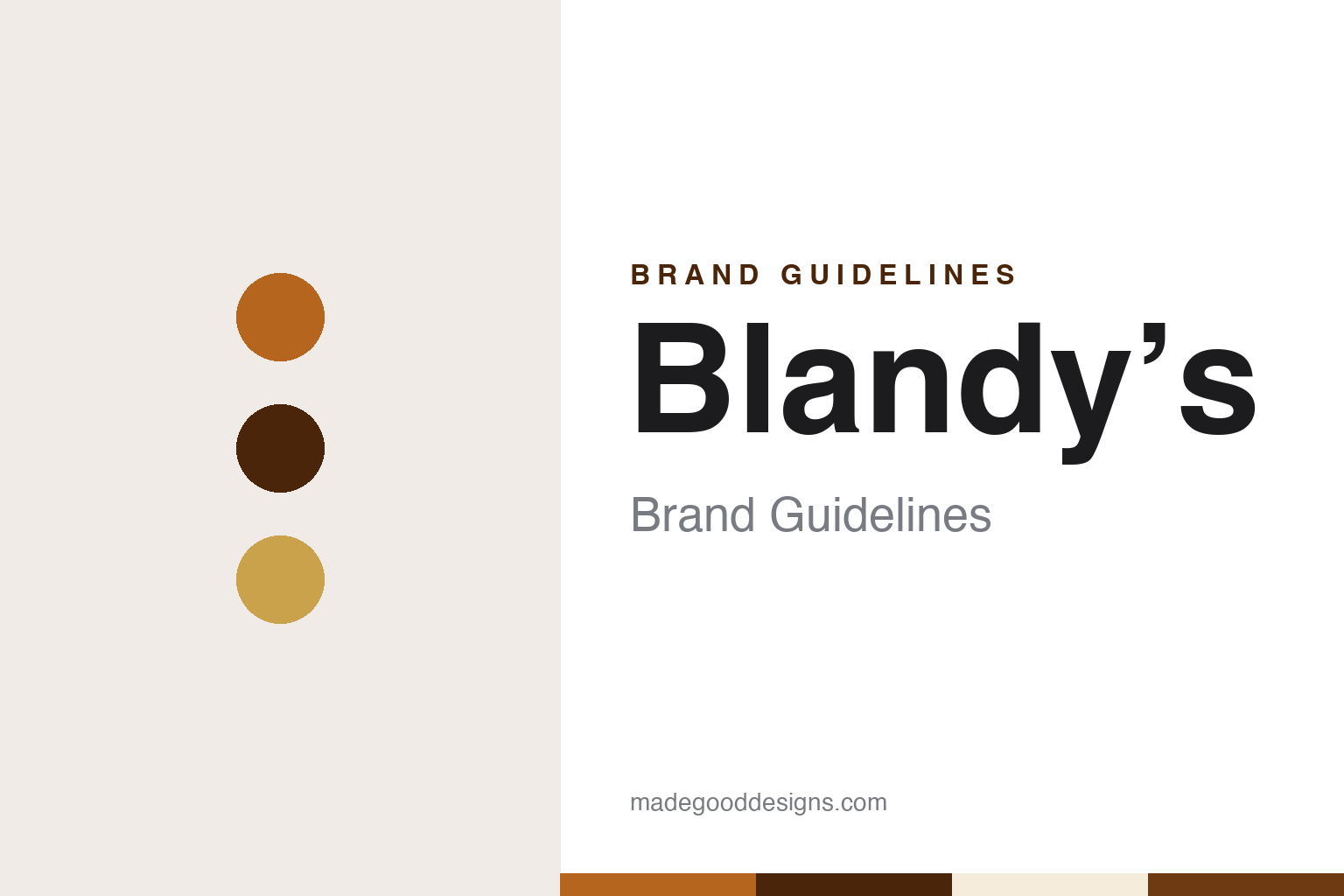
Blandy’s Brand Guidelines
The Funchal Madeira house founded by John Blandy in 1811.
Aa
Two constants: a Madeira amber, lodge mahogany and old gold palette and a classic old-style serif register. Abstract homage — not a Blandy’s product or mark; no label, logo or bottle is reproduced.
An Englishman in Funchal
Seven generations of one family on one Atlantic island.
Blandy’s is a Madeira wine house in Funchal, the capital of the Portuguese island of Madeira in the Atlantic. The Madeira Wine Company, which now owns the brand, says its founder John Blandy arrived on the island in 1808 and that in 1811 he set up his own business as a wine shipper and general trader with his brothers Thomas and George. The family dates the house from that year and marked its bicentenary in 2011.
The early firm grew by buying property in the town. The company says that, after almost two decades of acquiring small properties, the family took over in 1824 the buildings that are now the Blandy’s Wine Lodge. The academic journal Herança has published a study of John Blandy’s property dealings and business strategy in Madeira between 1811 and 1855, which ties his estate to the firm’s historic headquarters in Rua de São Francisco, known today as the old Blandy’s Wine Lodge.
The next generation faced a crisis in the vineyards. The company says that during the oidium outbreak of the 1850s, the fungal disease that devastated Madeira’s vines, Charles Blandy bought up much of the island’s stock of old wine in 1852, which allowed the house to keep selling while production collapsed.
The twentieth century brought consolidation. A Madeira Wine Association was formed in 1913 by a group of island producers to pool buying and winemaking, and the company says Blandy’s joined it in 1925. The association later took the name Madeira Wine Company, and its brands came to include Cossart Gordon, Leacock and Miles alongside Blandy’s. By the late 1970s, the company says, only a few of the original families remained involved and the Blandys held the controlling share.
Colour
Old cellars in the centre of Funchal.
The visible home of the brand is the Blandy’s Wine Lodge on Avenida Arriaga in central Funchal. The regional tourism board, Visit Madeira, describes the complex, also known as the Adegas de São Francisco, as a group of buildings holding some of the oldest Madeira wine cellars on the island, and Funchal’s city tourism site notes that Rua de São Francisco takes its name from a Franciscan church and convent that stood there until it was demolished in the nineteenth century. The lodge is a working cellar where wines are aged in cask, and it is open for guided visits and tastings.
The range follows the conventions of Madeira itself. The house’s own site groups its wines into blends with an age statement, from 3 to 50 years, single-harvest wines labelled Colheita and Frasqueira, and limited releases. British retailers also list Blandy’s bottlings named for a grape variety, such as a 10-year-old Malmsey.
The best-known everyday bottling plays on a piece of English history. Blandy’s Duke of Clarence, a rich Madeira that retailers list as a three-year-old wine made from Tinta Negra grapes, takes its name from George, Duke of Clarence, who according to legend was drowned in a butt of Malmsey in 1478 — a story Shakespeare repeated in Richard III. It sits in a set of wines the house calls the Dukes collection.
The company has also used the brand to signal its record on sustainability. The Blandy’s site describes the business as a Certified B Corporation, and says the Blandys are the only family among the founders of the Madeira wine trade still owning and running their original company.
Typography
Design and documentation.
The seven brands in this group are all wine and spirits names: Torres, Osborne, Fundador, Ypióca, Blandy’s, Brancott Estate and Villa Maria. Wine and spirits brands in general sit at many different points in the trade, from family houses that still carry a founder’s name to labels that now belong to much larger drinks groups, and a single brand can be sold everywhere from a corner shop to a restaurant list.
A wine or spirits brand’s identity is usually carried less by a single bottle than by a label, a name and the place it promises, because the company behind the name may have changed hands, moved its production or grown far beyond the place where it started. That makes the questions behind each name worth asking plainly: who started it, who owns it now, and where its wine or spirit is actually made and bottled.
Each guide separates what independent sources record from what the company says about itself — its founding story, its owners over time, where its wine or spirit is made and how its labels have changed — and marks plainly what rests only on the company’s own word.
Aa
A classic old-style serif for a two-century-old wine house. (Specimen set in Cormorant Garamond, a serif STAND-IN; NOT the Blandy’s logo.)
Blandy’s
A partnership with the Symingtons, and a return to family control.
In 1989 the Blandys invited another Anglo-Portuguese wine family into the business. The company says it offered the Symington family of Oporto, the port producers, a partnership in the Madeira Wine Company to strengthen its sales and marketing. Under that partnership, the company says, the Madeira Wine Company produced and bottled Atlantis in 1992, which it describes as the first table wine produced and bottled on the island.
The arrangement was reversed in the bicentenary year. The Drinks Business reported in June 2011 that Symington Family Estates and the Blandy Group had agreed that Blandy’s would regain control of the Madeira Wine Company, and the company says the agreement was signed on 1 August 2011. The Symingtons kept a minority holding and continued to distribute Blandy’s through their companies, including John E Fells in the United Kingdom and Premium Port Wines in the United States; The Drinks Business reported Paul Symington as saying the family wanted to concentrate on rebuilding the Cockburn’s port brand and on its Douro vineyards.
The family handover continues. The company says Michael Blandy, of the sixth generation, retired in 2024, and that Chris Blandy, of the seventh, now leads the business. The company’s own corporate site is madeirawinecompany.com, while the wine brand uses blandys.com.
For a design guide, Blandy’s shows how a family name, an age statement and a set of old cellars in the middle of Funchal can carry a fortified wine across more than two centuries. Compare Osborne, the sherry and brandy house of El Puerto de Santa María, and Delta Cafés, the Portuguese coffee roaster. For this guide we use Madeira amber, lodge mahogany and old gold with a serif, an unofficial interpretation; no product or logo is reproduced.
Explore & save
Keep Blandy’s’s identity on hand — save it to a board in the Made Good inspiration library.
Blandy’s identity set
Pin the Blandy’s Madeira amber, lodge mahogany and old gold palette and the classic old-style serif register to your own board.