Diplomático Brand Guidelines
A Venezuelan rum from a 1959 distillery at the foot of the Andes.
Aa
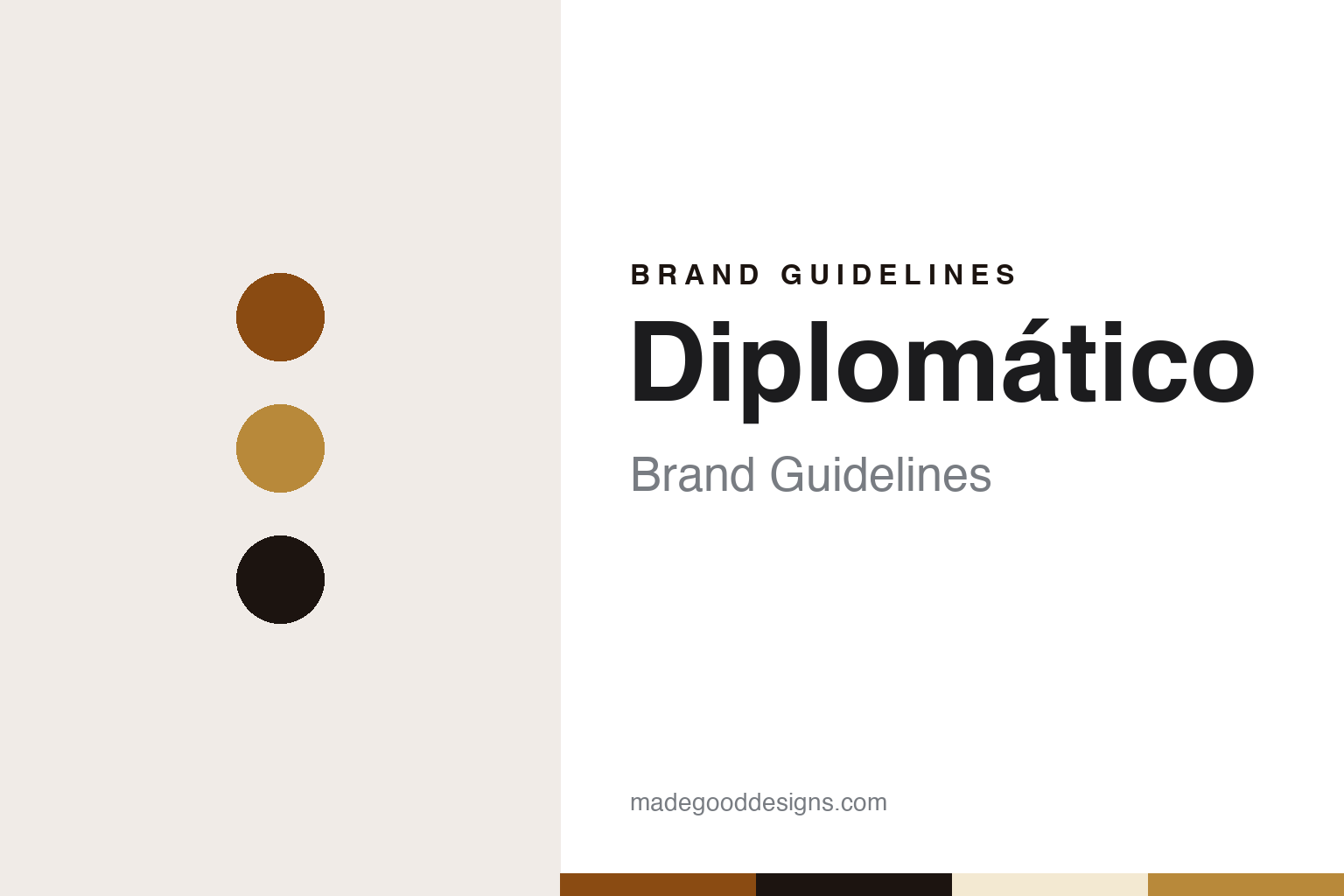
Two constants: a rum amber, label cream and old gold palette and a high-contrast serif register. Abstract homage — not a Diplomático product or mark; no label, portrait or bottle is reproduced.
A distillery at La Miel
Seagram’s stills, Venezuelan cane and a change of name in 2002.
Diplomático is a rum from Venezuela, made at a distillery in La Miel, in the state of Lara, which the company places at the foot of the Andes. The distillery dates to 1959. In an interview published by Leaders magazine in October 2018, the brand’s global marketing director, Edouard Beaslay, said it was created that year by local rum producers together with Seagram’s International, the Canadian drinks group, under the name Licorerías Unidas S.A., or LUSA.
The Seagram’s years shaped the equipment that still defines the house style. Beaslay told Leaders that Seagram’s brought a batch kettle of the kind used for bourbon and copper pot stills of the kind used for whisky from its Canadian and Scottish distilleries, and built continuous columns for lighter Hispanic-style rums. The company’s own site today lists pot still, batch kettle and column distillation, and says the combination of batch kettle and pot still is “at the heart of the Diplomático style,” with the column used to balance the profile.
The next turn came in 2002. According to the same Leaders interview, LUSA was put up for sale that year, became wholly Venezuelan and privately owned, and took the name Destilerías Unidas S.A., usually shortened to DUSA. Beaslay described DUSA as an independent, family-owned producer and one of the largest rum producers in Venezuela, said the rum was distributed in more than 70 countries, and noted that a range called the Distillery Collection, built around the individual stills, had been released in 2017.
The raw material is local, the company says. Its site states that the sugar cane is grown in Venezuela, sent to sugar factories and turned into molasses, which is fermented for at least 24 hours before distillation, and that the rums are aged mainly in ex-bourbon and ex-whisky barrels before blending. Diplomático also sits inside a national appellation: English Wikipedia notes that Ron de Venezuela has been a protected designation of origin granted by the Venezuelan intellectual-property office SAPI since 2003, requiring at least two years of ageing in white oak, and lists Diplomático among the brands that carry it.
Colour
A nineteenth-century gentleman as the face of the bottle.
The brand’s central figure is Don Juancho, the gentleman whose portrait the company calls “our brand icon.” The company says the icon is inspired by the Mantuanos, the Venezuelan noblemen of the nineteenth century, whom it describes as renowned for discernment and diplomacy. In the company’s telling they travelled widely, trading local artisanal goods, and became trusted ambassadors for their region wherever they went; “true diplomats of the era,” the site says, “their story inspired our name.” The name and the face on the label are therefore one idea: a rum presented as an envoy of Venezuela abroad.
The range is organised in tiers. The company groups Reserva Exclusiva, which it calls one of the world’s favourite super-premium sipping rums, Selección de Familia and Mantuano in a Tradition range, with older and rarer bottlings in a Prestige range. The names keep returning to the same vocabulary of family, reserve and Venezuelan gentry that the portrait sets up.
The advertising has leaned on the place rather than the man. The French advertising site J’ai un pote dans la com reported in 2019 that the agency McCann Paris had worked with Diplomático since mid-2018 to redefine its brand platform, and that the resulting global campaign, made up of six key visuals and a corporate film, centred on the distillery, the barrel and what it called the brand’s iconic bottle, for digital, print and outdoor use in the rum’s main markets from June 2019.
One market does not see the name at all. In Germany the same rum is sold as Botucal: the German wine and spirits publisher Meininger reports that the Diplomático name could not be used there because of existing trademark rights, and the specialist retailer Rum Auctioneer says the change followed a trademark dispute in 2012 with the discounter Aldi over its Diplomat brandy.
Typography
Design and documentation.
The seven brands in this group are all rum and bitters names: Diplomático, Gosling’s, Myers’s, Lamb’s, Wray & Nephew, El Dorado and Angostura. Rum and bitters brands in general sit at many different points in the trade, from family houses that still carry a founder’s name to labels that now belong to much larger drinks groups, and a single brand can be sold everywhere from a corner shop to a cocktail bar.
A rum or bitters brand’s identity is usually carried less by a single bottle than by a label, a name and the place it promises, because the company behind the name may have changed hands, moved its production or grown far beyond the place where it started. That makes the questions behind each name worth asking plainly: who started it, who owns it now, and where its rum or bitters is actually made and bottled.
Each guide separates what independent sources record from what the company says about itself — its founding story, its owners over time, where its rum or bitters is made and how its labels have changed — and marks plainly what rests only on the company’s own word.
Aa
A high-contrast serif for a portrait-led label. (Specimen set in Playfair Display, a serif STAND-IN; NOT the Diplomático logo.)
Diplomático
From a Venezuelan family company to a Kentucky drinks group.
The brand changed hands in 2022. FoodBev Media reported on 7 October 2022 that Brown-Forman, the Louisville, Kentucky, group behind Jack Daniel’s, had agreed to buy the Diplomático brand and related assets, including a production facility in Panama, from its owner, Destillers United Group. Brown-Forman’s chief executive, Lawson Whiting, said the rum would give the company a “market-leading entry” into its category, and more than 100 employees were to join Brown-Forman. The seller was to continue producing and ageing the rum at the original distillery at the foot of the Andes. The deal was completed on 5 January 2023, the trade title The Moodie Davitt Report reported.
The arrangement shows on the bottle and the website. The brand’s site today says Diplomático is imported into the United States by Brown-Forman of Louisville, while its copyright line names a Portuguese company, Diplomático Branding, Unipessoal LDA, and the production story it tells still begins with Venezuelan cane, Venezuelan molasses and the stills at La Miel. The appellation, the distillery and the Don Juancho portrait all stayed where they were when the owner changed.
The name needs a little care in searches. “Diplomático” is also the ordinary Spanish word for diplomatic, and in Germany the rum appears as Botucal; the brand’s own site is rondiplomatico.com. For the typeface question, see our note on what font Diplomático uses.
For a design guide, Diplomático shows how a single invented gentleman, a warm amber bottle and a vocabulary of family and reserve can carry a Venezuelan distillery’s rum to shelves around the world, through a change of name in 2002 and a change of owner in 2023. Compare Zacapa, the Guatemalan rum, and Flor de Caña, the Nicaraguan rum of the Pellas family. For this guide we use rum amber, label cream and old gold with a serif, an unofficial interpretation; no product or logo is reproduced.
Explore & save
Keep Diplomático’s identity on hand — save it to a board in the Made Good inspiration library.
Diplomático identity set
Pin the Diplomático rum amber, label cream and old gold palette and the high-contrast serif register to your own board.