Powers Brand Guidelines
The John’s Lane whiskey behind the diamond P, est. 1791.
Aa
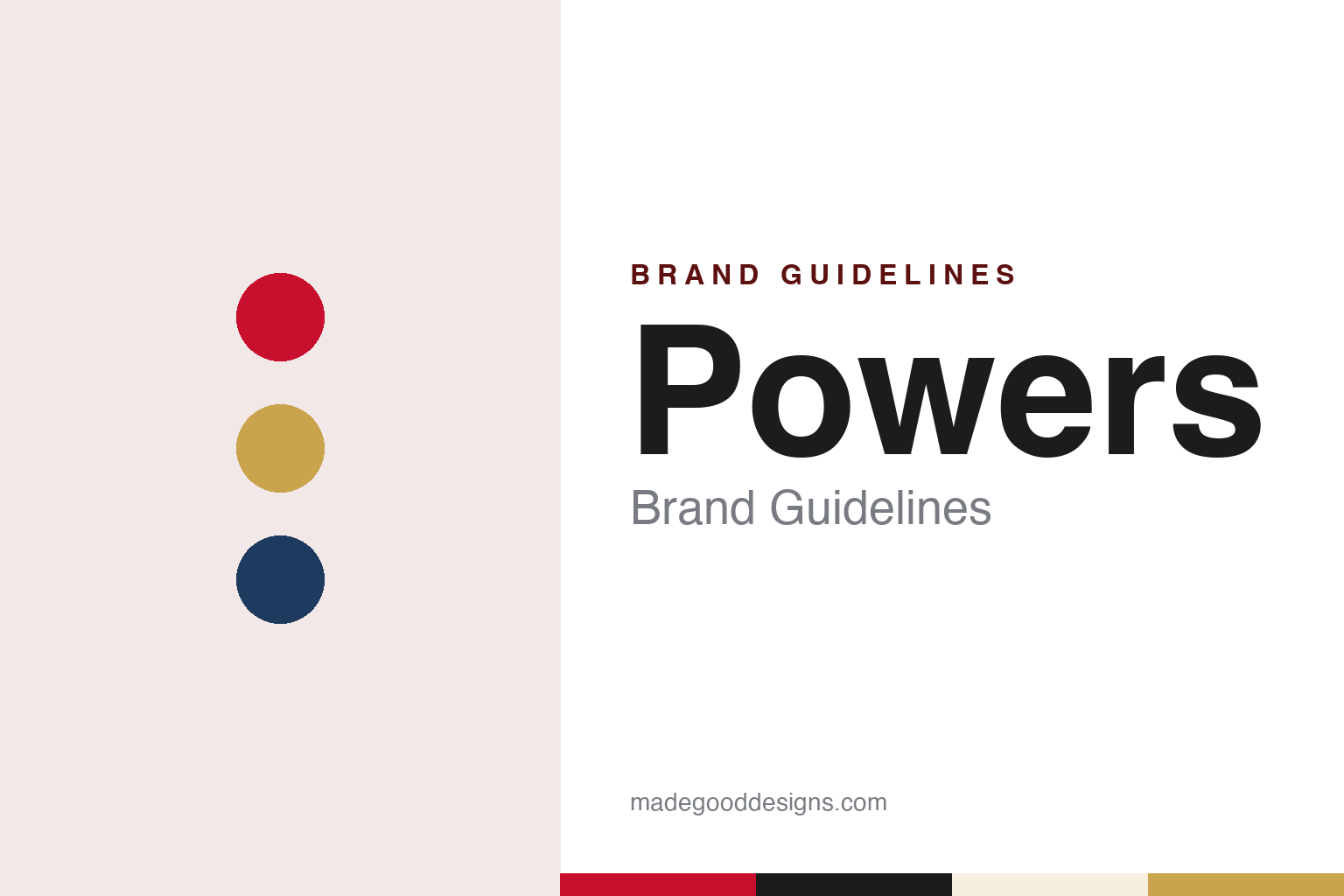
Two constants: a diamond red, gold and swallow blue palette and a high-contrast serif register. Abstract homage — not a Powers product or mark; no label, logo or bottle is reproduced.
John’s Lane
A Dublin innkeeper’s still that grew into a six-acre distillery.
Powers began in Dublin in 1791. English Wikipedia, drawing on Brian Townsend’s The Lost Distilleries of Ireland (1999), says James Power, an innkeeper, set up a small distillery at his pub on Thomas Street, trading at first as James Power and Son. By 1822 the business was called John Power & Son and had moved to John’s Lane, a side street off Thomas Street in the Liberties, the address that still names one of the brand’s whiskeys.
The firm grew with Dublin’s distilling trade. English Wikipedia says the founder’s grandson John Power was made a baronet in 1841, that the distillery was rebuilt in the Victorian style in 1871, and that by the 1880s the site covered more than six acres and employed about 300 people. The whisky writer Alfred Barnard visited in the late 1880s for his survey The Whisky Distilleries of the United Kingdom (1887), found five pot stills and called the plant “about as complete a work as it is possible to find anywhere.”
The step that shaped the brand came in 1886. English Wikipedia says John Power & Son began bottling its own whiskey that year instead of selling it in cask to merchants and bonders, and describes it as the first Dublin distillery to do so and one of the first in the world. The same article calls Powers Gold Label the first Irish whiskey ever to be bottled, and says the gold label on each bottle gave the whiskey its name.
The family era ended in the 1960s. In 1966 John Power & Son merged with the Cork Distilleries Company and John Jameson & Son to form Irish Distillers, English Wikipedia says, and the new group consolidated production in County Cork. Its article on Irish Distillers says production moved to the new Midleton complex in July 1975 and that distilling at the two Dublin sites ended a year later; the Powers article says that when production left John’s Lane in 1976, Gold Label was reformulated from a single pot still whiskey into a blend.
Colour
A diamond P, a pot-still bottle and a colour for each whiskey.
The brand’s oldest graphic is a letter in a lozenge. Irish Distillers describes the Powers diamond P as one of the first trademarks ever registered in Ireland, Whisky Magazine and American Whiskey Magazine reported in January 2020. Carol Quinn, the archivist at Irish Distillers, told Whisky Magazine that the diamond P was everywhere, on the casks, the stationery, the bills and the receipts, and that workers at the old John’s Lane distillery even wore a diamond P pin on their lapels.
That mark became the centre of a redesign announced in January 2020. Both magazines reported a new bottle whose shape follows the silhouette of a pot still at John’s Lane, and a label styled on the diamond P. Each whiskey took its own colour: red for Gold Label, a homage to the original red diamond marque; blue for Three Swallow, a nod to the bird’s feathers; and metallic ink for John’s Lane Release, reflecting the family’s industrial innovation at the Dublin distillery. The new pack reached Gold Label in the United States from March 2020, with the other whiskeys following in the US in mid-2020 and elsewhere from late 2020. American Whiskey Magazine quoted Conor McQuaid, then chairman and chief executive of Irish Distillers, saying the whiskey had been famous for its bold taste since the family distillery was established in 1791.
The packaging agency Stranger & Stranger lists the Powers packaging and branding in its portfolio, describing a pot-still-inspired bottle with the diamond P front and centre.
In Britain the look arrived with a new whiskey. Pernod Ricard UK said in August 2020 that it was reintroducing Gold Label to the UK as Powers Gold Label Distiller’s Cut, a UK exclusive bottled at 43.2% ABV, with a pot-still-shaped bottle, embossed glass and a diamond-shaped label. The company quoted its brand director Laura Stephen describing a bold new look for UK drinkers.
Typography
Design and documentation.
The seven brands in this group are all Irish whiskey names: Redbreast, Teeling, Powers, Kilbeggan, Writers’ Tears, Green Spot and Midleton. Irish whiskey brands in general sit at many different points in the trade, from family firms that still carry a founder’s name to labels that now belong to much larger drinks groups, and a single brand can be sold everywhere from a corner shop to a hotel bar.
An Irish whiskey brand’s identity is usually carried less by a single bottle than by a label, a name and the place it promises, because the company behind the name may have changed hands, moved its production or grown far beyond the place where it started. That makes the questions behind each name worth asking plainly: who started it, who owns it now, and where its whiskey is actually distilled, matured and bottled.
Each guide separates what independent sources record from what the company says about itself — its founding story, its owners over time, where its whiskey is made and how its labels have changed — and marks plainly what rests only on the company’s own word.
Aa
A high-contrast serif for a heritage whiskey label. (Specimen set in Playfair Display, a serif STAND-IN; NOT the Powers logo.)
Powers
A Dublin name, distilled in Cork and owned in Paris.
Ownership moved again in the late 1980s. English Wikipedia’s article on Irish Distillers says Pernod Ricard took over the group in June 1988 as a white knight, after hostile bids from Grand Metropolitan, Allied-Lyons and Guinness; the Powers article gives 1989 for the same deal, so the dates differ by a year between the two pages. Pernod Ricard UK says Powers is now made at Midleton Distillery in County Cork.
The range now spans several styles. English Wikipedia lists Gold Label, a triple-distilled blend of pot still and grain whiskey; a 12-year-old Special Reserve; three single pot still whiskeys, Three Swallow, Signature and John’s Lane; and an Irish rye. It notes that Jim Murray’s Whisky Bible named John’s Lane Release its Irish Whiskey of the Year in 2012, and that Powers sponsored the Fairyhouse Easter Festival, including the Powers Irish Grand National, from 1970 to 2010.
The old distillery has not vanished. English Wikipedia says some of the John’s Lane buildings now belong to the National College of Art and Design, and that three of the pot stills stand in the college’s Red Square, so a design school now sits on the site where the diamond P was stamped on casks.
The name needs care online: Powers is a common surname and a common word, so the brand is usually written Powers Irish Whiskey, and its single pot still bottles carry the John Power & Son name.
For a design guide, Powers shows how one registered mark, a diamond P from the nineteenth century, can carry a whiskey through a merger, a move from Dublin to Cork and a change of owner, and then return as the organising idea of a modern bottle. Compare Midleton, the Cork distillery where Powers is now made, and Bushmills, the County Antrim whiskey that joined Irish Distillers in 1972. For this guide we use diamond red, gold and swallow blue with a serif, an unofficial interpretation; no product or logo is reproduced.
Explore & save
Keep Powers’s identity on hand — save it to a board in the Made Good inspiration library.
Powers identity set
Pin the Powers diamond red, gold and swallow blue palette and the high-contrast serif register to your own board.