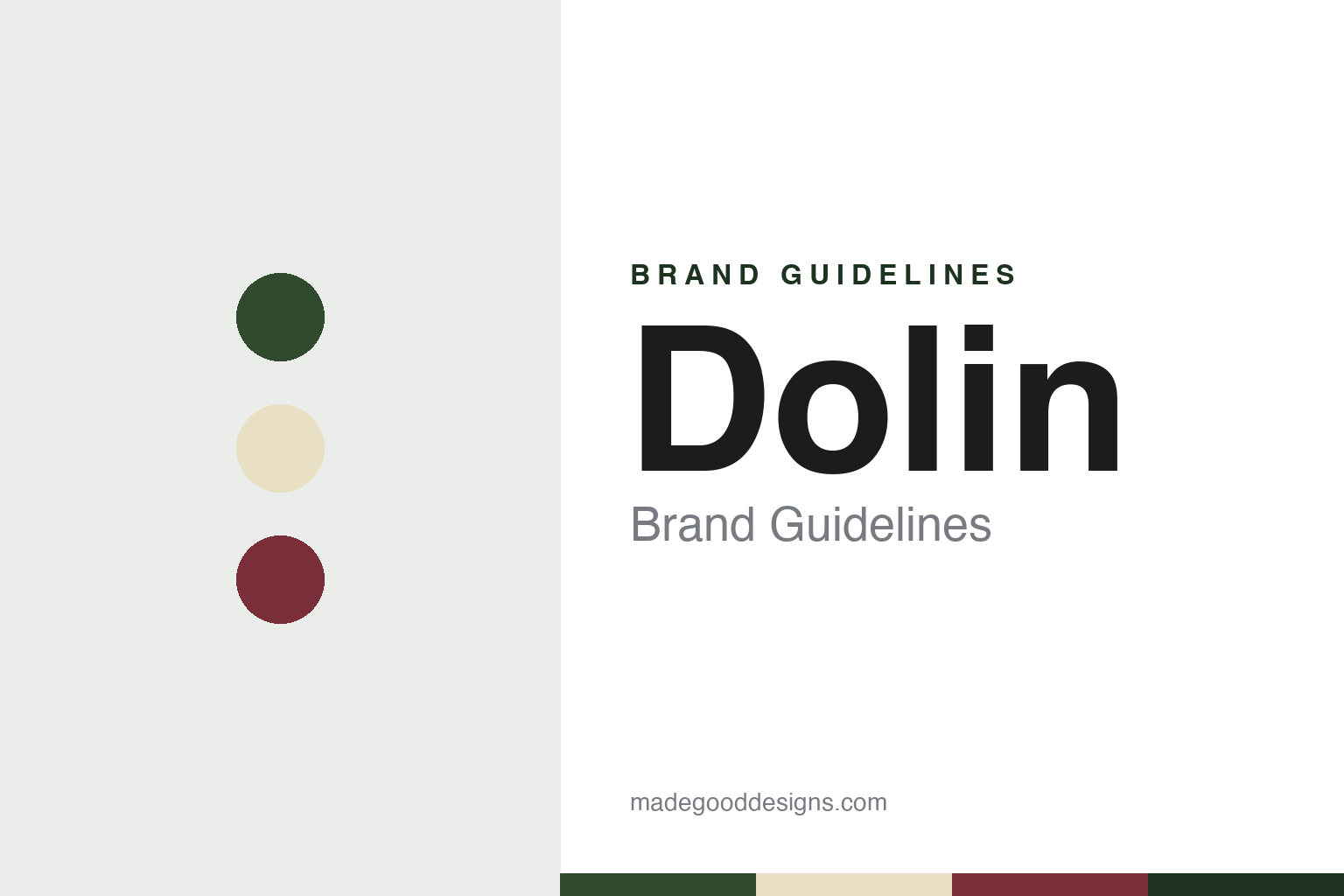
Dolin Brand Guidelines
The Chambéry vermouth house of the Sevez family since 1919.
Aa
Two constants: an alpine green, blanc cream and rouge plum palette and a classical serif register. Abstract homage — not a Dolin product or mark; no label, logo or bottle is reproduced.
From Les Échelles to Chambéry
A confectioner’s distillery, a coach road to Turin and a son-in-law’s name.
Dolin’s story begins one valley away from Chambéry. The company says Joseph Chavasse, who had learned confectionery in Grenoble under Joseph Salviani and married his daughter, settled at Les Échelles in Savoie in 1814 and founded a distillery there for the herb and fruit liqueurs of the region; French Wikipedia, citing the same company history, gives 1815, and English Wikipedia says Dolin vermouth has been made since 1815. In 1821, the company says, a coach route between Chambéry and Turin ran through Les Échelles, and Chavasse, aware that the liquor makers of Turin called their drink “vermout,” worked out a vermouth recipe of his own.
In 1830 he moved to the Faubourg Reclus in Chambéry, where the company says he made liqueurs with names such as Génépi des Alpes, Marasquin and Bon Savoyard before concentrating on vermouth. The name on the bottle came through marriage. The company says Chavasse’s daughter Marie married Louis-Ferdinand Dolin in 1840 (French Wikipedia gives 1843), and that Dolin bought the distillery in 1852 and named it after its flagship, Vermouth Dolin. From 1870, the company says, Marie Dolin ran the business herself.
Savoy became part of France in 1860, and the company says rival Chambéry houses such as Descotes and Comoz then launched vermouths of their own. By the 1880s Vermouth Dolin was a café-terrace drink in spa towns such as Aix-les-Bains, and the company says counterfeits had begun to appear. Around 1900, it says, the word “Chambéry” had come to stand for the Savoyard style, and Marie-Rosalie Dolin suggested bottling the popular “Chambéry-fraise” mix of vermouth and strawberry, the drink sold as Chambéryzette.
Colour
A town’s name on the label, and rules about real plants.
The town has had protection of its own. The Haus Alpenz page for Dolin’s dry vermouth says Chambéry was granted an appellation of origin for vermouth in 1932, and sets out the three principles it describes: the vermouth is made in Chambéry, it is flavoured by macerating real plants rather than with pre-prepared infusions, and it is sweetened only with grape must, wine and/or sugar. English Wikipedia also records that Chambéry received an appellation for its vermouths.
The style the town became known for is pale. English Wikipedia says the blanc style of vermouth began in Chambéry, and cites Punch, which wrote in January 2018 that Dolin is recognised as having created it. English Wikipedia lists a dry vermouth, two sweet styles, blanc and rouge, and a strawberry version; the company says it added a dry vermouth for cocktails in the 1960s, when demand in the United States stayed strong.
Beyond vermouth, Dolin is also a Savoyard liqueur and syrup maker. French Wikipedia lists aperitifs, génépi, fruit brandies, gentian and creams, and about twenty syrup flavours. The company says génépi became a large part of the business as ski resorts grew in the 1980s and especially after the 1992 Albertville Winter Olympics. In 1976, French Wikipedia says, Dolin took over the Bonal distillery at Saint-Laurent-du-Pont in Isère, maker of Gentiane-Quina Bonal, an aperitif whose popularity from the 1930s to the 1950s the article credits partly to advertising drawn by Charles Lemmel. The same article lists La Raphaëlle, created in 1865, and La Laurentine among Bonal’s aperitifs.
Typography
Design and documentation.
The seven brands in this group are sherry and vermouth names: Valdespino, Williams & Humbert, Barbadillo and Emilio Hidalgo on the sherry side, and Dolin, Belsazar and Mancino on the vermouth side. Sherry is a fortified wine from the far south of Spain, made by bodegas in towns such as Jerez de la Frontera and Sanlúcar de Barrameda; vermouth is a wine flavoured with herbs and spices, made here in France, Germany and Italy. Both trades sit at many different points in the drinks business, from family houses that still carry a founder’s name to labels that now belong to larger groups.
A sherry or vermouth brand’s identity is usually carried less by a single bottle than by a label, a name and the place it promises, because the company behind the name may have changed hands, moved its production or grown far beyond the place where it started. That makes the questions behind each name worth asking plainly: who started it, who owns it now, and where its wine is actually made and bottled.
Each guide separates what independent sources record from what the company says about itself — its founding story, its owners over time, where its sherry or vermouth is made and how its labels have changed — and marks plainly what rests only on the company’s own word.
Aa
A classical serif for a nineteenth-century Savoyard house. (Specimen set in Cormorant Garamond, a serif STAND-IN; NOT the Dolin logo.)
Dolin
Grocers, grandsons and a son-in-law: the Sevez century.
The Dolin family sold the business in 1919. The company says the buyers were the brothers Charles and Joseph Sevez, Chambéry grocers, who kept the Dolin name; French Wikipedia gives the same year. In 1920, the company says, Charles Sevez co-founded a wholesale distribution company, L’Allobroge, and in the 1930s, when American Prohibition and export taxes cut sales, the brothers answered with new products and advertising. Chambéry was bombed in 1944, and the company says business recovered from 1946.
The post-war decades were harder for vermouth in France. The company says whisky and pastis took its place on café tables in the 1950s, and that Pierre Sevez turned to fruit syrups and the Savoy wine trade. In the 1970s his sons Bernard and Jean-Louis Sevez revived the syrups and moved the company to an industrial estate in Chambéry. Bernard Sevez recruited Ariane Aimard, who took over technical management, and the company says Jean-Luc Scapolan later joined on the management side and succeeded his brother-in-law in 2001, by which time, the company says, Dolin was exporting to about fifty countries. Today the company says Pierre-Olivier Rousseaux, Bernard Sevez’s son-in-law, leads Dolin with Ariane Aimard, and French Wikipedia names him as president. The Haus Alpenz page describes the house as family-owned and independent.
The name needs a little care online. Dolin is also a surname, and searches mix the vermouth house with unrelated people and businesses; the house’s own site is dolin.fr.
For a design guide, Dolin shows how a town’s name, a family’s name and a single pale style of vermouth can carry a Savoyard house through two centuries and two families. Compare Noilly Prat, the dry vermouth of Marseillan, and Martini, the Turin vermouth house. For this guide we use alpine green, blanc cream and rouge plum with a classical serif, an unofficial interpretation; no product or logo is reproduced.
Explore & save
Keep Dolin’s identity on hand — save it to a board in the Made Good inspiration library.
Dolin identity set
Pin the Dolin alpine green, blanc cream and rouge plum palette and the classical serif register to your own board.